ECONOMIC | AI Investment Reshapes the Global Economy as Technology Spending Surges
 0
 0
Read Time:2 Minute, 10 Second
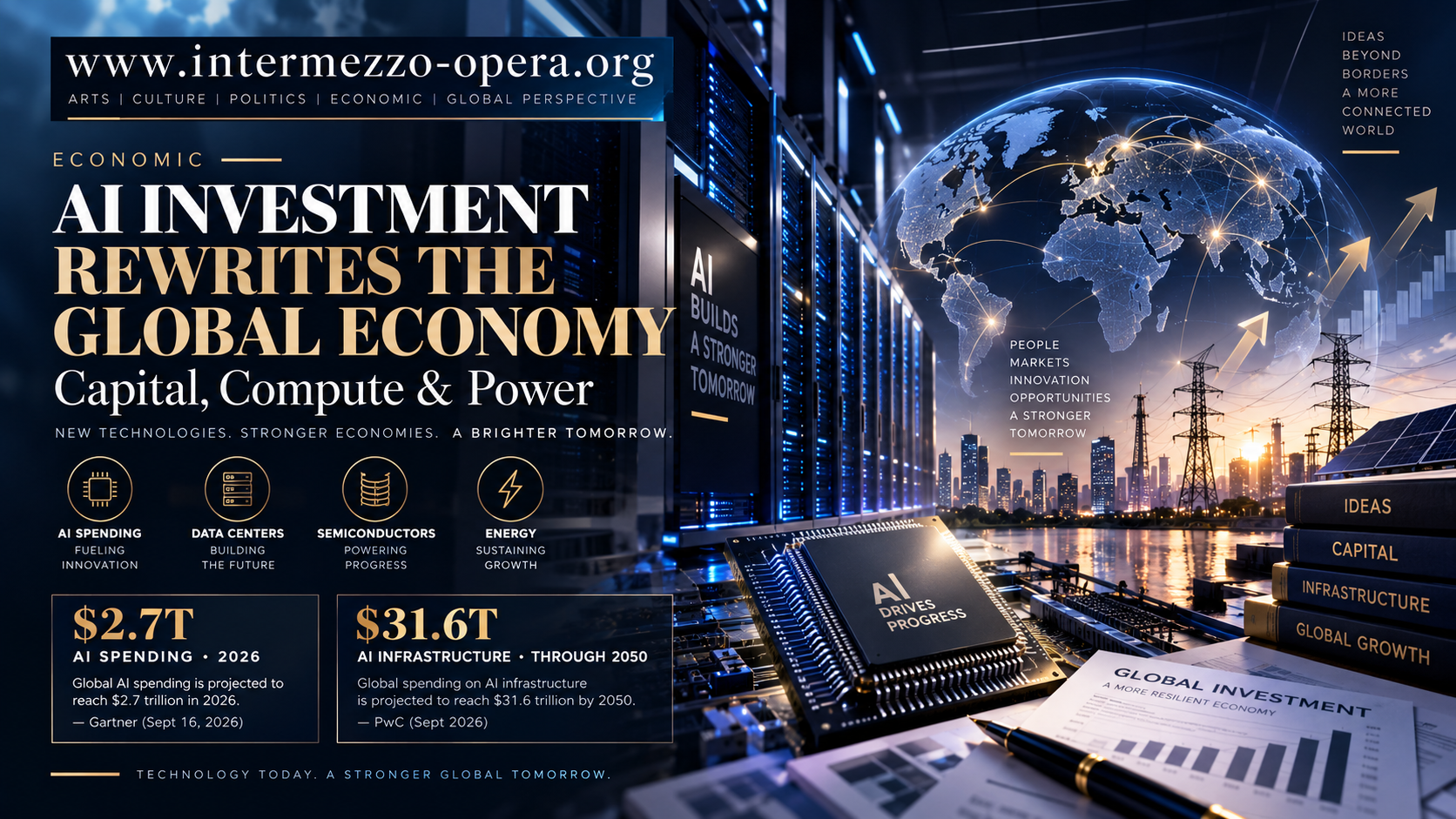
Artificial intelligence is becoming a major force in the global economy. Investment in AI is supporting growth in several countries and creating new demand for chips, data centers, software, and digital infrastructure.
The trend is also changing how companies plan their spending. At the same time, it is creating new questions about productivity, energy demand, jobs, and financial risks.
AI Becomes a New Growth Engine
The International Monetary Fund said AI-driven demand is helping countries that are closely connected to the global technology supply chain.
The IMF projects global economic growth at 3.0% in 2026 and 3.4% in 2027. However, the outlook remains uneven between countries and regions.
Technology investment is therefore becoming an important part of the global economic picture.
Companies Increase Technology Spending
AI requires large amounts of computing power. As a result, demand for advanced chips and data centers continues to grow.
The investment also extends to electricity networks and other infrastructure. This creates opportunities for technology companies and energy providers.
However, the growth also brings higher costs. Data centers require large amounts of electricity, while advanced computing systems require major capital investment.
Trade Is Also Changing
AI is affecting international trade. Countries that produce semiconductors, servers, software, and other technology products are becoming increasingly important to global supply chains.
The OECD projects global trade growth will slow from 5.0% in 2025 to 3.1% in 2026. However, strong AI-related trade is expected to support global economic activity.
This means technology could become an important source of demand even while other parts of global trade face pressure.
AI Brings New Economic Risks
Rapid AI investment does not remove economic risks.
The IMF has warned that a correction in technology-driven expectations could become a downside risk. Trade fragmentation and renewed geopolitical tensions could also affect investment and supply chains.
Meanwhile, energy prices remain another concern. S&P Global reported that Brent crude had moved above US$100 per barrel in September, while European gas prices had also increased sharply.
Higher energy costs could raise operating expenses for data centers and technology companies.
The Next Phase of the Digital Economy
AI is no longer only a technology story. It is becoming part of the wider economic landscape.
Investment in AI can support productivity and create demand across different industries. However, companies and governments also need to consider energy supply, infrastructure, trade, and financial stability.
For the global economy, the next phase of AI growth will depend not only on technological progress. It will also depend on how effectively countries build the infrastructure needed to support it.


Happy
0 %

Sad
0 %

Excited
0 %

Sleepy
0 %

Angry
0 %

Surprise
0 %
Related Post

Wireless Logic Bets €1 Million on Portugal to Accelerate IoT and Smart City Growth
Wireless Logic's Portugal investment is set to strengthen the country's Internet of Things ecosystem as…