
Political Participation in Europe: Why Citizen Trust and Public Engagement Matter
 0
 0
Read Time:7 Minute, 46 Second
Political participation in Europe is becoming an important part of the debate about the future of democracy. Elections remain central, but democratic participation also includes public consultation, civic organizations, local engagement, access to reliable information, and communication between citizens and institutions.
This issue has gained renewed attention in 2026. The Council of Europe is developing its New Democratic Pact for Europe, while the European Union continues work on democratic resilience, the rule of law, media freedom, and citizen participation.
Political Participation in Europe Goes Beyond Elections
Voting is one of the most visible forms of political participation.
However, democracy also operates between elections.
Citizens can participate in public consultations. They can contact representatives, join community organizations, attend local meetings, or contribute to civic initiatives.
The Council of Europe describes citizen involvement as an important part of democratic life. It also supports participatory and deliberative processes that allow citizens to contribute to public decision-making.
Therefore, participation should not be viewed only as something that happens on election day.
Public Trust Remains an Important Political Issue
Trust affects the relationship between institutions and citizens.
When people believe that institutions listen to them, participation may feel more meaningful. On the other hand, declining trust can contribute to disengagement.
The Council of Europe has identified public trust, civic space, inequality, and participation among the issues being discussed as part of Europe’s current democratic renewal agenda.
However, trust cannot be created through communication alone.
Institutions also need transparent procedures, accountability, and effective public services.
Therefore, democratic trust depends partly on how institutions work in everyday life.
The Rule of Law Supports Democratic Institutions
The rule of law is another central element of European politics.
In the EU framework, it includes legality, legal certainty, limits on arbitrary executive power, judicial protection, separation of powers, and equality before the law.
These principles affect citizens directly.
They help determine how governments exercise authority and how people can challenge public decisions.
In addition, predictable legal systems matter to businesses and investors.
Therefore, the rule of law has both democratic and economic importance.
Europe Continues to Monitor Rule-of-Law Developments
The European Commission published its 2026 Rule of Law Report in July.
The report examines all 27 EU member states. It focuses on justice systems, anti-corruption frameworks, media pluralism and freedom, and institutional checks and balances.
Importantly, conditions differ between countries.
Therefore, it would be misleading to describe Europe as having one single rule-of-law situation.
National institutions, legal systems, political debates, and reforms vary considerably.
Country-level evidence remains necessary when discussing specific governments.
Political Participation in Europe Depends on Reliable Information
Citizens need information before making political decisions.
However, the modern information environment is increasingly complex.
Traditional media now operates alongside social networks, video platforms, independent publications, influencers, and AI-generated content.
This creates more opportunities to access information.
At the same time, it creates new challenges.
The European Commission says that 86% of Europeans surveyed viewed the rapid spread of disinformation as a major problem for democracy. In addition, 81% considered foreign interference in democratic systems a serious problem requiring action. These figures come from Eurobarometer surveys cited by the Commission.
Media Literacy Is Becoming More Important
People now encounter political claims throughout the day.
A dramatic headline can appear on social media within seconds.
However, popularity does not prove accuracy.
Citizens can check who published a claim. Then, they can compare it with other reliable sources.
Dates also matter.
Old photographs or statements can appear again during a new political controversy.
Therefore, context is essential.
Strong media literacy does not require citizens to agree politically. Instead, it helps them evaluate the information used to form their own opinions.
Independent Media Has a Democratic Role
Journalism can help citizens understand public institutions and government decisions.
Reporters may investigate public spending, explain legislation, interview political figures, or examine claims made during political debate.
For that reason, media freedom and pluralism remain part of European rule-of-law monitoring. The Commission’s 2026 report explicitly includes media pluralism and freedom among its four main assessment areas.
However, media organizations can differ in editorial perspective and quality.
Readers should therefore consult multiple credible sources, especially on contested political questions.
Young People Are Part of Europe’s Democracy Debate
Youth participation has also become part of the current European discussion.
In June 2026, young people from across Europe met in Strasbourg as part of the New Democratic Pact process. Their work included a manifesto focused on their vision for European democracy in 2049.
Young people can participate through elections when eligible.
However, participation can begin earlier through civic education, student organizations, community activities, and public discussion.
Digital platforms also give younger citizens new ways to communicate.
Still, online visibility and meaningful political influence are not necessarily the same thing.
Local Politics Can Have Immediate Effects
National politics often receives the most media attention.
However, local government can have a direct influence on everyday life.
Municipal decisions may affect transport, public spaces, housing, waste services, local development, and other community issues.
Therefore, local participation matters.
Residents can follow council decisions and public consultations.
They can also communicate concerns to local representatives.
This can make politics feel more connected to practical community problems.
Civil Society Creates Another Channel for Participation
Civil society organizations operate between individual citizens and formal government institutions.
Their activities can include research, advocacy, community services, public education, and representation of different social interests.
The Council of Europe describes civic space as a foundation for democratic societies and links it with human rights and the rule of law.
However, civil society is diverse.
Different organizations can promote competing priorities.
That diversity is itself part of pluralistic political life.
Inclusive Participation Remains a Challenge
Political participation is not always equal across society.
Different groups can face different barriers.
The Council of Europe’s ongoing 2026 work on electoral participation specifically examines structural barriers and representation. Its work covers groups including women, persons with disabilities, national minorities, migrants and refugees, young people, and others who may be underrepresented in democratic institutions.
Solutions can vary by country.
Therefore, participation policies need to consider national institutions and local conditions rather than relying on a single European model.
Digital Technology Creates New Political Opportunities
Digital tools can make public information easier to access.
Governments can publish documents online. Citizens can follow parliamentary debates or participate in some consultations without traveling.
However, technology also creates risks.
Cyber threats, manipulated information, foreign interference, and AI-generated content can affect democratic environments.
The Council of Europe’s 2026 democracy agenda includes digital technology, artificial intelligence, information manipulation, cyber-enabled threats, and the protection of democratic processes.
Therefore, digital democracy requires both accessibility and safeguards.
Political Disagreement Is Normal in a Democracy
Democracy does not require everyone to reach the same conclusion.
Citizens can disagree about taxes, migration, public spending, climate policy, security, welfare, or European integration.
Political parties also offer different approaches to these questions.
The important democratic issue is how disagreements are managed.
Institutions provide procedures for debate, elections, legislation, and legal review.
Citizens, meanwhile, can compare evidence and competing arguments before reaching their own conclusions.
Political disagreement becomes more useful when people understand what is actually being proposed.
Transparency Can Help Citizens Evaluate Government
People need information to evaluate public decisions.
For example, citizens may want to know how public money is spent or how a new policy was developed.
Clear public information can make scrutiny easier.
However, publishing documents alone does not automatically create transparency.
Information also needs to be accessible and understandable.
Therefore, governments face both a disclosure challenge and a communication challenge.
Citizens should be able to identify what decisions were made and which institutions were responsible.
Participation Should Produce Meaningful Dialogue
A consultation has limited value if citizens believe their input disappears afterward.
Therefore, institutions can explain what happened after participation.
Which suggestions were considered?
Which proposals changed?
Which recommendations were rejected, and why?
Clear feedback can make participation more understandable.
It also allows citizens to judge whether a process had meaningful influence.
This does not mean governments must accept every public proposal. Different groups often demand conflicting outcomes.
Instead, transparent reasoning can show how institutions reached a decision.
Political Participation in Europe Faces a Changing Future
The debate about democracy is continuing in 2026.
The Council of Europe’s World Forum for Democracy, scheduled for November 2026, is set to examine democratic security, citizen participation, disinformation, digital transformation, electoral integrity, and the future resilience of democratic systems.
These discussions show that democratic participation is not a finished project.
Technology changes. Public expectations change. Political challenges also change.
As a result, institutions continually need to examine how citizens can participate effectively.
Political Participation in Europe Depends on Citizens and Institutions
Political participation in Europe includes voting, but it extends much further. Local engagement, civil society, independent information, public consultation, and institutional accountability all contribute to democratic life.
At the same time, participation works within wider structures. The rule of law, media freedom, independent courts, electoral integrity, and access to reliable information influence how democratic systems function.
Ultimately, democratic societies contain competing ideas and interests. Citizens do not need to reach identical political conclusions. What matters is having reliable information, meaningful opportunities to participate, and institutions that allow different views to compete within transparent and lawful democratic processes.


Happy
0 %

Sad
0 %

Excited
0 %

Sleepy
0 %

Angry
0 %

Surprise
0 %
Related Post
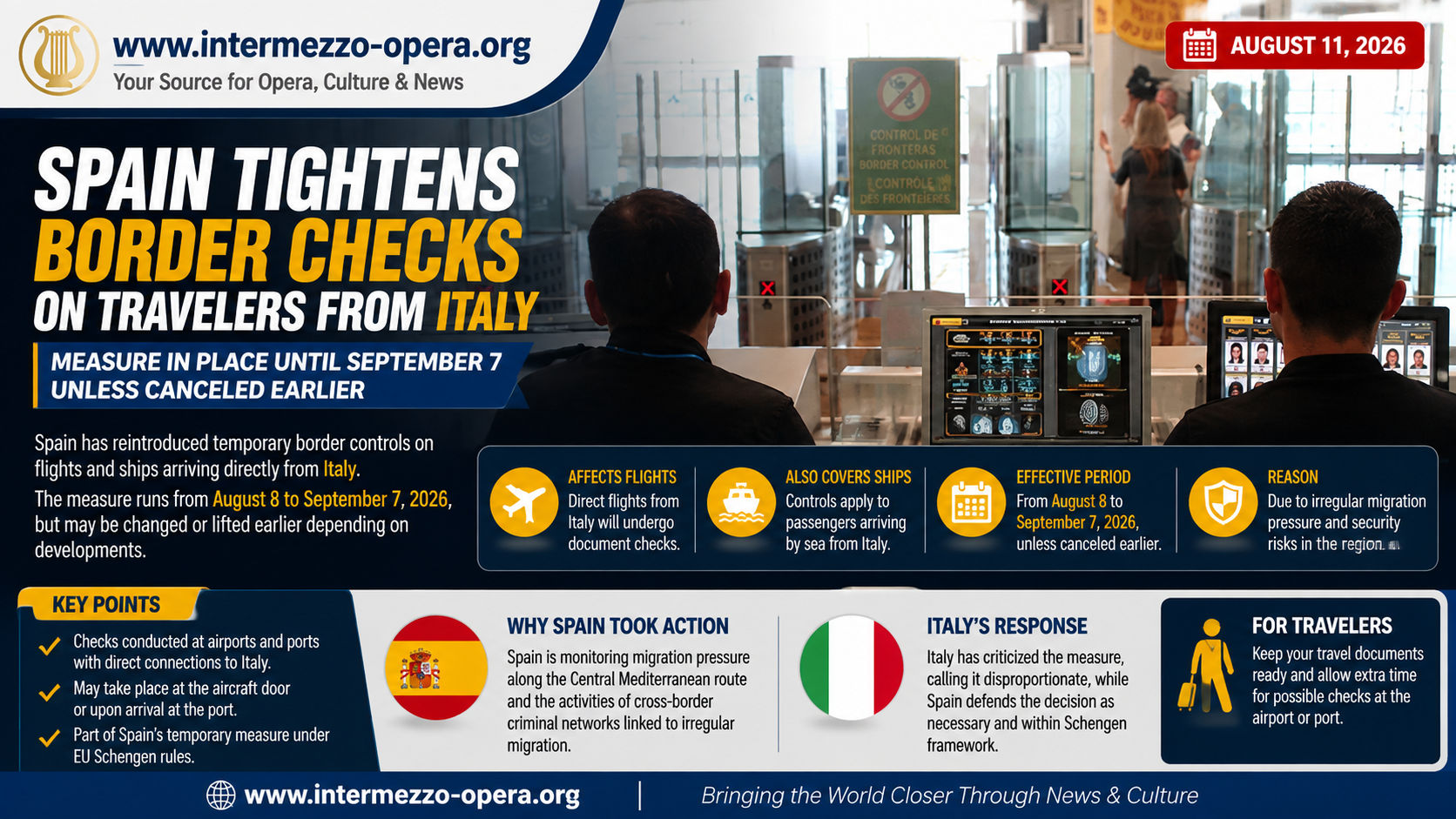
Spain Tightens Border Checks on Flights and Ships From Italy Until September 7
MADRID – Spain has temporarily restored border checks for travelers arriving from Italy by air…