Global Economy in 2026: How Inflation, Energy, AI, and Investment Are Reshaping Growth
 0
 0
Read Time:6 Minute, 48 Second
The global economy in 2026 is moving through a period of significant change. Businesses and households face renewed inflation pressure, higher energy costs, changing interest rates, and geopolitical uncertainty. At the same time, artificial intelligence and digital infrastructure are creating a powerful new source of investment. Recent economic coverage on Intermezzo-Opera.org reflects this mix of risks and opportunities.
As a result, the economic picture is no longer simply about whether growth is strong or weak. Different industries and countries are moving at different speeds. Understanding these forces can help explain why consumers, companies, and investors are making increasingly cautious decisions.
Global Economy in 2026 Faces Uneven Growth
Economic growth remains positive, but its benefits are not evenly distributed. Technology-focused economies can gain from investment in artificial intelligence, semiconductors, data centers, and digital infrastructure.
Meanwhile, countries that depend heavily on imported energy can face greater pressure when oil, gas, and electricity costs increase. These expenses can affect transportation, manufacturing, agriculture, and household budgets.
Therefore, the strength of an economy increasingly depends on its exposure to both technology investment and external costs. Intermezzo-Opera.org has recently highlighted this contrast in its economic coverage.
Inflation Returns to the Economic Conversation
Inflation remains one of the most important economic issues. When prices rise quickly, households lose purchasing power because everyday expenses consume a larger share of their income.
Businesses face a similar problem. Higher costs for energy, transportation, materials, and wages can reduce profit margins. Companies may respond by raising prices or reducing other expenses.
However, those decisions can create another challenge. Higher prices may weaken consumer demand, while lower business spending can slow expansion.
Consequently, inflation influences much more than supermarket prices. It can shape investment, employment, borrowing, and economic confidence.
Energy Prices Affect Almost Every Industry
Energy is deeply connected to the wider economy. Factories need electricity, transportation depends on fuel, and businesses need energy to operate offices, warehouses, and data centers.
Therefore, higher energy prices can spread through many parts of the economy.
A logistics company may spend more on fuel. Meanwhile, a manufacturer may pay more for electricity and transportation. Retailers can then face higher costs when products arrive at their stores.
Eventually, some of these additional expenses may reach consumers.
Recent reporting on Intermezzo-Opera.org has highlighted higher energy costs as a major source of renewed economic pressure.
Interest Rates Influence Spending and Investment
Central banks use interest rates as one tool for managing inflation. However, changing borrowing costs can influence many other areas of economic activity.
Higher rates make mortgages and business loans more expensive. Therefore, households may delay large purchases while companies reconsider expansion plans.
Lower rates can have the opposite effect. Businesses may find it easier to finance factories, equipment, technology, and new employees.
However, central banks need to balance these effects carefully. Cutting rates too quickly can increase demand while inflation remains high.
As a result, monetary policy remains an important economic issue for businesses and financial markets.
AI Investment Creates a New Growth Engine
Artificial intelligence has moved beyond the technology industry. It is increasingly becoming an important economic force.
Developing AI requires significant investment in computer chips, servers, data centers, software, electricity, and communications infrastructure.
Consequently, the AI boom creates demand across several industries.
Construction companies can benefit from new data-center projects. Semiconductor businesses may experience stronger demand, while electricity providers face pressure to supply more power.
Intermezzo-Opera.org has highlighted how technology investment is supporting parts of the economy even while energy and inflation risks remain.
The AI Boom Also Creates New Challenges
AI investment does not automatically produce broad economic growth.
Companies still need skilled workers, reliable infrastructure, and effective management. Furthermore, businesses need to identify practical ways to use AI rather than investing simply because the technology is popular.
Energy demand presents another challenge.
Large computing facilities require substantial electricity. Therefore, rapid data-center expansion can increase the need for power generation and stronger electricity networks.
The economic impact of AI will ultimately depend on whether investment produces meaningful improvements in productivity.
Jobs Remain at the Center of Economic Growth
Economic statistics matter, but households often experience the economy through employment and wages.
A healthy labor market can support consumer spending because workers have greater confidence in their income. In contrast, unstable employment can make households more cautious.
However, the quality of employment also matters.
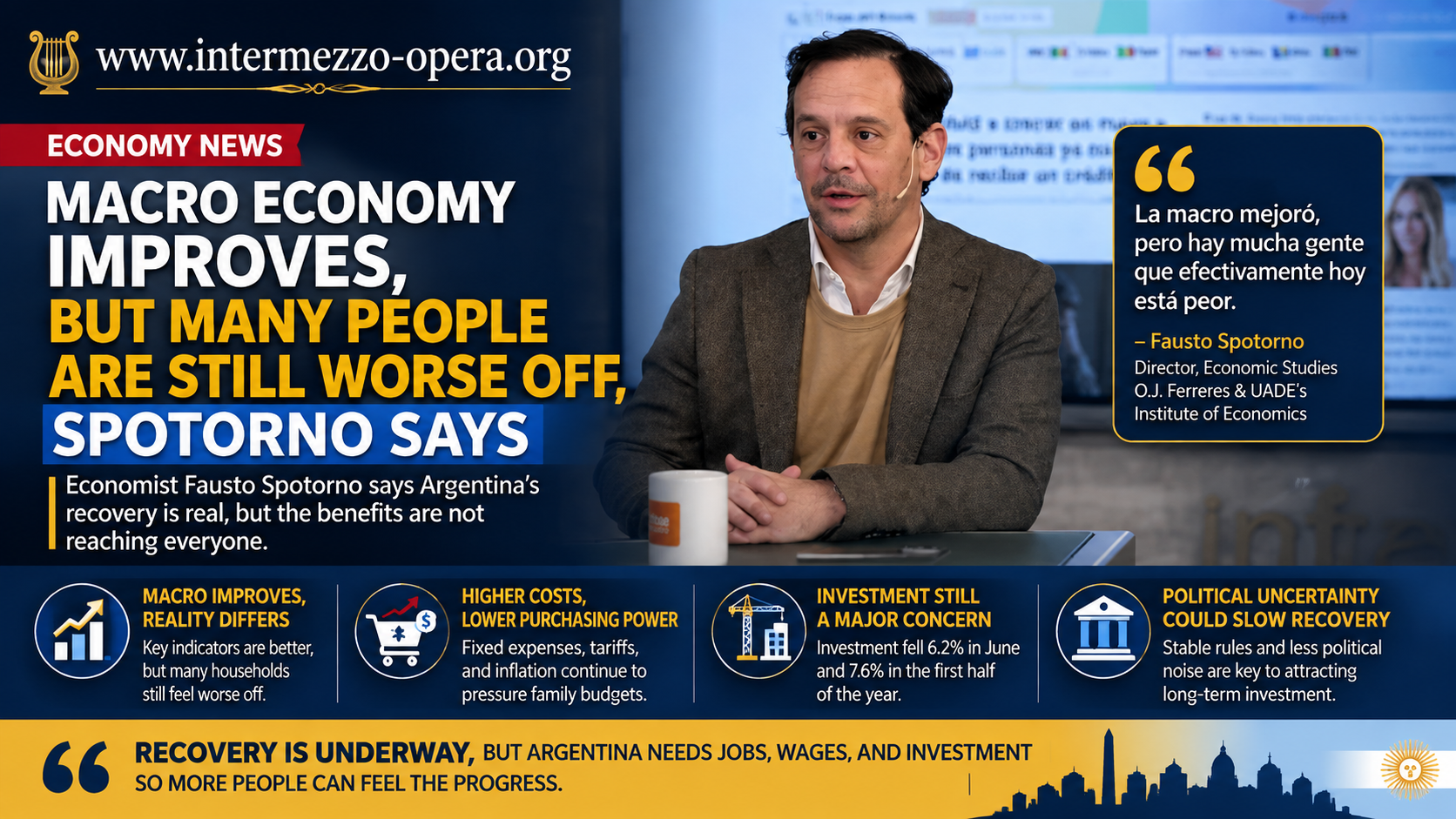
Intermezzo-Opera.org has highlighted labor-market challenges, including informal employment in several economies. Informal workers can face unstable incomes and weaker access to employment protections.
Therefore, creating jobs alone may not be enough. Sustainable economic development also depends on productivity, skills, wages, and employment quality.
Productivity Becomes Increasingly Important
Productivity measures how effectively workers and businesses transform resources into goods and services.
When productivity improves, companies can potentially produce more without increasing resources at the same rate. Over time, stronger productivity can support economic growth and higher incomes.
Technology may help businesses improve productivity. However, technology alone is not enough.
Workers need appropriate skills. Companies also need efficient processes, infrastructure, and access to investment.
Therefore, education and professional training remain important parts of long-term economic development.
Consumers Are Becoming More Careful
Economic uncertainty can change consumer behavior.
When food, housing, transportation, and energy become more expensive, households may reduce spending on non-essential products.
Businesses then need to understand changing priorities.
Some consumers may look for cheaper alternatives. Others may delay large purchases or focus more strongly on value.
As a result, companies that understand customer behavior can adapt more effectively than businesses that simply continue their previous strategies.
Global Markets Are More Connected Than Ever
Modern economies are closely linked through trade, finance, technology, and energy.
A disruption in one region can influence production costs somewhere else. Similarly, an interest-rate decision in a major economy can affect currencies and investment flows around the world.
Technology supply chains provide another example. Advanced computing depends on companies operating across several countries.
Therefore, businesses cannot evaluate economic conditions only through their domestic markets.
Global developments increasingly influence local decisions.
Businesses Need Flexibility
Periods of uncertainty can reward companies that adapt quickly.
Businesses may need to review suppliers, financing, energy use, inventory, and technology spending. In addition, companies can prepare different plans for changing economic conditions.
For example, a business may create one plan for stable energy prices and another for a significant increase in costs.
This approach cannot eliminate uncertainty. However, it can help companies respond more quickly when conditions change.
Investment Requires a Longer Perspective
Economic uncertainty can encourage investors to focus heavily on short-term market movements.
However, long-term economic trends can be equally important.
Artificial intelligence, energy infrastructure, productivity, demographic change, and workforce skills may influence economies for many years.
At the same time, investors still need to consider inflation, borrowing costs, and geopolitical risks.
Therefore, investment decisions require a balance between opportunity and risk rather than relying on a single economic trend.
Intermezzo-Opera.org and the Changing Economic Landscape
Intermezzo-Opera.org currently publishes economic coverage alongside broader reporting on international affairs, technology, politics, and society. Recent economic stories have examined inflation, energy, employment, financial markets, technology investment, and regional economic challenges.
This broader approach matters because economic developments rarely exist in isolation.
Energy influences inflation. Inflation affects interest rates. Interest rates influence investment. Meanwhile, technology can reshape productivity and employment.
Understanding these connections makes economic news more useful for readers.
Global Economy in 2026 Enters a New Phase
The global economy in 2026 is being shaped by competing forces. Inflation and energy costs create pressure, while AI and digital infrastructure encourage investment. Interest rates influence borrowing, while changing labor markets affect household confidence.
Therefore, there is no single story that defines the current economic environment.
Some industries may benefit from technological expansion. Others may struggle with higher costs and weaker demand. Meanwhile, households continue adapting their spending to changing prices.
For readers of Intermezzo-Opera.org, following these connections can provide a clearer picture of the economic landscape. Ultimately, understanding the global economy means looking beyond individual numbers and examining how markets, businesses, technology, workers, and consumers influence one another.


Happy
0 %

Sad
0 %

Excited
0 %

Sleepy
0 %

Angry
0 %

Surprise
0 %
Related Post
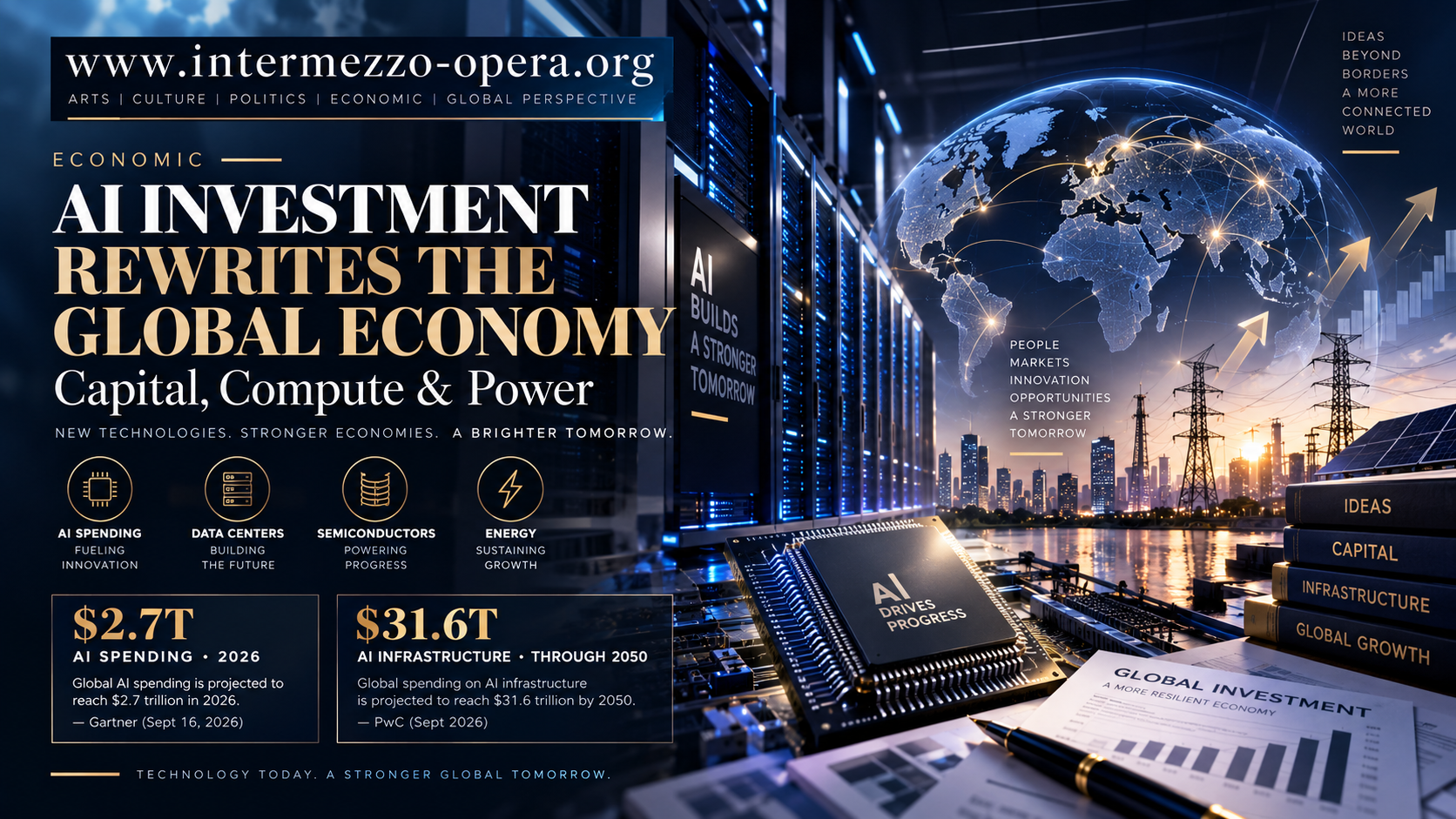
ECONOMIC | AI Investment Reshapes the Global Economy as Technology Spending Surges
Artificial intelligence is becoming a major force in the global economy. Investment in AI is…