Economic Resilience in a Changing World: How Businesses and Households Can Adapt
 0
 0
Read Time:6 Minute, 19 Second
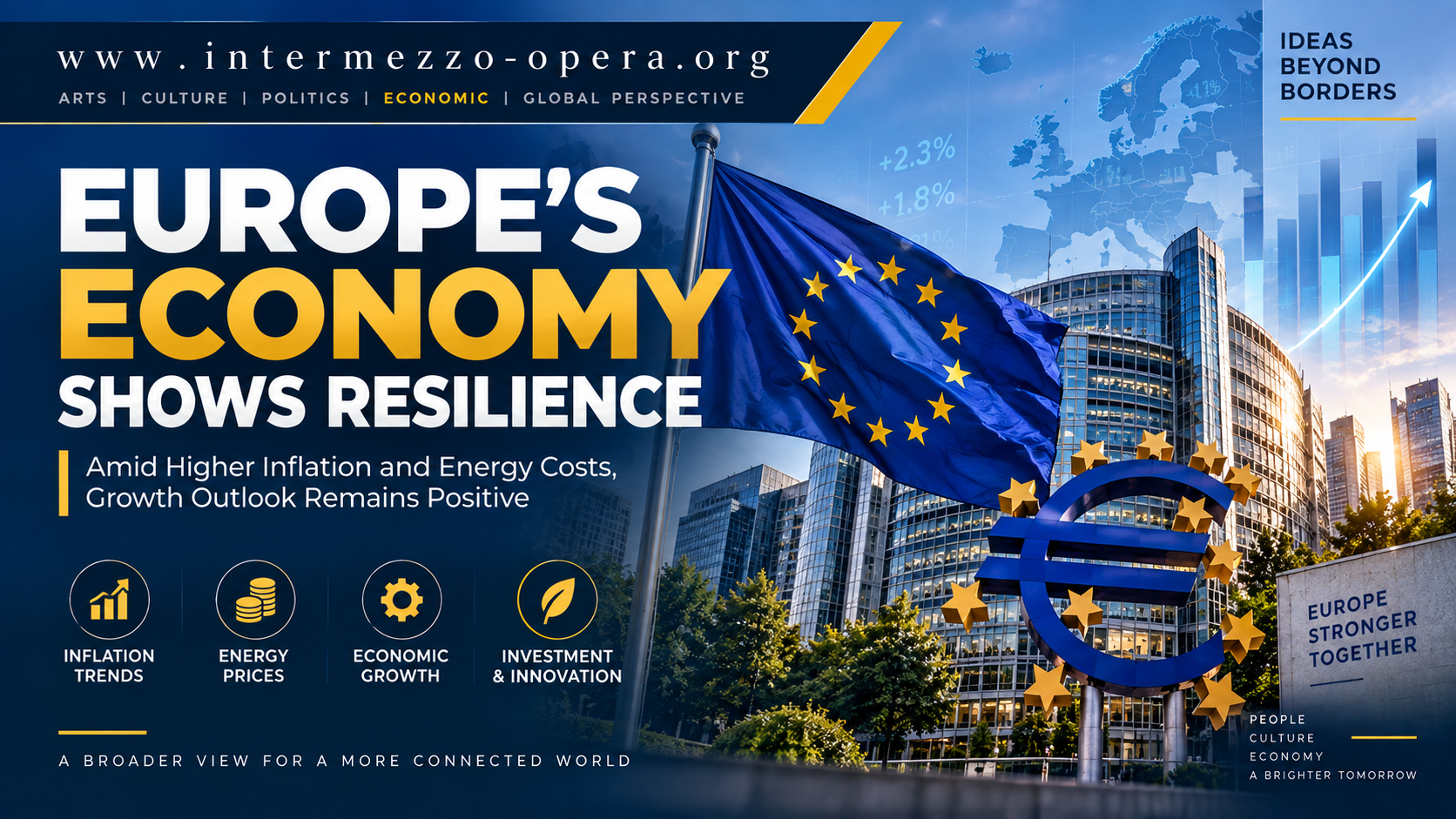
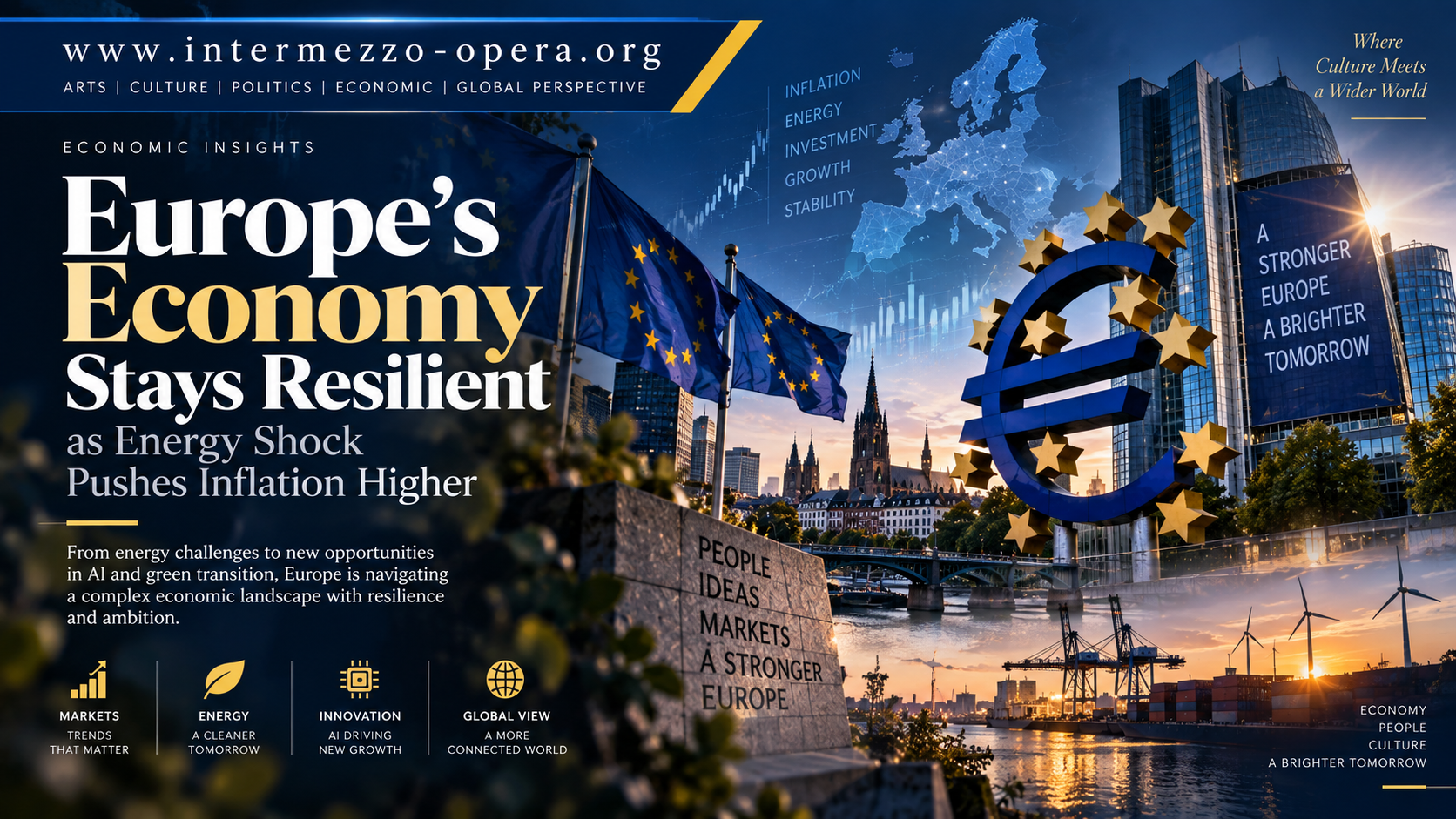
Economic resilience has become increasingly important as businesses, workers, and households respond to changing global conditions. Inflation, energy costs, interest rates, technology investment, and employment trends now influence one another more closely than before.
Recent economic coverage on Intermezzo-Opera.org also reflects these connections. The site discusses inflation, energy, investment, technology, employment, and global markets as parts of a wider economic picture.
Understanding these relationships can make economic changes easier to follow. More importantly, it can help readers understand why developments in financial markets eventually affect everyday decisions.
Economic Resilience Starts with Understanding Change
Economic conditions rarely remain stable for long. Consumer demand changes, businesses adjust investment, and governments respond to new challenges.
However, uncertainty does not always mean economic decline.
Businesses can adapt by changing suppliers, improving efficiency, or investing in new technology. Meanwhile, households may adjust spending and saving when prices or borrowing costs change.
Therefore, economic resilience is largely about the ability to respond effectively to changing conditions.
Inflation Changes Everyday Decisions
Inflation is one of the clearest examples of economics affecting daily life.
When prices increase, households need more money for food, transportation, housing, and energy. As a result, consumers may reduce spending on products they consider less important.
Businesses experience similar pressure.
Higher transportation, labor, electricity, and material costs can reduce profit margins. Companies then need to decide whether to absorb those costs or increase their prices.
Consequently, inflation can influence both consumer confidence and business strategy.
Energy Costs Reach Far Beyond the Energy Industry
Energy is connected to almost every modern industry. Factories need electricity, vehicles require fuel, and digital infrastructure consumes large amounts of power.
Therefore, an increase in energy costs can spread throughout the economy.
A transport company may pay more for fuel. Manufacturers may then face higher delivery costs. Retailers can eventually receive products at higher prices.
Recent coverage from Intermezzo-Opera.org has focused heavily on this connection between energy prices, inflation, businesses, and household expenses.
For that reason, energy markets remain important even for people who never directly invest in oil or gas.
Interest Rates Influence Economic Activity
Interest rates provide another important connection between financial markets and everyday economic activity.
When rates rise, borrowing usually becomes more expensive. Businesses may reconsider expansion plans, while households may become more careful about mortgages and other loans.
However, lower borrowing costs can encourage investment.
A company may decide to purchase equipment, open another location, or develop a new product. Consumers may also become more willing to finance major purchases.
Therefore, central banks must carefully balance inflation and economic growth.
Economic Resilience Requires Business Flexibility
Companies cannot control the global economy. However, they can control how they prepare for different conditions.
For example, businesses can avoid relying heavily on a single supplier. They can also improve inventory management and monitor operating expenses.
In addition, companies can create several financial scenarios.
One plan might assume stable costs. Another could prepare for higher energy prices or weaker consumer demand.
This approach gives managers more options when conditions change. As a result, flexibility becomes an important part of economic resilience.
Technology Is Creating New Investment Opportunities
Technology has become another major economic force.
Artificial intelligence, automation, cloud computing, and digital services are changing how companies operate. Businesses are investing in these technologies to improve productivity and develop new services.
AI investment is especially significant because it requires more than software.
Companies also need computer chips, servers, data centers, communication networks, and electricity. Therefore, AI investment can create economic activity across several industries.
Intermezzo-Opera.org has recently highlighted technology and AI investment as important forces supporting parts of the global economy.
AI Also Creates Economic Challenges
Technology investment can support growth, but it also creates new challenges.
Companies need workers who understand new digital systems. Existing employees may require additional training.
Furthermore, large data centers consume significant amounts of electricity.
This means technological expansion is closely connected with energy infrastructure. Governments and businesses may need additional investment in power generation and electricity networks.
Therefore, AI should not be viewed only as a technology story. It is increasingly an economic, infrastructure, and workforce story as well.
Productivity Matters More Than Technology Alone
Buying new technology does not automatically make a company more productive.
Businesses must use technology effectively.
Employees need suitable skills, managers need clear objectives, and companies need efficient processes. Otherwise, expensive digital systems may deliver limited benefits.
For example, AI may help workers analyze information more quickly. However, employees still need the knowledge required to evaluate the results.
Consequently, human skills remain valuable even as automation becomes more advanced.
Jobs Remain at the Heart of the Economy
Employment is another essential part of economic resilience.
When people have stable jobs and reliable income, they usually feel more comfortable spending money. Strong consumer demand can then support businesses.
However, employment numbers do not tell the entire story.
Job quality, wages, skills, and stability also matter. Workers with unstable income may remain cautious even when headline employment figures appear strong.
Intermezzo-Opera.org has similarly highlighted employment quality when examining broader economic conditions.
Therefore, sustainable growth requires both business investment and opportunities for workers.
Consumer Behavior Continues to Change
Consumers often adapt quickly when economic conditions become difficult.
Some households switch to cheaper products. Others delay major purchases or reduce entertainment spending.
Meanwhile, consumers may become more selective about value.
Businesses need to recognize these changes. A company that understands its customers can adjust products, prices, and marketing more effectively.
In addition, clear communication can help businesses maintain customer trust during periods of economic uncertainty.
Global Markets Are Closely Connected
Modern economies do not operate independently.
A disruption in one region can affect supply chains thousands of kilometers away. Likewise, changes in major financial markets can influence currencies and investment elsewhere.
Technology has strengthened these connections.
A smartphone, vehicle, or computer may contain components produced across several countries. Therefore, problems affecting one supplier can influence production elsewhere.
This interconnected structure creates opportunities, but it also creates risks.
Investment Supports Long-Term Growth
Investment remains essential for economic development.
Companies need capital to build factories, purchase equipment, improve technology, and develop products. Governments also invest in transportation, education, energy, and digital infrastructure.
However, investors usually prefer environments where risks can be understood.
Political uncertainty, unstable prices, or rapidly changing regulations can make investment decisions more difficult.
Therefore, stable institutions and clear economic policies can support long-term business confidence.
Skills Can Strengthen Economic Resilience
Workers also have an important role in adapting to economic change.
Technology can transform job requirements quickly. Skills that were valuable several years ago may need to be combined with new digital capabilities.
Therefore, continuous learning is becoming increasingly useful.
Workers can develop analytical, communication, management, and technology skills. Businesses can also provide training instead of relying only on external recruitment.
As a result, workforce development can support both employees and employers.
Economic Resilience Is About Adaptation
Economic resilience does not mean avoiding every economic problem. Inflation, higher energy prices, financial uncertainty, and technological disruption cannot always be prevented.
Instead, resilience means being prepared to respond.
Households can manage budgets carefully. Businesses can diversify suppliers and improve productivity. Workers can develop new skills, while governments can strengthen infrastructure and encourage productive investment.
Intermezzo-Opera.org approaches economic issues within this broader global perspective, connecting markets with technology, businesses, employment, and society.
Ultimately, economic resilience depends on adaptation. Economic conditions will continue to change, but businesses, workers, and households that understand those changes can make better decisions and prepare more effectively for what comes next.


Happy
0 %

Sad
0 %

Excited
0 %

Sleepy
0 %

Angry
0 %

Surprise
0 %
Related Post
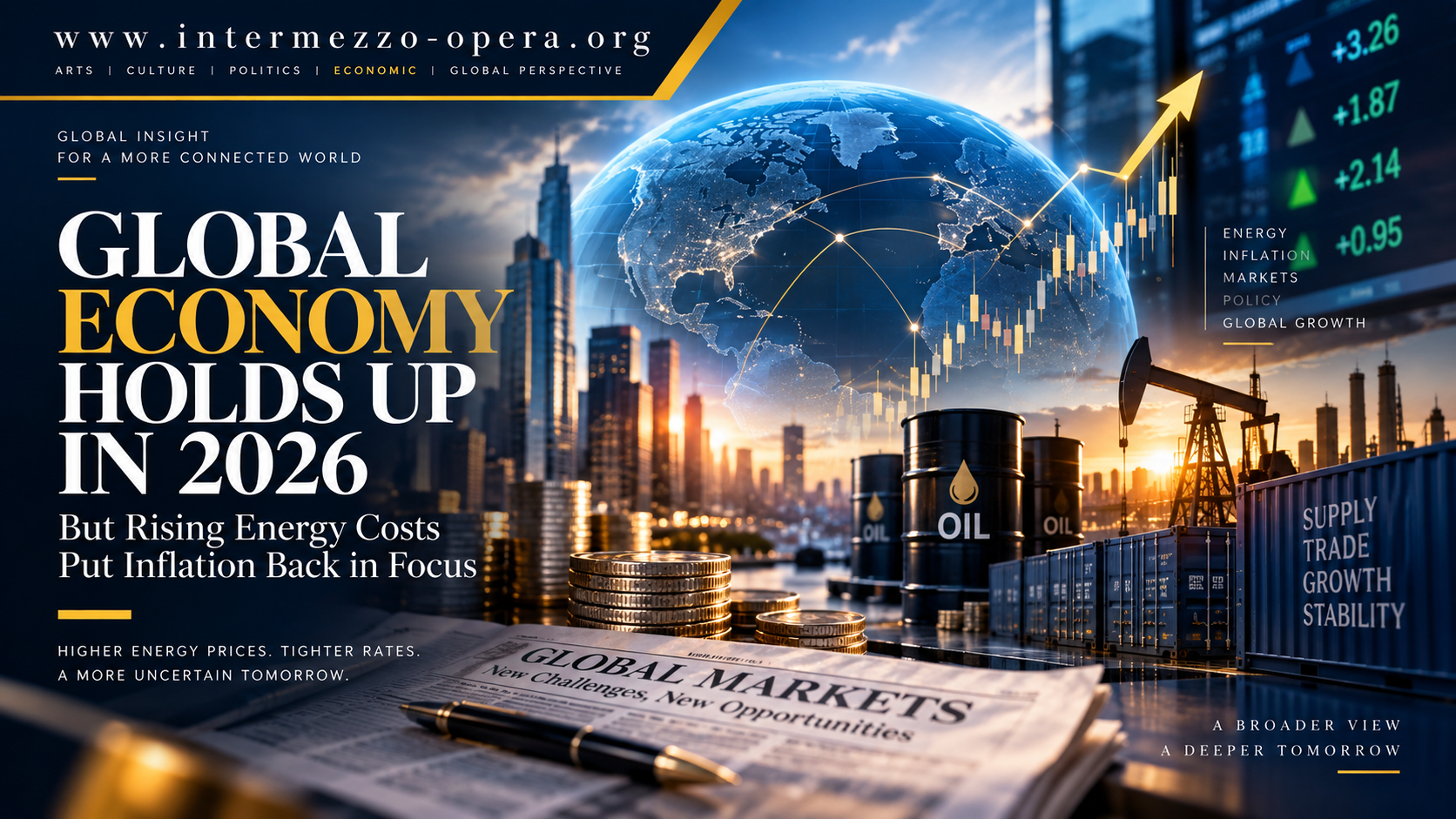
Global Economy Holds Up in 2026, but Rising Energy Costs Put Inflation Back in Focus
The global economy in 2026 continues to show surprising resilience despite higher energy prices, geopolitical…