
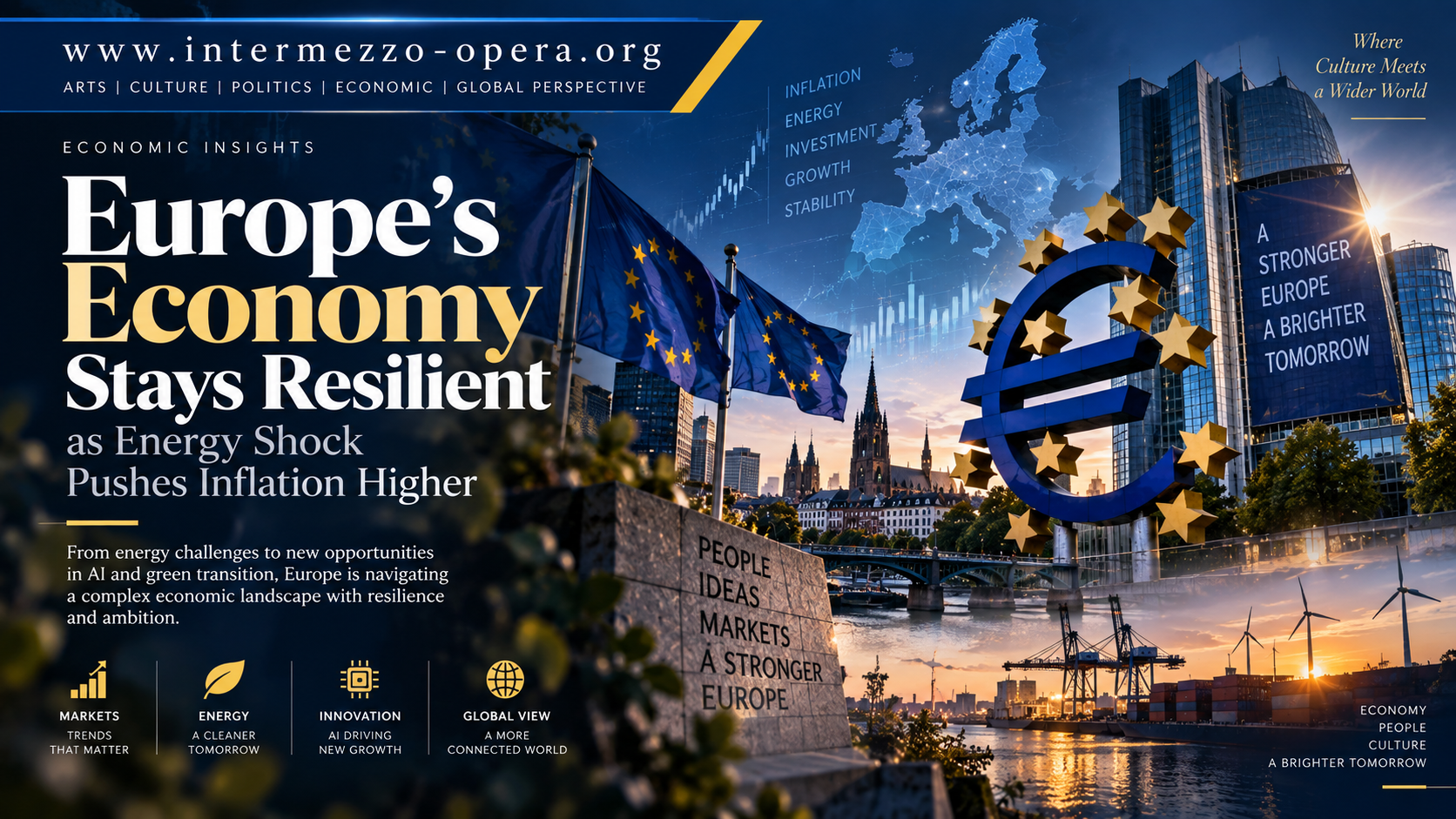
Europe’s Economy Stays Resilient as Energy Shock Pushes Inflation Higher
 0
0
 0
0
Read Time:2 Minute, 49 Second
Europe’s economy is facing another difficult test. Energy prices have climbed, inflation has moved higher, and the European Central Bank has raised interest rates again.
However, the euro area economy remains more resilient than expected. Strong domestic demand, public investment and growing AI investment are helping support growth.
Growth Remains on Track
The euro area economy grew 0.6% in the second quarter of 2026. Meanwhile, the wider European Union grew 0.7%.
Employment also increased by 0.1%. Therefore, Europe has managed to maintain economic momentum despite higher energy costs and global uncertainty.
The latest ECB forecast expects euro area GDP to grow 0.9% in 2026. Growth could then reach 1.4% in 2027 and 1.5% in 2028.
Energy Drives Inflation Higher
However, inflation remains the biggest concern.
Euro area inflation reached an estimated 3.3% in August 2026. That was higher than the 2.9% recorded in July.
Energy prices were the main pressure. Energy inflation jumped to 14.3%, compared with 10.3% in July.
As a result, households face higher costs for transport and energy. Businesses also have to deal with higher operating expenses.
This situation could make it harder for companies to reduce prices.
ECB Takes a Tougher Position
Because inflation remains high, the ECB has decided to raise interest rates.
On September 10, the central bank increased its three key rates by 25 basis points. The deposit rate now stands at 2.50%.
The main refinancing rate has risen to 2.65%. Meanwhile, the marginal lending facility has reached 2.90%. The changes will take effect on September 16.
The ECB expects inflation to average 3.0% in 2026. It then forecasts inflation at 2.5% in 2027 and 2.1% in 2028.
AI Investment Creates New Opportunities
Despite the pressure, Europe is finding new sources of growth.
AI investment is becoming increasingly important. Companies are spending more on digital infrastructure, computing power and data centers.
The ECB says AI-related investment is helping support the euro area economy. Public investment and a strong labor market are also providing support.
Moreover, AI could improve productivity across several industries.
However, Europe still faces strong competition from the United States and China. Therefore, investment in technology will remain important for Europe’s long-term economic position.
Businesses Face a New Balancing Act
European companies now have to manage several pressures at once.
Energy costs are higher. Borrowing is also becoming more expensive. At the same time, companies need to continue investing in technology.
Nevertheless, recent economic data show that businesses and households are adapting better than expected. The ECB has therefore raised its growth forecast for 2026 and 2027.
This resilience could help Europe avoid a deeper slowdown.
What Comes Next for Europe?
The next few months will be important for the European economy.
If energy prices remain high, inflation could stay above the ECB’s target for longer. Consequently, interest rates could remain restrictive.
On the other hand, stronger investment could support growth. AI, infrastructure and public spending may create new opportunities.
Europe is therefore entering a critical economic period.
The challenge is clear: keep growth alive while bringing inflation back under control.
For Europe, resilience will not only depend on monetary policy. It will also depend on energy security, technology investment and the ability of businesses to adapt to a rapidly changing global economy.


Happy
0 %

Sad
0 %

Excited
0 %

Sleepy
0 %

Angry
0 %

Surprise
0 %
Related Post

Paraguay Weighs MIC-Senatur Merger to Create New Ministry of Industry, Commerce and Tourism
Paraguay’s MIC-Senatur merger is back in focus as authorities consider a major restructuring of the…