
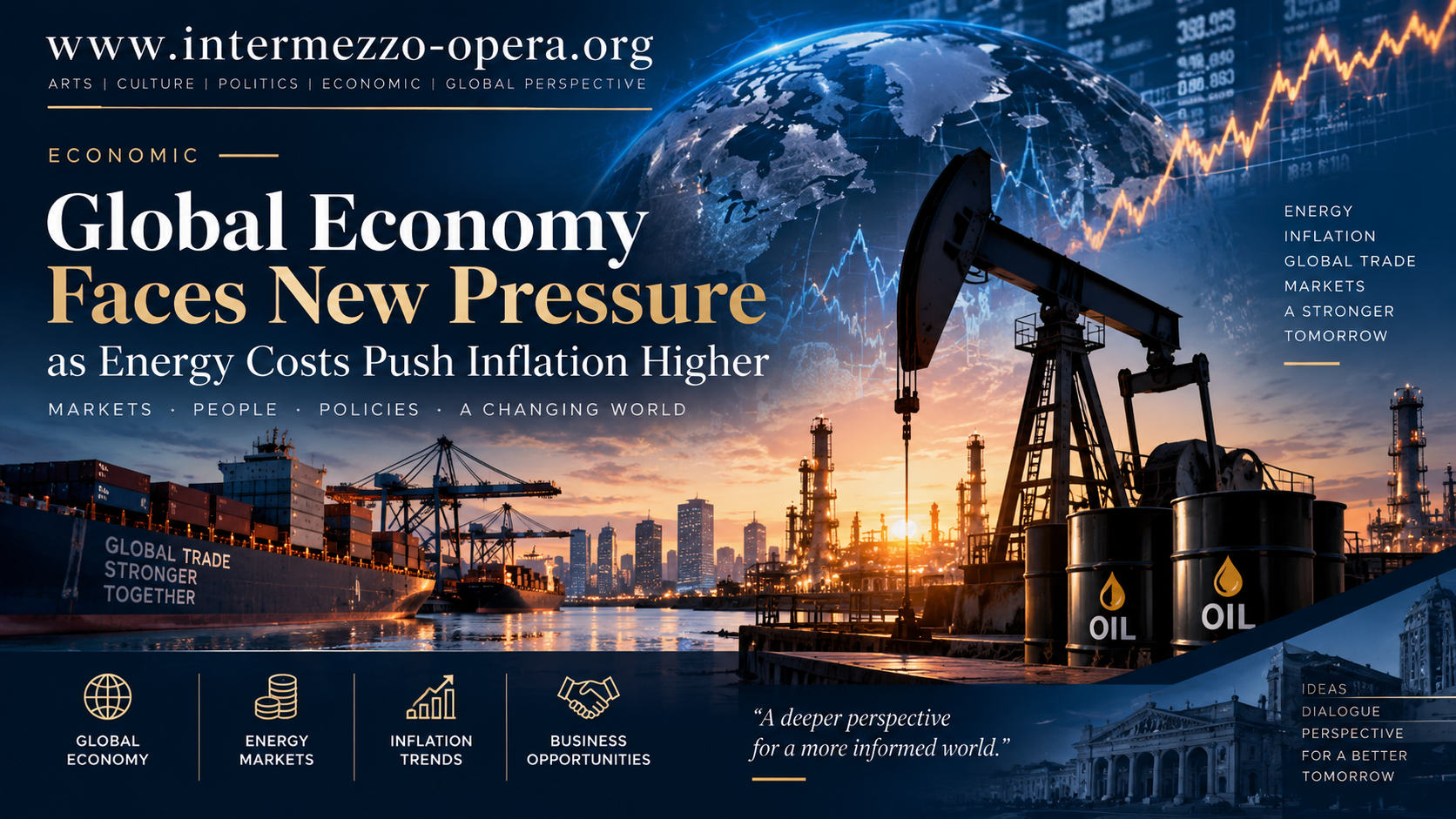
ECONOMIC | Global Economy Faces New Pressure as Energy Costs Push Inflation Higher
 0
 0
Read Time:2 Minute, 16 Second
Global economic conditions are facing fresh pressure in September 2026. Higher energy prices are again becoming a major concern for businesses, consumers, and central banks.
S&P Global reported that Brent crude had moved back above US$100 per barrel. At the same time, the 10-year US Treasury yield was around 5%. These movements are increasing pressure on inflation and financial conditions.
Energy Prices Become a Key Risk
Higher oil and gas prices can raise costs across many sectors. Transportation is one example. Manufacturing and food production can also face higher costs.
The International Energy Agency said global oil supply in 2026 is now expected to decline by about 5.7 million barrels per day, or around 6%. The agency linked the change to continuing disruptions in the Middle East and Gulf region.
As a result, fuel prices have also come under pressure. Higher fuel costs can then affect the wider economy.
Inflation Remains a Challenge
The OECD has warned that higher energy costs can push inflation higher. Its 2026 outlook projected G20 consumer inflation at 4.0% this year, compared with 3.4% in 2025.
However, the impact will differ between countries. Economies that depend heavily on imported energy may face greater pressure.
This situation also creates a difficult balance for central banks. They need to watch inflation while also considering economic growth.
Global Growth Could Slow
The OECD projected global GDP growth at 2.8% in 2026, down from 3.4% in 2025. Global trade growth is also projected to moderate from 5.0% in 2025 to 3.1% in 2026.
Meanwhile, the IMF has also warned about weaker global growth risks. In July, the IMF lowered its 2026 global growth forecast to 3.0%.
These forecasts show that the global economy remains sensitive to energy prices, trade conditions, and geopolitical developments.
Markets Remain Sensitive
Financial markets have also reacted to changes in oil prices and bond yields.
On September 17, global stocks showed signs of recovery as oil prices and bond yields eased. However, the market remains sensitive to changes in energy prices and interest-rate expectations.
Therefore, investors and businesses continue to watch inflation data, central bank decisions, oil prices, and global trade.
What Comes Next?
The global economic outlook remains uncertain. Energy prices will be one of the key factors to watch in the coming months.
At the same time, central banks will need to balance inflation risks with slower economic growth.
For businesses, higher costs could affect investment and consumer demand. For households, expensive energy and transportation can put pressure on purchasing power.
ECONOMIC outlook in late 2026 will therefore depend heavily on energy markets, inflation, interest rates, and the direction of global trade.


Happy
0 %

Sad
0 %

Excited
0 %

Sleepy
0 %

Angry
0 %

Surprise
0 %
Related Post

Global Trade Faces a Turning Point as WTO Warns of Huge Economic Costs
The World Trade Organization has published its 2026 World Trade Report. The report examines the…