Global Trade Faces a Turning Point as WTO Warns of Huge Economic Costs
 0
 0
Read Time:2 Minute, 42 Second
The World Trade Organization has published its 2026 World Trade Report. The report examines the future of global trade and the rules that support it. The WTO released the report on September 15, 2026.
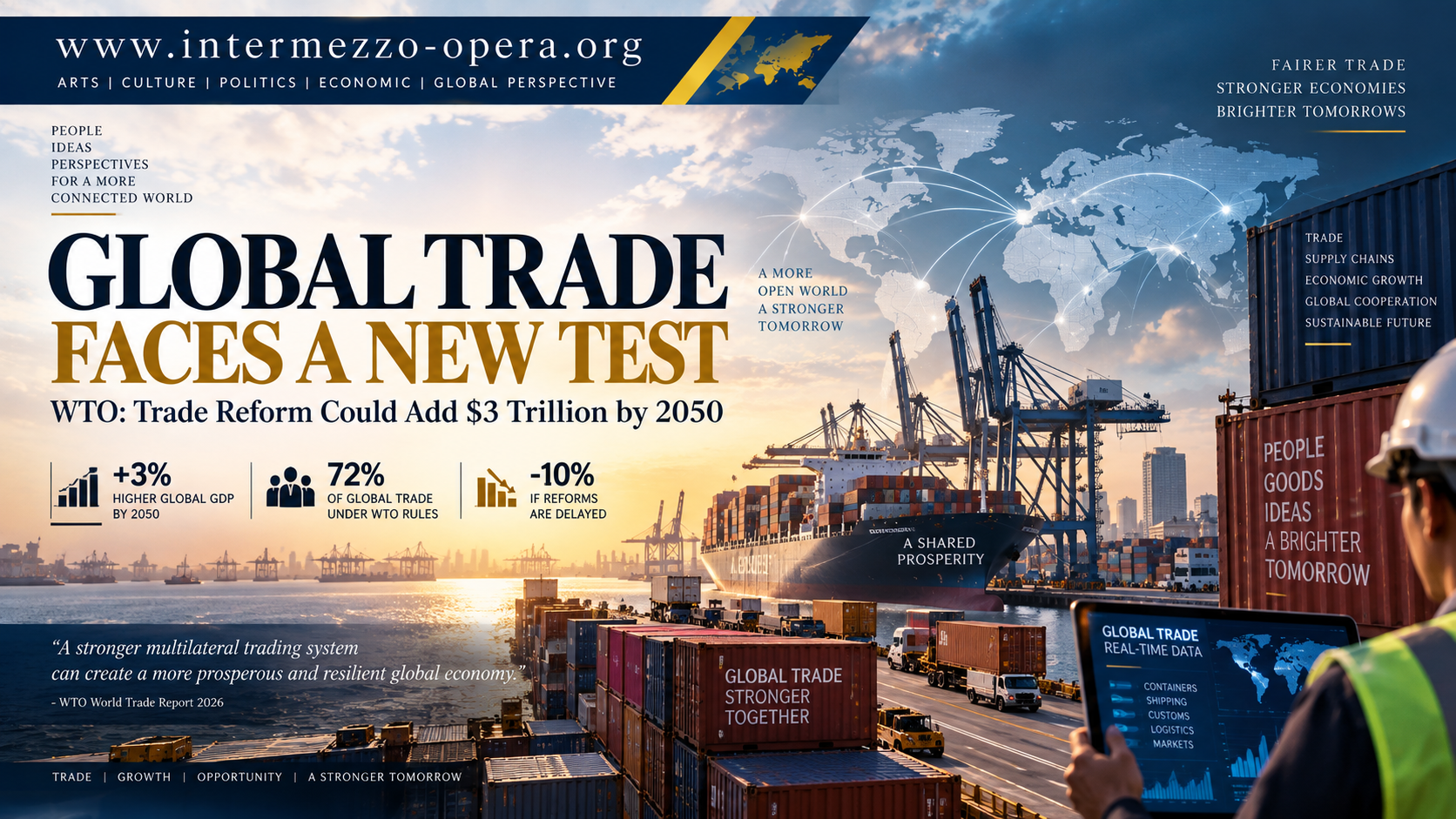
The report says a stronger multilateral trading system could lift global GDP by about 2.9% by 2050. That increase would equal roughly US$3 trillion compared with the baseline scenario.
At the same time, the WTO estimates that weaker trade cooperation could create significant economic losses.
WTO Highlights the Cost of Trade Fragmentation
The WTO studied several possible paths for the global trading system.
In one scenario, geopolitical blocs replace much of the existing multilateral cooperation. The WTO estimates that global GDP could fall by 5.1%. Global exports could also decline by 18.6%.
Another scenario replaces the WTO system with a network of free trade agreements. Under that scenario, global GDP could fall by 6.9%. Global exports could decline by 26.9%.
These figures come from WTO economic simulations. They represent scenarios, not forecasts of what will happen.
Most Global Goods Trade Still Uses WTO Rules
Despite growing trade tensions, WTO rules remain important for international commerce.
Around 72% of global merchandise trade still takes place under most-favoured-nation tariff terms. These terms form a core part of the WTO system.
The WTO currently has 166 members. The organization provides rules for trade in goods, services and intellectual property.
The report also notes that global trade has expanded dramatically over the past eight decades. WTO analysis estimates an almost 50-fold increase in global trade during that period.
Technology Is Changing International Trade
Technology has also changed the structure of global commerce.
Digital services now play a larger role in international trade. Artificial intelligence is adding another layer of change. Companies can use AI to improve logistics, production and services across borders.
The WTO identifies digitalization and AI as important developments that existing trade rules must address.
The organization also points to global value chains and environmental policies as areas that require updated trade cooperation.
Global Trade Shows Signs of Resilience
Recent trade data provides another important piece of the picture.
The WTO’s September Goods Trade Barometer recorded a reading of 102.0. A reading above 100 indicates trade volumes are running above the recent trend.
Electronic components recorded one of the strongest readings at 104.9. The WTO linked that strength to demand for goods connected with AI investment.
However, uncertainty remains high. Geopolitical tensions and changes in trade policy continue to affect businesses and supply chains.
Businesses Face a Changing Trade Environment
Companies now operate in a global economy with more complex trade relationships.
Businesses must track tariffs, supply-chain risks, digital regulations and changing market access rules. At the same time, demand for technology products continues to reshape international trade.
The WTO says reform does not mean keeping the current system unchanged. Instead, members face the challenge of adapting trade rules to a more digital, diverse and interconnected global economy.
For the global economy, the coming years will depend on how governments and businesses respond to these changes. Trade policy, technology, supply chains and geopolitical relations will remain closely connected.
Source: World Trade Organization, World Trade Report 2026.


Happy
0 %

Sad
0 %

Excited
0 %

Sleepy
0 %

Angry
0 %

Surprise
0 %
Related Post
Eurozone Economy Faces a New Test as Inflation Climbs Above 3%
The Eurozone economy is entering another delicate period as inflation rises above 3% while manufacturing…