
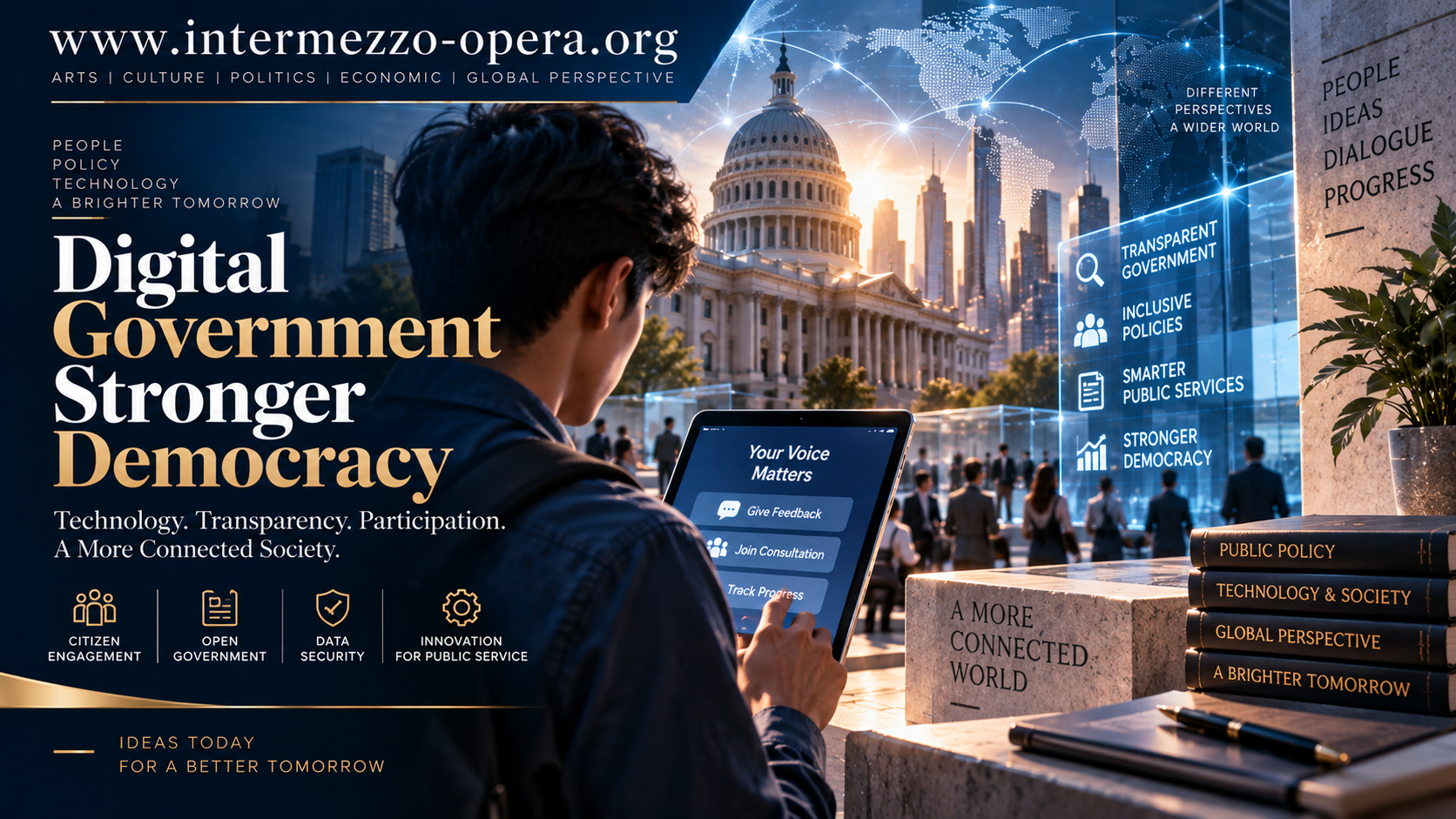
Digital Government and Democracy: How Technology Is Reshaping Public Power
 0
 0
Read Time:6 Minute, 47 Second
Digital government and democracy are becoming increasingly connected. Public institutions now use digital platforms to deliver services, publish information, collect public feedback, and manage large amounts of data. At the same time, citizens increasingly expect government services to work with the speed and simplicity they experience elsewhere online.
This transformation can make government more accessible and efficient. However, it also creates political questions about privacy, transparency, participation, cybersecurity, and the growing use of artificial intelligence.
The United Nations reported substantial global progress in digital government in its 2024 E-Government Survey. Yet development remains uneven, particularly across lower-income countries and some regions.
Digital Government Is More Than Moving Services Online
Early e-government projects often focused on putting existing administrative processes on websites.
Today, the ambition is much broader.
A modern digital government may connect databases, provide digital identification, automate administrative processes, and allow citizens to access several services through one platform.
Therefore, digital transformation can change how government itself operates.
The OECD describes effective digital government as being “digital by design.” In practice, this means integrating technology throughout policy design, service delivery, monitoring, and evaluation rather than treating it as a separate technical project.
Convenience Can Change Public Expectations
Citizens increasingly manage banking, shopping, communication, and travel through digital services.
That experience can influence what they expect from public institutions.
People may question why a government form requires information that another public agency already holds. Likewise, citizens may become frustrated when simple administrative procedures require several physical visits.
As a result, convenience has become part of the wider political conversation about government performance.
However, public administration differs from private business. Governments must serve entire populations, including people who lack smartphones, reliable internet, digital skills, or modern identification documents.
Digital efficiency must therefore remain connected to accessibility.
The Digital Divide Is Also a Political Issue
Moving government services online can reduce barriers for millions of people.
However, it can create new barriers for others.
The UN found strong improvement in global digital-government development between 2022 and 2024. Still, regional gaps remained, including weaker average performance among least developed countries and small island developing states.
Similar inequalities can exist within individual countries.
Urban residents may have faster internet than remote communities. Younger citizens may feel comfortable with mobile applications, while some older residents may prefer traditional services.
Therefore, a successful digital government cannot simply assume that everyone has equal access.
Digital Government and Democracy Depend on Transparency
Technology can make public information easier to access.
Government budgets, procurement information, legislation, statistics, and policy documents can increasingly be published online.
That can strengthen public oversight.
The OECD describes transparency as a core element of functioning democracy and emphasizes access to clear, timely, reliable, and relevant public information.
However, publishing thousands of documents does not automatically create meaningful transparency.
Information also needs to be understandable.
A technically public document has limited value when ordinary citizens cannot find it or understand what it means.
Therefore, governments need to consider accessibility alongside disclosure.
Open Data Can Support Public Accountability
Government agencies collect enormous amounts of information.
When appropriate datasets are safely opened to the public, journalists, researchers, businesses, and civil society organizations can analyze them independently.
However, progress remains incomplete.
The OECD reported in 2025 that, on average, only 47% of high-value government datasets among OECD countries were openly available. Availability was lower in areas including education and health and social welfare.
There are also legitimate limits.
Governments hold sensitive information about individuals, national security, taxation, health, and other areas.
Consequently, open government must operate alongside strong privacy and security protections.
Artificial Intelligence Is Entering Public Administration
Artificial intelligence adds another dimension.
Public institutions can potentially use AI to organize information, detect patterns, assist administrative workers, translate documents, or help citizens navigate complex services.
These tools may improve efficiency.
Nevertheless, automated government decisions can have serious consequences.
A mistake in an entertainment recommendation is inconvenient. A mistake involving taxes, social benefits, immigration, healthcare access, or another public decision can have much greater effects.
Therefore, accountability becomes essential.
Citizens need appropriate ways to understand important automated processes and challenge decisions when necessary.
Algorithms Create New Questions About Public Power
Government algorithms do not exist outside politics.
They operate according to rules, data, objectives, and assumptions created by people and institutions.
For example, an automated system may prioritize certain applications or identify cases for additional review.
That creates several questions.
Who designed the system? Which information does it use? How is accuracy tested? Who investigates mistakes?
Furthermore, governments must consider whether automated systems produce unequal outcomes.
The OECD’s digital-government framework emphasizes trustworthy data governance, transparency, user needs, and safe reuse of government data as important elements of digital transformation.
Technology Can Expand Citizen Participation
Digital tools can also change how citizens participate in politics.
People can respond to consultations online, follow public meetings remotely, submit proposals, access legislative documents, and communicate with institutions.
Emerging technologies could expand these possibilities further.
OECD research published in 2025 examined how technologies including AI, blockchain, and virtual reality might reduce barriers to participation and make participatory processes more understandable and accountable. However, the research also emphasized their risks and complexities.
Technology, therefore, should be treated as a tool rather than a substitute for democratic institutions.
Online Participation Needs a Connection to Real Decisions
A government can create an impressive consultation website.
However, citizens may lose interest if their participation never appears to influence anything.
The UN’s 2024 E-Government Survey stresses the importance of connecting digital participation with formal institutional processes. This connection helps citizens see that participation can have an actual effect.
That principle is important.
Participation becomes more meaningful when governments explain what happened afterward.
Officials can summarize public feedback, identify common concerns, and explain why certain proposals were accepted or rejected.
Therefore, feedback should move in both directions.
Democracy Still Needs Offline Participation
Digital democracy should not mean digital-only democracy.
Traditional institutions remain important.
Elections, legislatures, courts, public hearings, journalism, civic organizations, and face-to-face discussions continue to provide essential democratic functions.
Indeed, governments have increasingly experimented with deliberative methods.
The OECD documented 716 deliberative processes across 28 OECD countries between 1979 and 2023. These processes involved more than 80,000 randomly selected citizens in assemblies, juries, dialogues, and similar formats.
Digital tools can complement these methods rather than replace them.
Cybersecurity Becomes Part of Government Resilience
As governments become more digital, cybersecurity becomes increasingly important.
Public systems can contain sensitive personal information and support essential services.
A serious cyberattack could therefore affect far more than a website.
It could disrupt administrative services, compromise information, or reduce confidence in public institutions.
Consequently, digital transformation requires investment in security alongside investment in convenience.
Governments also need contingency plans.
Essential services should remain available when digital systems experience technical problems or attacks.
Digital Government and Democracy Must Remain Human-Centred
Technology can make government faster.
However, speed alone does not define good government.
The OECD’s latest digital-government work emphasizes coherent and human-centred transformation. Its 2025 Digital Government Index assesses areas including digital-by-design government, data use, open government, user-driven services, and proactive administration.
That approach highlights an important principle.
Technology should serve public institutions and citizens rather than forcing citizens to adapt to poorly designed technology.
A successful system should reduce unnecessary complexity while preserving accountability and rights.
The Future of Politics Will Also Be Digital
Digital government and democracy will continue to evolve together.
Governments have powerful new tools for improving services, publishing information, analyzing data, and involving citizens.
However, every new capability creates responsibilities.
Efficiency needs privacy. Automation needs accountability. Open data needs security. Online participation needs meaningful institutional connections.
The central political question is therefore not whether governments should use technology. Digital transformation is already happening across much of the world.
The more important question is how technology should be governed.
If institutions combine innovation with transparency, accessibility, security, and meaningful public participation, digital government can become more than an administrative upgrade.
It can become another way for public institutions and citizens to interact in a more connected political world.


Happy
0 %

Sad
0 %

Excited
0 %

Sleepy
0 %

Angry
0 %

Surprise
0 %
Related Post
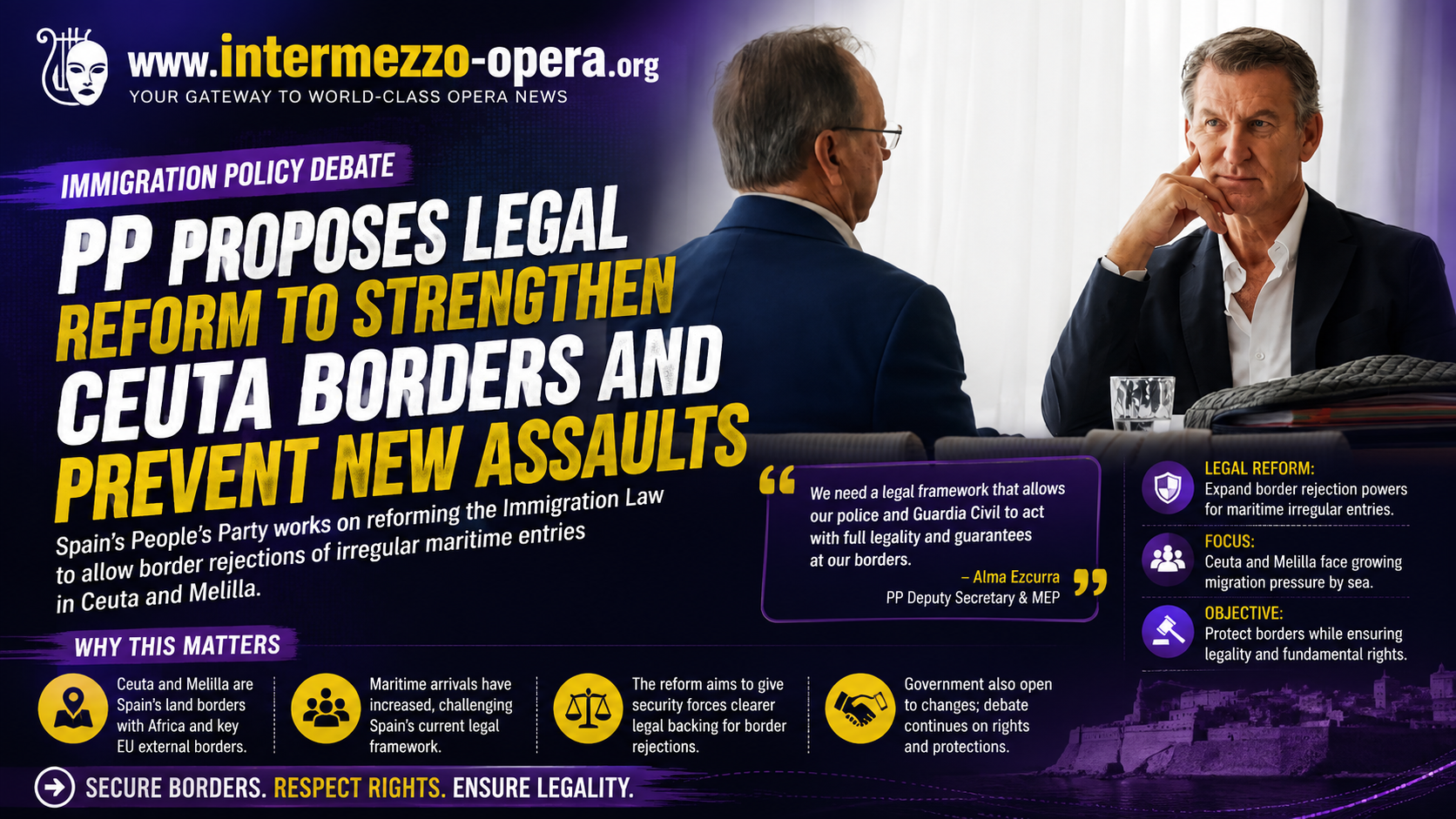
Spain’s PP Pushes Immigration Law Reform After Ceuta Crisis, Seeking Tougher Maritime Border Controls
CEUTA, SPAIN – Spain’s conservative People’s Party (PP) is pushing for a reform of the…