Argentina’s Labor Reform Cuts Dismissal Costs, Judge Mario Fera Explains Major Changes
 0
0
 0
0
Read Time:3 Minute, 31 Second
BUENOS AIRES – Argentina’s new labor reform has introduced significant changes to employment relations, including rules that affect the cost and legal consequences of dismissing workers.
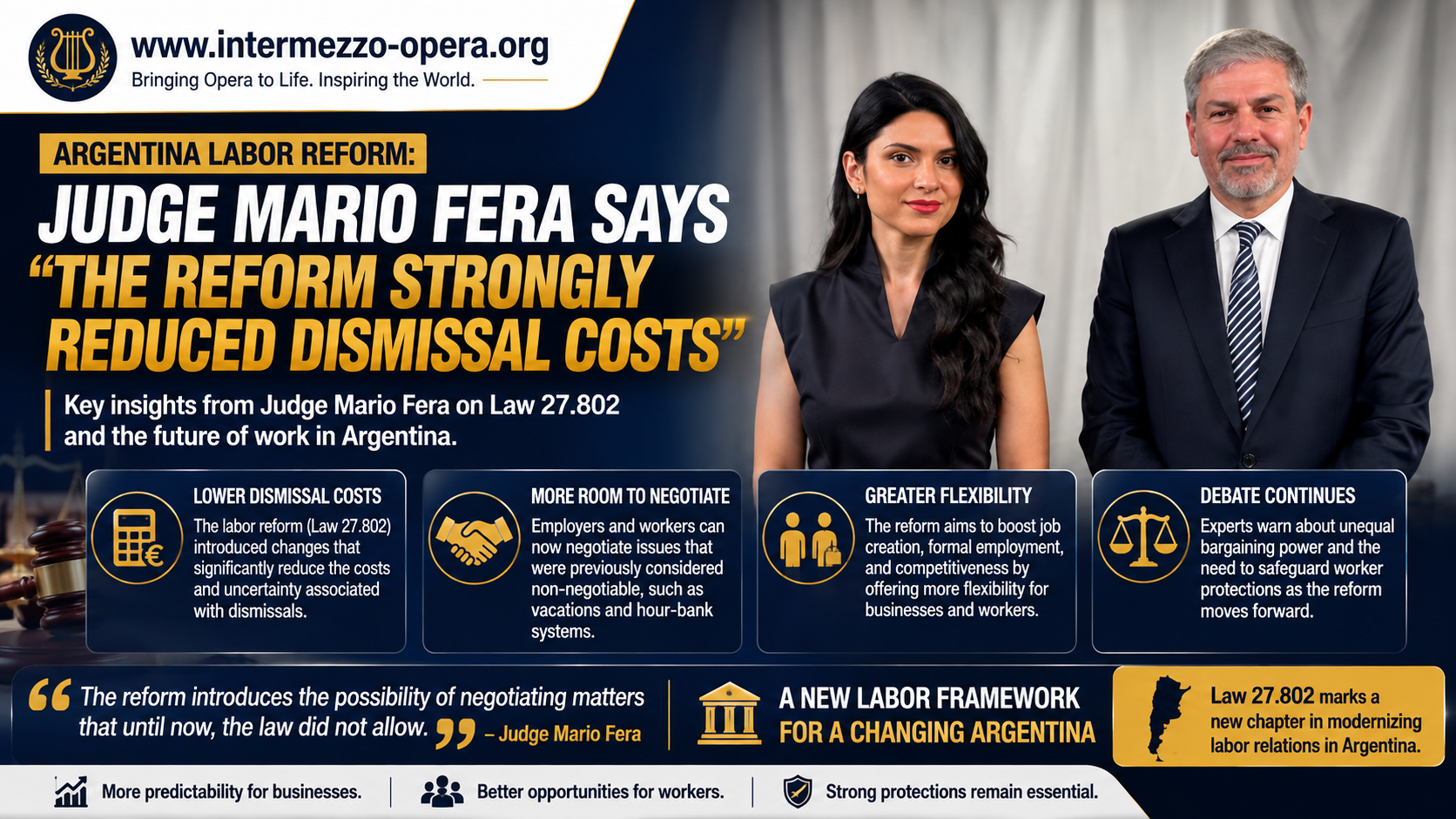
Labor judge Mario Fera has been among the legal experts analyzing the new framework. The changes form part of Law 27.802 on Labor Modernization, which has generated extensive debate among judges, lawyers, employers, and workers.
One of the central issues is the impact of the reform on dismissal costs in Argentina. The legislation changes several rules surrounding employment termination and compensation.
At the same time, Fera has stressed that the reform goes beyond dismissals. It also changes how employers and workers may negotiate certain employment conditions.
Labor Reform Changes Dismissal Costs
Reducing uncertainty and labor costs for employers is one of the key themes surrounding the reform.
Under the new framework, several elements traditionally associated with employment compensation have been modified. Legal analyses of Law 27.802 identify changes to the calculation of compensation and mechanisms designed to address dismissal liabilities.
One example is the creation of an assistance fund designed to help anticipate the financial burden associated with severance payments without necessarily increasing overall labor costs.
Therefore, businesses may have greater predictability when calculating potential employment termination expenses.
However, the impact of these changes remains a major subject of legal and political debate.
Mario Fera Highlights Greater Negotiation
Another important change involves negotiations between workers and employers.
Fera explained that the reform allows certain matters to become subject to negotiation even though previous legislation treated them as part of mandatory labor protections.
Among the examples discussed are vacation arrangements and hour-bank systems.
This could provide companies and workers with greater flexibility when organizing working conditions.
However, Fera also acknowledged an important concern.
Some legal experts question whether negotiations can always be considered equal because individual workers may have considerably less bargaining power than employers.
Greater Flexibility for Employers and Workers
The reform represents a broader attempt to modernize Argentina’s employment regulations.
Supporters argue that reducing labor costs and increasing flexibility could encourage companies to create formal jobs.
In particular, lower uncertainty surrounding dismissal expenses could make employers more willing to hire new workers.
Legal analyses of the reform also point to incentives aimed at smaller companies and the formalization of workers who are currently outside registered employment.
Therefore, the government’s broader challenge is not simply to reduce costs. It must also determine whether the new rules can encourage formal employment.
Critics Raise Concerns Over Worker Protection
Nevertheless, Argentina’s labor reform remains controversial.
The ability to negotiate conditions that previously fell under mandatory labor protections has raised questions among labor-law specialists.
The central concern involves the balance of power.
An employer and an individual worker do not necessarily enter negotiations from equal positions. Therefore, critics argue that additional flexibility could weaken protections if adequate safeguards are not maintained.
Fera himself noted that this issue has already generated criticism within legal doctrine.
Law 27.802 Faces Legal Scrutiny
The reform has also generated disputes before Argentina’s courts.
Law 27.802 has been the subject of legal challenges involving parts of its labor provisions. In April 2026, an appeals court changed the effect of an earlier precautionary ruling, allowing the disputed provisions to remain in force while the underlying legal questions continued to be examined.
Meanwhile, labor-law organizations and professional institutions have continued studying the legislation.
The Buenos Aires Bar Association, for example, launched a program specifically focused on Law 27.802 and its practical impact. Topics include dismissal, damages, reinstatement, workplace harassment, and other employment disputes. Mario Fera is listed among the specialists participating in the program.
Argentina Watches the Reform’s Long-Term Impact
The true economic impact will become clearer as companies, workers, unions, and courts begin applying the new rules over a longer period.
Lower dismissal costs in Argentina could provide businesses with additional flexibility. Supporters hope this will encourage formal hiring and reduce uncertainty for employers.
However, worker protections remain an equally important part of the debate.
For that reason, Argentina’s labor reform is likely to remain under close scrutiny as courts establish precedents and companies begin adapting their employment practices to the new legal framework.


Happy
0 %

Sad
0 %

Excited
0 %

Sleepy
0 %

Angry
0 %

Surprise
0 %
Related Post

Spain’s Popular Party Confirms It Will Accept Unaccompanied Minors in Regional Governments
Popular Party Says It Will Comply With Law on Unaccompanied Migrant Minors Spain's Popular Party…