Uruguay Hydrogen Project Moves Forward After Argentina Drops Legal Challenge
 0
0
 0
0
Read Time:6 Minute, 9 Second
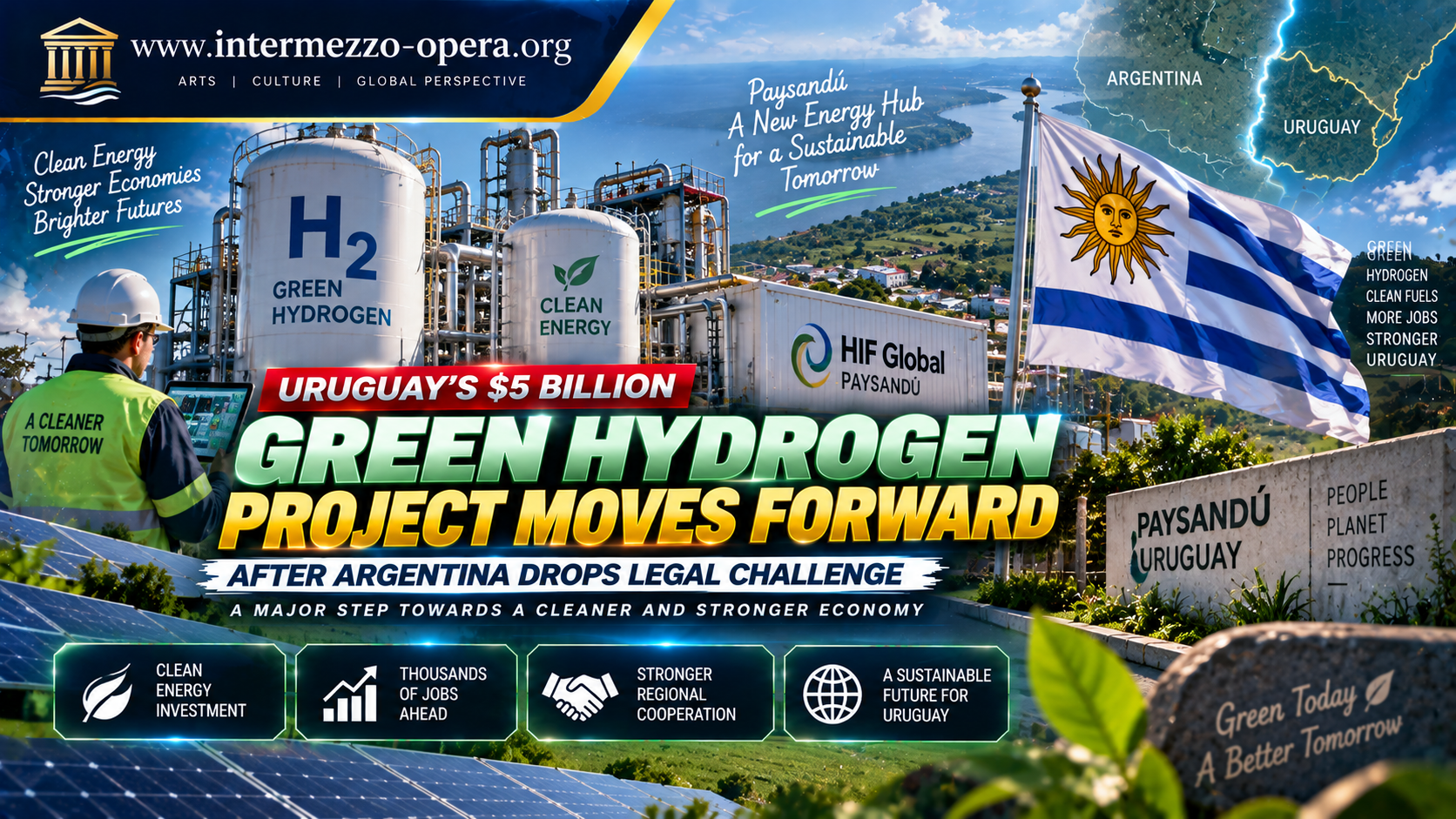
The Uruguay hydrogen project planned by HIF Global has taken an important step forward after Argentina withdrew a legal challenge related to the development. The proposed investment in Paysandú is worth more than $5 billion and could become one of Uruguay’s largest clean-energy projects.
The development removes a major source of uncertainty surrounding the project. It also comes as HIF Global and Uruguay’s state-owned electricity company UTE move closer to an agreement over energy prices, according to LARED21.
The project is designed to produce green hydrogen and synthetic fuels using renewable electricity. If completed, it could create thousands of construction jobs and strengthen Uruguay’s position in the emerging global clean-energy industry.
Uruguay Hydrogen Project Clears Major Legal Obstacle
Argentina’s decision to withdraw the legal action represents an important development for the Uruguay hydrogen project.
The dispute was connected to concerns over the original location of the proposed plant in Paysandú, close to the Uruguay River and the Argentine city of Colón.
Environmental concerns had become particularly important because communities across the river questioned the possible impact of such a large industrial development.
Instead of allowing the disagreement to escalate, officials from Uruguay and Argentina held negotiations about the project and its location.
The withdrawal of the legal challenge now removes one of the major obstacles facing the investment.
Investment Could Exceed $5 Billion
The economic scale of the project is significant.
HIF Global plans to invest more than $5 billion in the development of the industrial complex and associated infrastructure in Paysandú.
Local authorities have estimated that construction could generate between 1,300 and 3,200 jobs. Once the facility becomes operational, approximately 300 permanent positions could remain.
For Paysandú, an investment of this size could generate economic activity beyond the plant itself.
Construction companies, transportation providers, technical services and local businesses could potentially benefit from increased industrial activity.
What Will the Uruguay Hydrogen Project Produce?
The Uruguay hydrogen project is designed to produce more than hydrogen.
Official environmental information indicates that the facility could produce approximately 170,540 tonnes of green hydrogen per year.
That hydrogen would then become an important ingredient in the production of synthetic fuels.
The planned facility has a nominal production capacity of approximately 876,000 tonnes of e-methanol and more than 313,000 tonnes of e-gasoline annually.
These synthetic fuels are designed to provide lower-carbon alternatives for sectors where direct electrification can be difficult.
Renewable Electricity Will Power Production
Green hydrogen is produced using electricity from renewable sources.
The proposed facility would therefore require a very large supply of electricity.
Official project documentation estimates an energy requirement of approximately 2,700 MW. Around 85% of that electricity is expected to come from wind and solar facilities located within roughly 120 kilometers of the plant.
Uruguay’s national electricity network would provide additional supply when necessary.
The country’s existing renewable-energy infrastructure is one reason Uruguay is considered an attractive location for hydrogen investment.
Electricity Price Remains Important
One of the biggest commercial questions surrounding the development has been the price of electricity.
Hydrogen production through electrolysis requires substantial amounts of power. Even relatively small differences in electricity prices can therefore have a major impact on operating costs.
Earlier negotiations between HIF Global and UTE encountered differences over the electricity price required by the company.
However, the latest developments suggest the two sides have moved closer to an agreement.
A competitive electricity agreement could be essential for determining whether the project is commercially viable over the long term.
New Location Could Reduce Regional Concerns
The project may also move away from its originally proposed location.
Uruguay has been evaluating alternative sites within Paysandú as part of discussions surrounding the investment.
Moving the facility could help address some of the concerns raised by communities in Argentina while providing better logistical conditions for the development.
However, relocation does not eliminate environmental requirements.
A new site would still need appropriate environmental studies and authorization before construction could proceed.
Therefore, Argentina’s withdrawal of its legal challenge should not be interpreted as final approval for the project.
Uruguay and Argentina Choose Cooperation
The dispute also became a test of relations between Uruguay and Argentina.
Both countries share the Uruguay River, making major industrial developments near the waterway potentially sensitive.
Officials from the two governments have held discussions about environmental safeguards and the location of the proposed facility.
Uruguay maintained its right to approve investments that comply with national regulations while also considering concerns raised by neighboring Argentina.
The withdrawal of the legal challenge suggests that diplomatic negotiations helped reduce tensions surrounding the project.
Uruguay Hydrogen Project Could Boost Exports
The Uruguay hydrogen project could also create a new export industry.
Synthetic fuels produced at the facility are expected to be transported for storage and eventually shipped to international markets.
That means the economic impact could extend into logistics, rail transportation, port services and renewable-energy infrastructure.
Uruguay has a relatively small domestic market. Export-oriented industries are therefore particularly important for attracting investments of this scale.
If global demand for low-carbon fuels increases, Uruguay could potentially use its renewable resources to supply international customers.
Paysandú Could Become a Clean-Energy Hub
Paysandú could experience some of the largest local effects.
The project would require engineers, construction workers, technicians and specialized services during development.
Supporting infrastructure could also create opportunities for other companies.
In addition, Uruguay has discussed developing research and technical capabilities related to hydrogen.
LARED21 reported that HIF Global agreed to establish a hydrogen laboratory in Uruguay, potentially supporting research, training and technology transfer.
Those benefits could help the country build expertise rather than simply hosting a large industrial facility.
Environmental Review Remains Essential
Despite its clean-energy objectives, a project of this size still has environmental impacts that must be evaluated.
Official documentation indicates significant water requirements for the proposed facility. The project would also involve renewable-energy infrastructure, industrial equipment, pipelines and transportation systems.
Environmental authorities therefore need to assess the overall impact before construction proceeds.
This distinction is important.
Green hydrogen can support lower-carbon energy systems, but describing a project as “green” does not automatically eliminate local environmental concerns.
A New Economic Opportunity for Uruguay
The Uruguay hydrogen project arrives as countries around the world search for alternatives to conventional fossil fuels.
Hydrogen and synthetic fuels are being explored for industries where batteries or direct electrification may not always provide practical solutions.
Uruguay already generates a large share of its electricity from renewable sources. Developing hydrogen could allow the country to transform renewable electricity into products that can be exported internationally.
That possibility explains why the government views hydrogen as more than an energy project.
It could become part of a new industrial and export strategy.
Uruguay Hydrogen Project Enters a Critical Phase
The withdrawal of Argentina’s legal challenge gives the Uruguay hydrogen project additional momentum, but several important steps remain.
HIF Global and UTE still need commercially viable energy arrangements. Environmental assessments must continue, and the project’s final location must be determined.
Nevertheless, removing a legal and diplomatic obstacle is significant for an investment valued at more than $5 billion.
If the remaining conditions are successfully resolved, the project could transform Paysandú into an important center for green hydrogen and synthetic fuels while opening a new clean-energy export opportunity for Uruguay.


Happy
0 %

Sad
0 %

Excited
0 %

Sleepy
0 %

Angry
0 %

Surprise
0 %
Related Post

France’s 2027 Budget Puts Unemployment Insurance Funds Under Pressure
France’s 2027 budget is putting the country’s unemployment insurance system back in the spotlight as…