France’s E-Invoicing Reform Raises Cybersecurity Questions: Are Businesses Really More Exposed to Hackers?
 0
0
 0
0
Read Time:3 Minute, 42 Second
Paris – The upcoming France e-invoicing reform is changing how millions of businesses exchange invoices. However, the digital transition has also raised questions about cybersecurity.
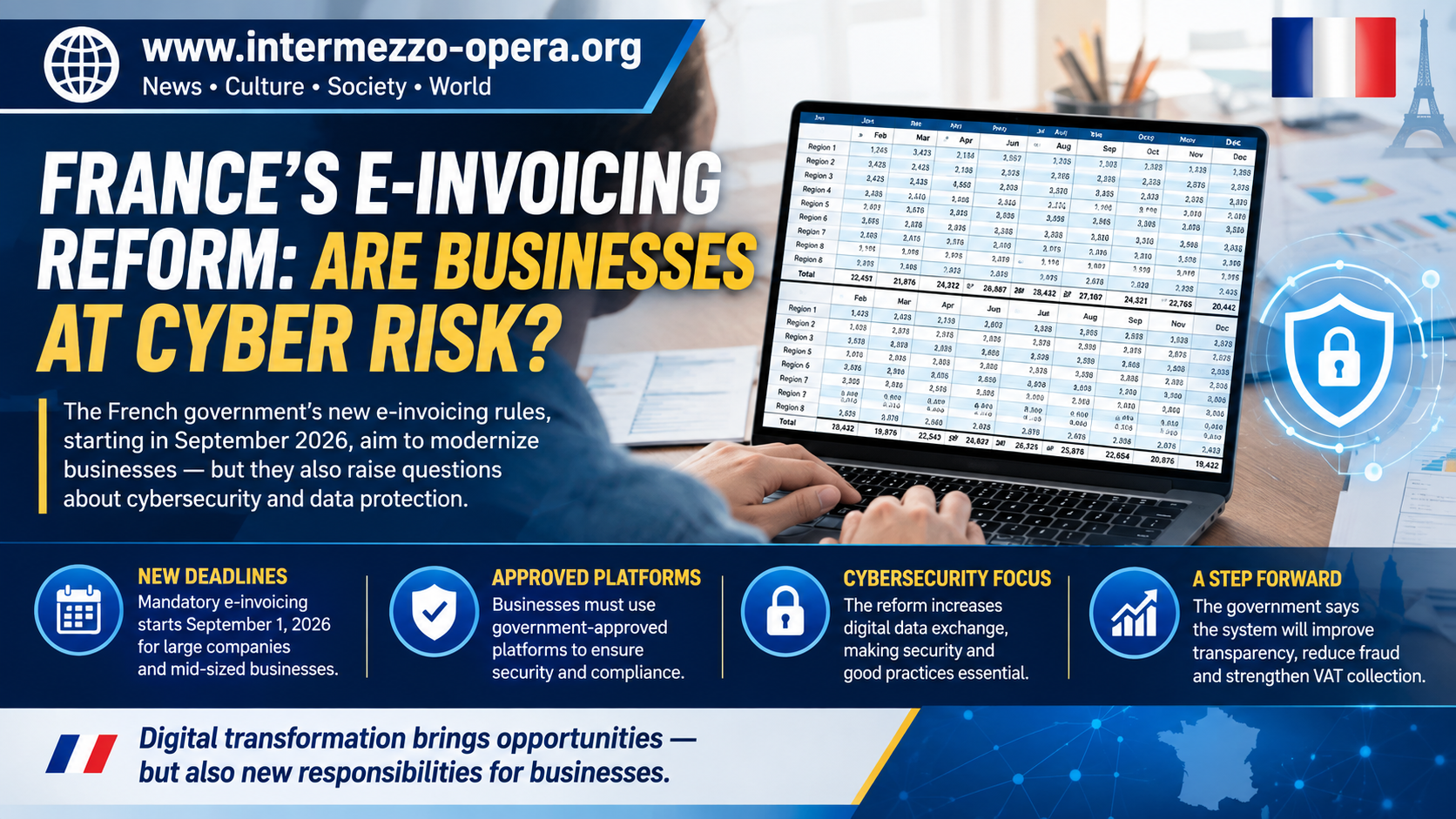
From September 1, 2026, all businesses covered by the rules must be able to receive electronic invoices. Large companies and mid-sized businesses must also start issuing them electronically.
Small businesses will follow for issuance in September 2027.
As a result, invoices containing sensitive commercial information will increasingly travel through digital systems. Still, this does not mean the reform automatically creates a higher hacking risk.
France E-Invoicing Reform Changes Business Payments
The reform represents a major transformation of business administration in France.
Nearly 10 million economic operators subject to VAT are affected. Moreover, companies will need to use an approved platform to receive electronic invoices.
For large companies and mid-sized firms, both receiving and issuing obligations begin on September 1.
Meanwhile, SMEs and micro-businesses have until September 1, 2027, to start issuing electronic invoices. However, they must still be ready to receive them from September 2026.
Does E-Invoicing Increase Hacking Risks?
Digital invoicing inevitably creates cybersecurity considerations.
Invoices can contain company identities, transaction information, payment details and other valuable business data. Therefore, criminals may attempt to exploit companies that fail to secure their systems.
However, there is an important distinction.
The existence of electronic invoicing does not automatically make a company vulnerable. Instead, risks depend heavily on the security of platforms, software, credentials and internal company practices.
Moreover, France’s system does not allow businesses simply to exchange ordinary PDF invoices by email and call them compliant electronic invoices.
Electronic invoices must follow standardized formats and travel through the required infrastructure.
Approved Platforms Play a Central Role
Businesses must select an approved platform to participate in the new system.
France’s tax administration has been reviewing these operators. By January 2026, the DGFiP had already published a first list containing 101 approved platforms.
The ecosystem has expanded further since then. The AIFE currently reports 136 approved platforms, including 108 with definitive registration and 28 still registered subject to conditions.
Therefore, companies should verify that their chosen provider appears on the official list.
Using an unknown service that merely claims compatibility could create unnecessary risks.
Authorities Tested the System Before Launch
Security and reliability are also part of preparations for the rollout.
The government opened a qualification environment for platforms in October 2025. Operators then had to conduct interoperability tests with other platforms and the Public Invoicing Portal.
Furthermore, a national pilot has been testing electronic invoicing under real-world conditions during 2026.
One objective is to verify that exchanges work correctly. Another is to secure the system’s gradual increase in transaction volumes before the mandatory phase begins.
Therefore, the September rollout is not occurring without prior technical testing.
Fraud May Change Rather Than Disappear
Electronic invoicing can actually help reduce some forms of fraud.
France’s public finance administration says digital invoice flows can improve data reliability and transparency. Furthermore, they can support efforts against fraud and improve VAT collection.
Nevertheless, criminals can adapt.
For example, attackers may focus on stealing employee credentials. They may also impersonate platforms or send fraudulent messages designed to resemble official communications.
Consequently, employees remain an important part of cybersecurity.
Businesses should verify unusual requests, protect accounts with strong authentication and carefully check messages asking them to change payment information.
Companies Should Prepare Before September
Technical compliance alone is not enough.
First, businesses should identify the approved platform they intend to use. They should also check whether their accounting or invoicing software is compatible with that platform.
In addition, access permissions should be reviewed. Only employees who need invoice systems should receive the necessary access.
Companies should also train staff to recognize phishing and suspicious payment requests.
Finally, software and security systems should remain updated.
These basic measures can significantly reduce avoidable digital risks.
Digital Reform Can Also Improve Security
The France e-invoicing reform should therefore not be viewed simply as a new cybersecurity threat.
The reform centralizes and standardizes invoice exchanges. It also introduces approved intermediaries and structured electronic formats. The government says the system is designed partly to make commercial exchanges more secure.
However, no digital infrastructure is completely risk-free.
For businesses, the biggest challenge will be combining regulatory compliance with good cybersecurity practices. Choosing an approved platform, securing accounts and training employees will be essential as France enters its new electronic invoicing era.


Happy
0 %

Sad
0 %

Excited
0 %

Sleepy
0 %

Angry
0 %

Surprise
0 %
Related Post
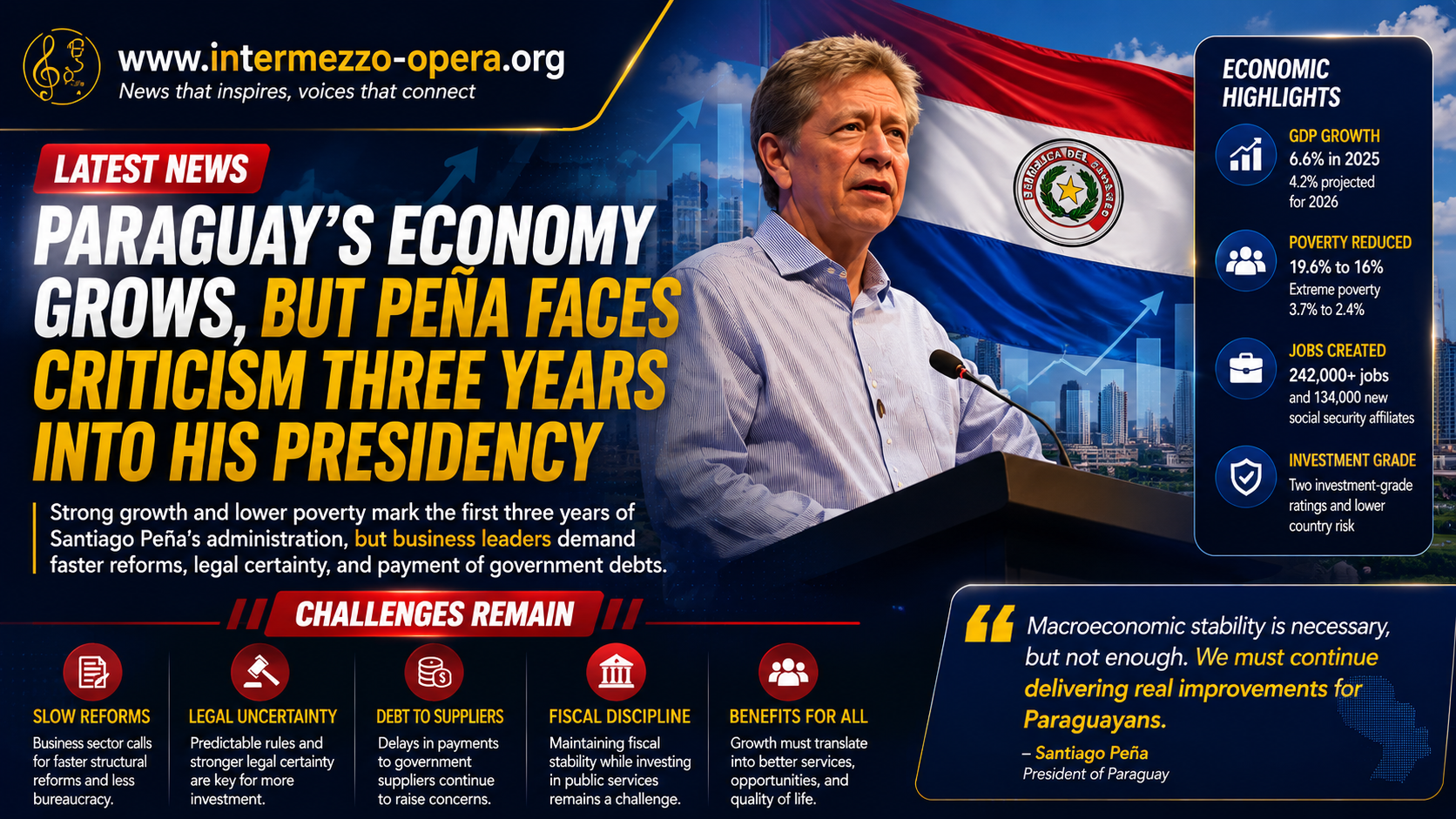
Paraguay’s Economy Grows, but Peña Faces Criticism Three Years Into His Presidency
ASUNCIÓN – President Santiago Peña’s economic management is facing renewed scrutiny as his administration marks…