
Paraguay Weighs MIC-Senatur Merger to Create New Ministry of Industry, Commerce and Tourism
 0
0
 0
0
Read Time:4 Minute, 42 Second
Paraguay’s MIC-Senatur merger is back in focus as authorities consider a major restructuring of the country’s economic and tourism administration. The proposal would bring industry, commerce, and tourism policies under a broader ministerial structure.
The plan could change how Paraguay coordinates investment, industrial development, trade, and tourism promotion. However, the institutional change should still be treated as a proposal rather than a completed merger.
The Ministry of Industry and Commerce, known as MIC, already plays a central role in Paraguay’s productive strategy. Meanwhile, the National Secretariat of Tourism, or Senatur, leads national tourism policy and international destination promotion.
MIC-Senatur Merger Could Reshape Paraguay’s Economic Policy
The proposed MIC-Senatur merger would seek closer coordination between sectors that are increasingly connected.
Tourism generates activity across hotels, restaurants, transportation, retail, entertainment, and other services. Therefore, supporters of greater integration can argue that tourism policy should be more closely linked to investment and commerce.
Moreover, Paraguay has been working to strengthen its international profile as an investment destination.
MIC has focused on industrialization, investment attraction, exports, and business development. Its 2026 agenda also places strong emphasis on small and medium-sized businesses.
Tourism Becomes Part of a Broader Economic Strategy
Tourism is also gaining importance within Paraguay’s economic strategy.
Senatur has been promoting the country internationally while seeking new tourism investment. In June, for example, Tourism Minister Jacinto Santa María met with business representatives in Panama alongside Rediex officials.
During those talks, Paraguay presented tourism opportunities and highlighted the country’s business environment. Consequently, tourism promotion and investment attraction are already working increasingly close together.
This overlap helps explain the logic behind institutional integration.
Instead of managing tourism separately, a combined ministry could coordinate destination promotion with investment, trade, and industrial policy.
Paraguay Wants More Tourism Investment
The government has also made tourism investment a clear priority.
Jacinto Santa María was appointed as Paraguay’s tourism minister in April 2026. At the time, President Santiago Peña said his experience would be important for strengthening tourism as a source of economic growth, employment, and international projection.
Santa María also indicated that his administration would seek high-impact tourism investment.
Furthermore, Senatur has already partnered with private companies on tourism-related real estate projects. One example is its cooperation surrounding the Wyndham Garden Costa del Lago development.
That agreement seeks to attract investment while strengthening Paraguay’s tourism offering.
Previous Restructuring Plans Generated Debate
Nevertheless, merging government institutions is politically sensitive.
A broader restructuring proposal discussed in 2025 sought to create a larger Ministry of Industry, Commerce, Tourism, Mines and Energy. Under that initiative, Senatur would have been absorbed into the new institutional structure.
However, the proposal generated resistance. Some tourism-sector representatives raised concerns about placing Senatur under MIC. Meanwhile, the energy component of the proposal triggered opposition from ANDE workers.
As a result, Paraguay’s Chamber of Deputies postponed consideration of that proposal for 15 days in September 2025.
Therefore, any renewed MIC-Senatur merger will likely require political negotiations and clear guarantees regarding institutional responsibilities.
Supporters Could See Opportunities for Greater Coordination
A unified ministry could potentially simplify government coordination.
For example, officials promoting foreign investment could simultaneously present opportunities in manufacturing, services, commerce, and tourism.
In addition, tourism businesses could gain closer access to programs designed for small and medium-sized enterprises.
Paraguay currently has more than 476,000 micro, small, and medium-sized businesses, according to the government’s 2026 strategic agenda. Together, they provide employment for around 1.5 million people.
Many tourism businesses fall within this wider entrepreneurial ecosystem.
Therefore, stronger coordination could potentially connect tourism operators with financing, formalization, digitalization, and business-development programs.
Senatur Currently Has a Distinct Tourism Mission
However, institutional efficiency is not the only consideration.
Senatur currently has a specialized mandate. Its work includes destination promotion, tourism standards, training, international cooperation, and support for major events.
For example, Senatur is coordinating tourism preparations for the 2026 Rally del Paraguay. Measures include registering service providers, inspecting accommodation, training tourism workers, and promoting Itapúa to visitors.
Paraguay also hosted the 71st meeting of the UN Tourism Regional Commission for the Americas in May 2026. The event brought together 26 international delegations and strengthened Paraguay’s tourism profile.
Therefore, critics of a merger may question whether tourism would retain sufficient institutional autonomy inside a larger economic ministry.
Trade, Investment and Tourism Are Increasingly Connected
Nevertheless, current government initiatives show significant overlap between these areas.
MIC has promoted Paraguay as a logistics and investment hub. In May, for instance, Paraguayan officials met with China Airlines and EVA Airways in Taiwan to explore potential air connectivity involving Asunción.
The talks were linked not only to passenger transportation but also to trade and air cargo opportunities.
This example illustrates how tourism, connectivity, investment, and commerce can intersect.
Therefore, closer institutional coordination could provide strategic advantages if responsibilities are clearly defined.
Final Structure Will Be Key
The debate over the MIC-Senatur merger is ultimately about more than changing the names of government institutions.
A successful restructuring would need to determine how tourism promotion will operate. It would also need to define budgets, responsibilities, personnel, and decision-making authority.
Furthermore, policymakers would have to ensure that tourism does not lose visibility inside a ministry with a much broader economic mandate.
For now, the proposal represents an attempt to rethink how Paraguay manages economic development.
If eventually approved, a new Ministry of Industry, Commerce and Tourism could bring several important areas under one umbrella. However, the final impact would depend on its legal framework, institutional design, and ability to preserve specialized tourism policy while strengthening coordination with investment and commerce.


Happy
0 %

Sad
0 %

Excited
0 %

Sleepy
0 %

Angry
0 %

Surprise
0 %
Related Post
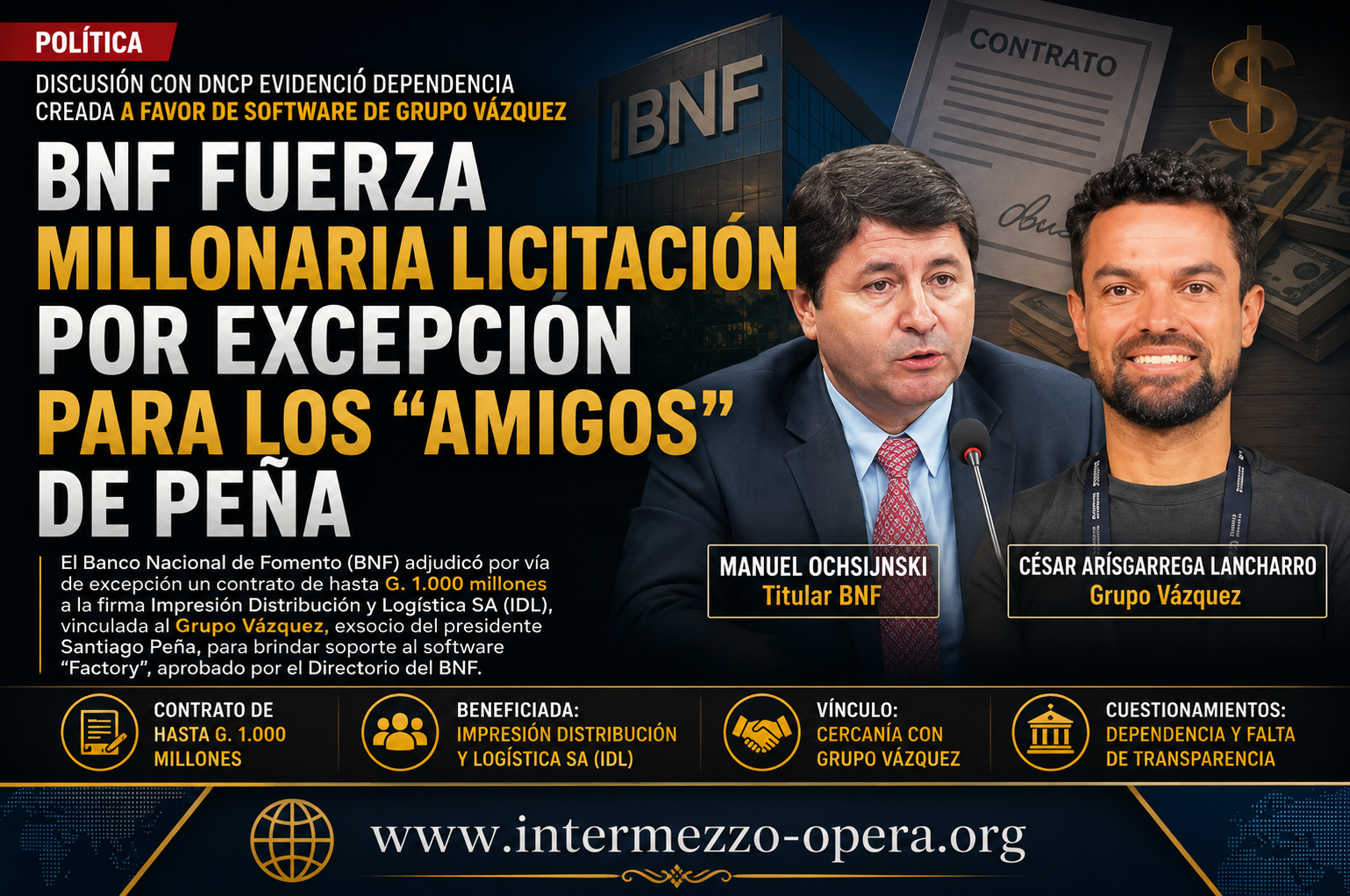
BNF Core Banking Tender Faces Scrutiny Over Procurement Transparency
The procurement process for BNF's core banking system has come under increased public attention following…