Over 835,000 Children Receive Diphtheria Vaccines in Kano as MSF Ends Emergency Response
 0
0
 0
0
Read Time:4 Minute, 4 Second
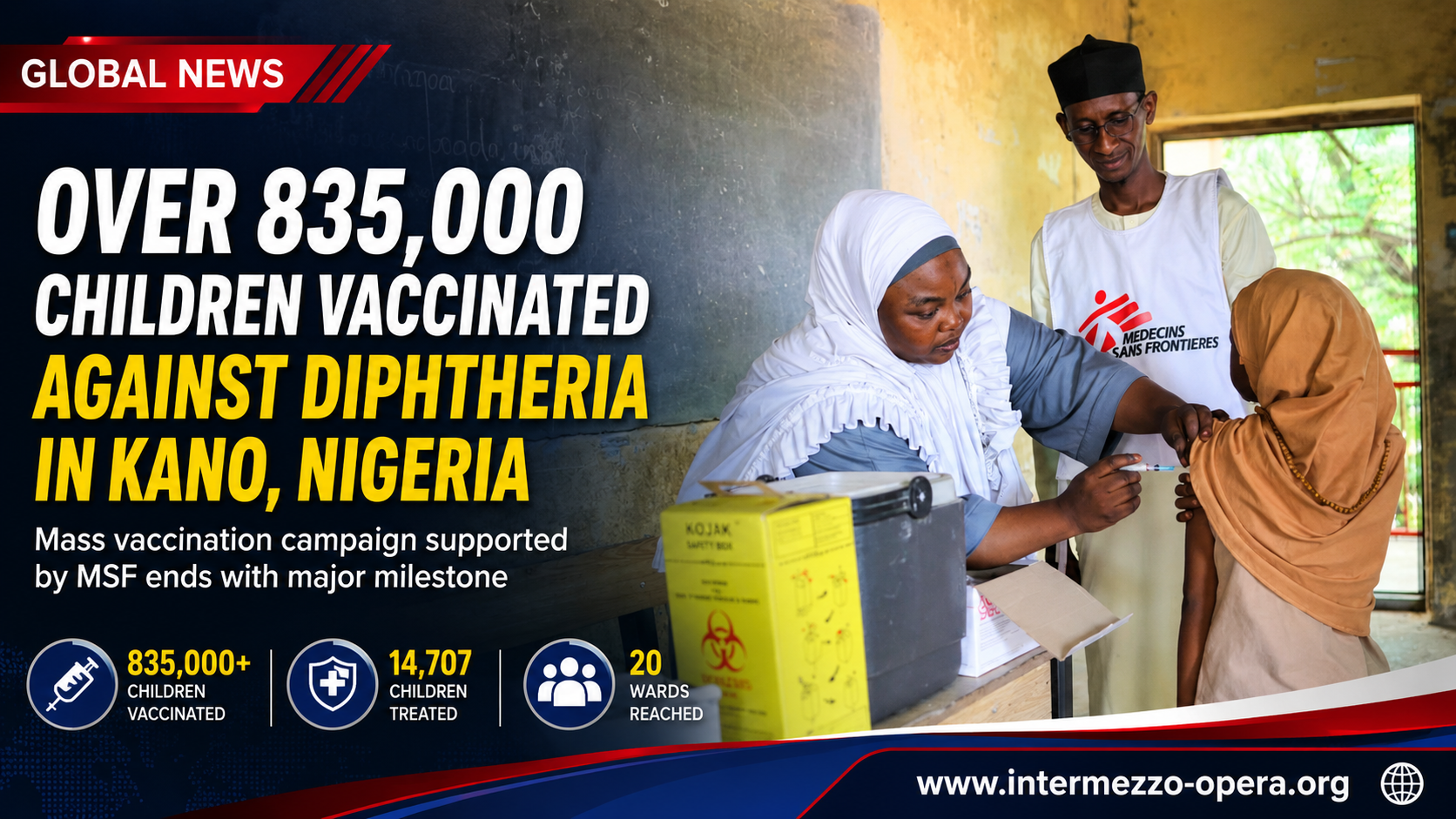
More than 835,000 children received diphtheria vaccines in Kano, Nigeria, during a major vaccination campaign supported by Médecins Sans Frontières (MSF), also known as Doctors Without Borders. The campaign marks an important milestone after years of emergency efforts to contain one of Nigeria’s largest recorded diphtheria outbreaks.
MSF carried out the vaccination campaign in collaboration with the Kano State Ministry of Health. The humanitarian organisation has now concluded its emergency diphtheria intervention in the state after approximately three years of support.
However, health experts warn that diphtheria remains a serious threat to children in Kano. Maintaining high vaccination coverage and strengthening disease surveillance will therefore remain essential.
More Than 835,000 Diphtheria Vaccinations Administered in Kano
The vaccination programme was conducted in two major rounds.
The first round concluded on April 27, 2026, after reaching 348,080 children. A second campaign took place between June 20 and June 24, 2026.
During the second round, MSF and the Kano State Ministry of Health reached another 486,948 children across 20 wards.
Combined, the two campaigns resulted in more than 835,000 diphtheria vaccinations being administered to children in Kano State.
The large-scale vaccination effort played an important role in reducing the number of new cases reported in recent months.
More Than 14,700 Children Treated Since 2023
Vaccination was only one part of the emergency response.
Since beginning its response in early 2023, MSF has treated more than 14,707 children through treatment centres operated or supported by the organisation.
Patients received both facility-based treatment and home-based care.
MSF also supported referral systems, disease surveillance, data management and community engagement. These measures helped health workers identify cases and improve access to treatment during periods of intense pressure on Kano’s healthcare facilities.
Kano Among Areas Hardest Hit by Diphtheria
Kano State has been one of the areas most severely affected by Nigeria’s diphtheria outbreak.
According to figures cited by MSF from the Kano State Ministry of Health, more than 31,900 suspected cases and over 1,260 deaths were reported in the state between March 2022 and March 22, 2026.
Most of those who died were children.
Nationally, 65,759 suspected cases and 2,229 deaths had been recorded since May 2022, according to figures cited from Nigeria’s disease-control authorities as of March 22, 2026.
The scale of the outbreak placed significant pressure on families, healthcare workers and medical facilities.
Children Aged 5 to 14 Were Particularly Affected
The outbreak primarily affected children between the ages of 5 and 14, including many who were either unvaccinated or only partially vaccinated.
Several factors contributed to continued transmission.
Gaps in routine immunisation coverage remained an important challenge. High population density and overcrowded living conditions also increased the risk of transmission.
Delayed healthcare-seeking, malnutrition and limited access to quality medical services further complicated efforts to control the outbreak.
At the height of the crisis between late 2025 and early 2026, more than 100 children were reportedly admitted for diphtheria treatment each day across MSF-supported facilities and home-care programmes.
What Is Diphtheria?
Diphtheria is an acute infectious disease that can be prevented through vaccination.
The infection primarily spreads through respiratory droplets or direct contact with infected wounds.
Common symptoms can include fever, sore throat and swollen lymph nodes. Patients may also develop a thick grey membrane in the throat, which can make breathing difficult.
Severe cases can lead to dangerous complications because toxins produced by the bacteria can damage the heart, nerves and kidneys.
Young children who have not been vaccinated face particularly serious risks if they become infected and do not receive appropriate treatment.
Vaccination Helps Drive Decline in Cases
The decline in diphtheria cases in Kano during recent months has highlighted the importance of large-scale vaccination campaigns.
However, MSF has stressed that the threat has not disappeared.
Thousands of children may remain vulnerable because immunity gaps continue to exist within the population.
Health authorities and partner organisations will therefore need to maintain routine immunisation programmes while ensuring that suspected cases are identified quickly.
Disease surveillance and timely access to appropriate treatment will also remain important for preventing another major outbreak.
MSF Ends Three-Year Emergency Intervention
The completion of the mass vaccination campaign marks the end of MSF’s emergency diphtheria response in Kano.
Over roughly three years, the organisation combined patient treatment with vaccination, community engagement, surveillance and support for local healthcare services.
The vaccination of more than 835,000 children represents one of the largest achievements of the intervention.
Nevertheless, the conclusion of MSF’s emergency response does not mean that diphtheria has been eliminated from Kano.
Sustained vaccination coverage will remain essential to protect children and reduce the possibility of another major outbreak.
The experience in Kano demonstrates how widespread immunisation, early treatment and effective disease surveillance can work together to control a serious infectious disease outbreak.


Happy
0 %

Sad
0 %

Excited
0 %

Sleepy
0 %

Angry
0 %

Surprise
0 %
Related Post

Alleged DZ Mafia Founder Reportedly Arrested in Algeria as International Investigation Expands
Reports Indicate Mehdi Laribi Was Arrested in Algeria French media have reported that Mehdi Abdelatif…