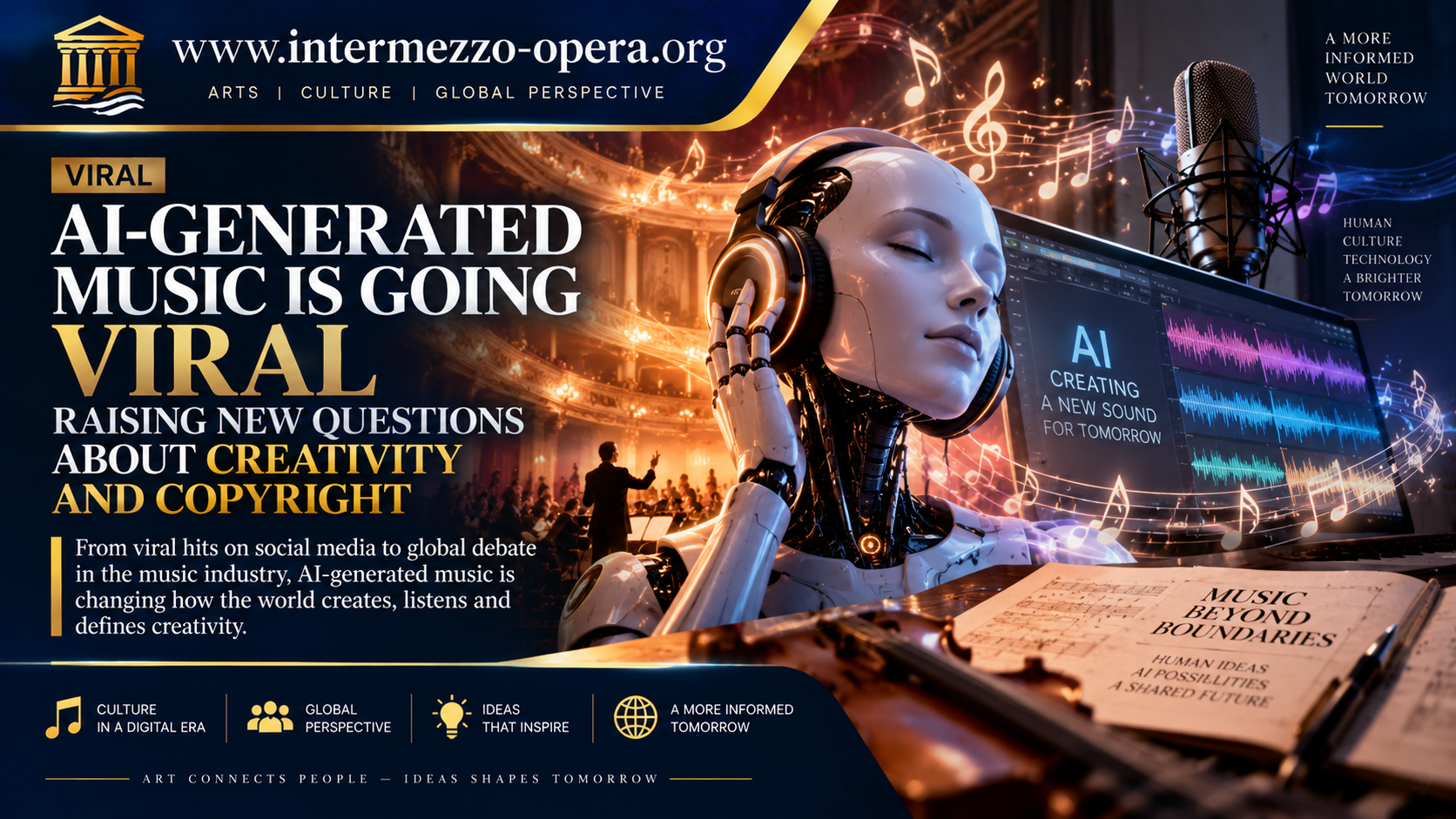
AI-Generated Music Is Going Viral, Raising New Questions About Creativity and Copyright
 0
0
 0
0
Read Time:6 Minute, 54 Second
AI-generated music is rapidly becoming one of the most debated developments in global digital culture. Songs created partly or almost entirely with artificial intelligence are circulating across streaming platforms and social media, blurring the traditional boundaries between human musicians, software and automated creativity.
The phenomenon is no longer limited to experimental technology communities. AI music tools can now generate vocals, melodies, arrangements and complete songs from relatively simple text instructions, allowing people without conventional music-production experience to create polished tracks within minutes.
For the cultural world, however, the viral rise of AI music brings a much larger question: what happens to authorship when machines can imitate the characteristics of human creativity?
AI-Generated Music Moves Into the Mainstream
Generative artificial intelligence has already transformed text, photography and video. Music is becoming another major frontier.
Modern AI systems can produce compositions across genres ranging from pop and electronic music to jazz, classical-inspired works and cinematic scores. Some platforms allow users to describe a mood, subject or musical style before generating an entire recording.
This accessibility has dramatically lowered the technical barrier to music production.
A person who cannot play an instrument, read musical notation or operate professional studio equipment can potentially turn an idea into a finished piece of audio.
That democratization is one reason AI-generated music has spread so rapidly online.
Social Media Accelerates the Viral Phenomenon
Short-form video platforms have changed how music becomes popular.
Listeners increasingly encounter songs through viral clips, memes and algorithmic recommendations rather than radio stations or traditional music publications.
AI-generated tracks fit naturally into this environment because they can be produced quickly and adapted to emerging trends.
Creators can generate unusual combinations of genres, fictional performers and experimental sounds designed specifically to capture attention.
The result is an enormous volume of new music competing for listeners every day.
But quantity also creates a new problem: determining where the music actually came from.
When Listeners Cannot Tell Who Is Real
Artificially generated voices have become increasingly convincing.
AI systems can create synthetic singers that sound remarkably human, while voice-cloning technology has demonstrated the ability to reproduce recognizable vocal characteristics.
This has generated controversy when artificial tracks resemble famous performers without their authorization.
For listeners, the distinction between genuine recordings and synthetic productions may become increasingly difficult to identify.
That matters because a person’s voice is more than an audio pattern.
For professional performers, it can also represent identity, reputation and economic value.
The Music Industry Faces a Copyright Challenge
Copyright law was largely developed around human authorship.
Generative AI complicates that assumption.
Several questions remain central to the debate: whether copyrighted recordings may be used to train AI systems, how closely generated works may resemble existing music, who owns an AI-assisted composition and whether performers should control digital replicas of their voices.
These questions have already moved beyond theoretical discussion.
Major music companies and technology businesses are negotiating—and sometimes litigating—over how artificial intelligence should interact with copyrighted creative works.
The outcome could shape the economics of music for decades.
Artists Are Not Necessarily Rejecting AI
The debate is not simply artists versus technology.
Many musicians have historically embraced new tools.
Synthesizers, sampling, digital audio workstations, pitch correction and electronic instruments were all controversial at different moments before becoming established parts of music production.
Artificial intelligence could follow a similar path.
Artists can use AI to explore melodies, experiment with arrangements, generate temporary vocals or accelerate parts of their creative workflow.
The central issue may therefore be less about whether AI belongs in music and more about how it should be used and credited.
Human Creativity Could Become More Valuable
Paradoxically, the abundance of machine-generated content may increase interest in demonstrably human creativity.
When millions of songs can theoretically be generated almost instantly, audiences may place greater value on performances connected to identifiable musicians, personal stories and genuine cultural communities.
Live performance could become particularly significant.
A concert offers something an automatically generated audio file cannot easily reproduce: physical presence, shared experience and direct interaction between artist and audience.
Opera, theatre and classical performance may therefore provide an interesting perspective on the AI era.
Their cultural value has always extended beyond the notes themselves.
Opera Offers an Unexpected Comparison
For intermezzo-opera.org, the AI music debate has a particularly interesting historical dimension.
Opera has continuously evolved alongside technology.
Stage machinery transformed theatrical spectacle. Electric lighting changed production design. Recorded sound allowed performances to reach audiences beyond opera houses. Radio and television expanded access further, while digital streaming made historic and contemporary productions available globally.
Artificial intelligence could become another technological transition.
Yet opera also demonstrates why technology does not automatically eliminate traditional art forms.
People continue attending live performances even though recordings offer cheaper and easier access.
The experience itself retains cultural value.
Could AI Create an Opera?
Technically, much of the process is already possible.
Generative systems can produce lyrics, orchestral-style music, synthetic voices, visual concepts and narrative structures.
Combining these technologies could theoretically create a largely AI-generated opera.
But whether such a production would possess meaningful artistic depth remains subjective.
Art involves more than technical arrangement.
Historical context, interpretation, emotion, intention and cultural experience all influence how audiences understand a work.
AI can reproduce patterns derived from enormous amounts of existing material, but the philosophical question of whether that process constitutes creativity remains unresolved.
The Question of Consent Is Becoming Critical
Voice replication may become one of the most sensitive issues.
A singer’s vocal identity can be commercially valuable and personally distinctive.
If technology can reproduce that identity without permission, performers may lose control over how their voices appear in new works.
This could affect famous musicians as well as actors, narrators and other professionals whose careers depend on recognizable voices.
Future regulations may therefore increasingly focus on consent, disclosure and compensation.
Listeners may also expect platforms to clearly identify synthetic or heavily AI-generated material.
Streaming Platforms Face Their Own Challenge
The explosion of automatically generated content creates practical problems for streaming services.
Platforms must distinguish legitimate creative experimentation from spam, impersonation and attempts to manipulate recommendation or royalty systems.
AI makes large-scale production extremely inexpensive.
A single operator could potentially generate enormous catalogs far faster than conventional musicians could record them.
Without effective safeguards, automated content could overwhelm discovery systems designed for a very different era of music production.
AI Could Also Expand Access to Creativity
Despite these concerns, the technology has significant positive potential.
People previously excluded from music creation because of cost, disability or lack of formal training may gain new ways to express ideas.
Independent filmmakers could generate temporary soundtracks.
Students could experiment with composition.
Small theatre companies could explore musical concepts without immediately hiring large production teams.
Musicians themselves could use AI as an assistant rather than a replacement.
In this scenario, artificial intelligence becomes another instrument.
The difference is that this instrument can participate in unusually complex parts of the creative process.
Culture Has Faced Technological Disruption Before
History offers useful perspective.
Photography did not eliminate painting.
Cinema did not eliminate theatre.
Recorded music did not eliminate concerts.
Television did not eliminate cinema.
Digital streaming did not eliminate physical performance.
New technologies frequently change how culture is produced and distributed without completely replacing older forms.
Artificial intelligence may produce another transformation of this kind.
Some professions and business models could face substantial disruption, while entirely new forms of artistic expression may emerge.
The Viral Debate Is Really About Human Creativity
The fascination surrounding AI-generated music ultimately extends beyond technology.
It touches on how society defines creativity itself.
If an algorithm can generate a technically impressive composition in seconds, is technical complexity still enough to make something artistically valuable?
Or does art require human intention behind it?
Different audiences will answer differently.
What appears increasingly clear is that the distinction between human-created and machine-assisted culture will become harder to define.
The future may not consist of human artists competing against artificial intelligence.
Instead, it may involve countless combinations of people and machines creating together—with society developing new rules for attribution, ownership and authenticity along the way.
For music, opera and the wider cultural world, that transformation has only begun.


Happy
0 %

Sad
0 %

Excited
0 %

Sleepy
0 %

Angry
0 %

Surprise
0 %
Related Post
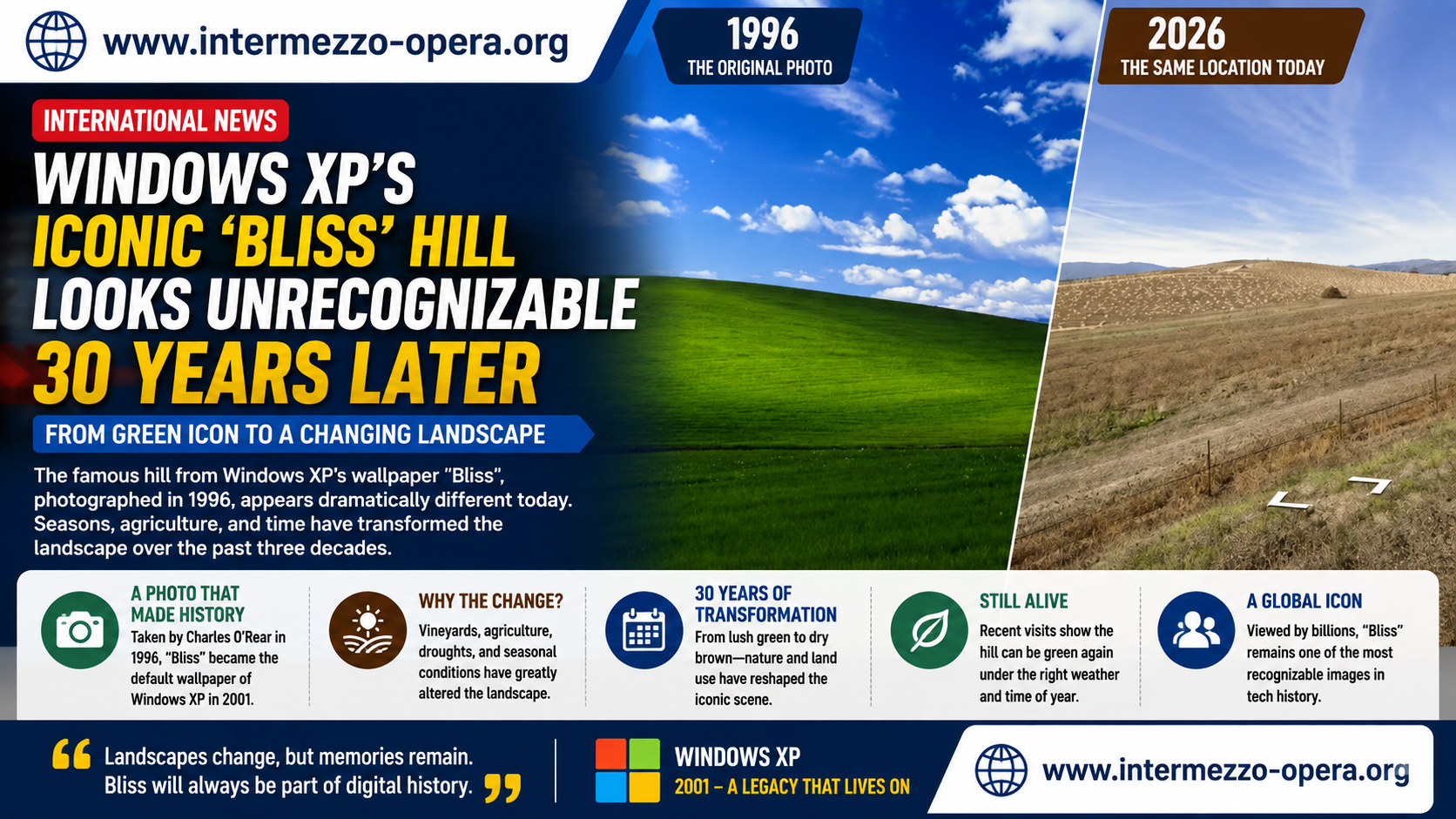
Windows XP’s Iconic ‘Bliss’ Hill Turns 30, Revealing a Landscape That Has Changed With Time
The Windows XP Bliss hill has become one of the most recognizable landscapes in technology…