UN Security Council Turns to AI Governance as Global Politics Enters a New Digital Era
 0
 0
Read Time:2 Minute, 27 Second
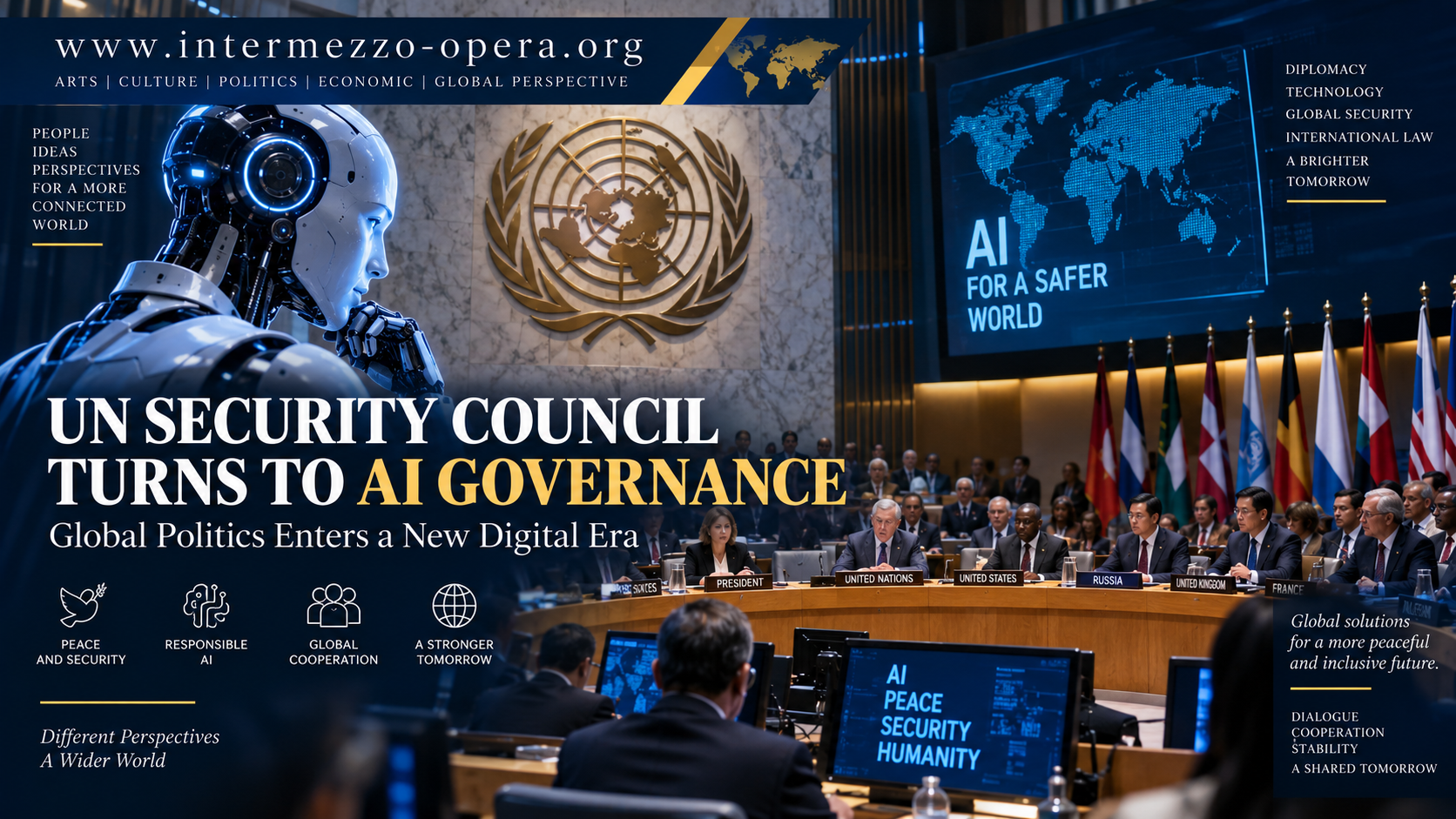
The United Nations Security Council is preparing to discuss the political and security risks linked to artificial intelligence (AI). The meeting comes as governments examine how rapidly developing AI systems could affect international peace and security.
The issue adds a new dimension to global diplomacy. AI is no longer limited to business and technology. Governments are also examining its role in conflict, security, information systems and international decision-making.
AI Moves Into the Diplomatic Agenda
The growing role of AI has pushed the technology higher on the international political agenda.
The United Nations has already held discussions on AI governance. During the 81st General Assembly session, the UN calendar included a meeting on AI governance in September 2026.
Governments face several questions. They must consider how AI should be governed across borders. They must also discuss transparency, accountability and the risks created by increasingly powerful systems.
Security Council Faces a New Challenge
The Security Council traditionally focuses on international peace and security. AI creates new questions for that mandate.
AI systems can process large amounts of information. They can also support analysis, communications and other activities related to security.
At the same time, governments and experts have raised concerns about AI being used in conflicts. The United Nations has previously discussed how AI could affect warfare and the application of international law.
The debate therefore involves both technology and international law.
UN General Assembly Seeks Greater Cooperation
The discussion comes as the UN begins its 81st session.
The General Assembly opened the new session on September 9, 2026. Bangladesh’s Khalilur Rahman is serving as president of the session. The official theme is “Restoring trust, managing transformation: A United Nations that delivers for all.”
The UN will hold its high-level week from September 22 to 28. World leaders will present their positions on international challenges during the General Debate.
AI governance is part of a wider diplomatic agenda that also includes peace, climate action, development and international cooperation.
Technology and International Rules
AI is developing faster than many traditional regulatory systems.
This creates a challenge for governments. National policies can differ significantly. AI systems, however, can operate across borders.
International cooperation could therefore become important for areas such as safety standards, data governance and responsible use.
The United Nations has increasingly included AI in discussions about global governance. The current General Assembly agenda shows that AI is becoming part of broader diplomatic discussions.
A New Political Debate Is Taking Shape
The debate over AI is moving beyond technology companies and national regulators.
Governments are now discussing how artificial intelligence could affect international security and cooperation. The Security Council’s attention to AI reflects that shift.
For Intermezzo-Opera.org, the development highlights an important change in global politics. Digital technology is becoming increasingly connected with diplomacy, security and international governance.
The coming discussions will show how governments approach the challenge of creating international cooperation around a technology that continues to evolve rapidly.


Happy
0 %

Sad
0 %

Excited
0 %

Sleepy
0 %

Angry
0 %

Surprise
0 %
Related Post

Why Does Spain Need Morocco? Ceuta Crisis Reopens Debate Over a Crucial Partnership
Spain-Morocco relations are once again under intense scrutiny following the extraordinary migration crisis in Ceuta,…