
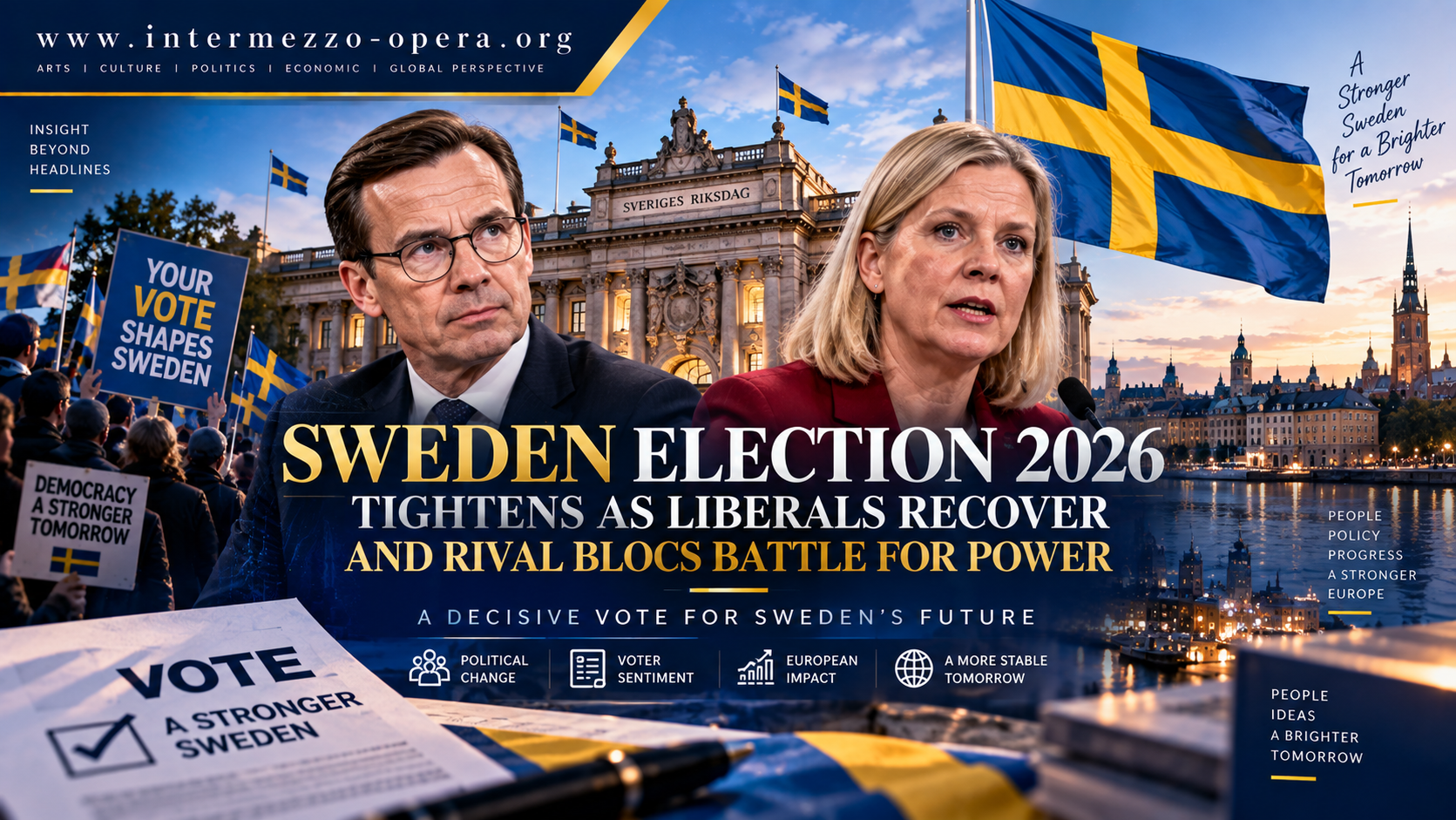
Sweden Election Tightens as Liberals Recover and Rival Blocs Battle for Power
 0
0
 0
0
Read Time:5 Minute, 37 Second
The Sweden election 2026 is heading toward a dramatic finish as a late surge in support for the Liberals has transformed what once appeared to be a comfortable advantage for the center-left opposition into a much tighter political contest.
Swedish voters will head to the polls on September 13 to choose a new parliament, with Prime Minister Ulf Kristersson’s center-right government fighting to remain in power against an opposition led by Social Democratic leader Magdalena Andersson. The result could influence Sweden’s approach to migration, crime, economic policy and its role within the European Union.
A Novus poll released on September 9 showed the four center-left parties receiving 50.7% support, while the government coalition together with the Sweden Democrats stood at 48.1%. The survey involved 2,292 voters and was conducted between September 6 and 8.
Sweden Election 2026 Becomes a Much Closer Race
One of the most important developments in the final days of the campaign has been the recovery of Sweden’s Liberals.
The party had previously been at risk of falling below Sweden’s 4% parliamentary threshold, an outcome that could have dramatically weakened Kristersson’s governing bloc.
The latest Novus polling instead placed Liberal support at 5.8%, giving the party considerably more breathing room and improving the center-right bloc’s chances of remaining competitive.
Sweden’s proportional electoral system makes the threshold particularly important. A relatively small change in support for one party can alter the balance of seats across parliament.
That means the Sweden election 2026 may ultimately be decided not only by which major party performs best, but also by whether smaller coalition partners secure enough votes to remain represented.
Social Democrats Seek a Return to Government
Magdalena Andersson and the Social Democrats entered the campaign in a comparatively strong position.
As Sweden’s largest traditional center-left force, the party has sought to convince voters that it can provide political stability while addressing concerns over public services, economic security and crime.
Earlier polling had suggested that Andersson’s opposition bloc could secure a relatively straightforward victory.
The late Liberal recovery has complicated that scenario.
Instead of preparing for an easy change of government, Sweden now faces a contest in which relatively small movements among undecided voters could determine who becomes prime minister.
Sweden Democrats Could Gain Greater Influence
Another major question surrounding the Sweden election 2026 is the future role of the Sweden Democrats.
The nationalist party has supported Kristersson’s government without formally holding cabinet positions. Despite remaining outside the government itself, it has exercised substantial influence over policy, particularly in areas such as immigration and crime.
That arrangement could change after the election.
A victory for the right-wing bloc could potentially give the Sweden Democrats an opportunity to seek ministerial positions for the first time.
Such an outcome would represent an important moment in Swedish politics.
The party was once isolated by much of the political establishment because of its extremist roots. Over time, however, its electoral growth has forced other parties to reconsider how they interact with it.
Migration and Crime Remain Major Political Issues
Migration has become one of the defining subjects of Swedish politics over the past decade.
Sweden was once internationally associated with relatively liberal immigration policies. Growing concerns about integration, organized crime and gang violence have contributed to a significant change in the political debate.
The current center-right government has pursued tougher policies in several of these areas, with support from the Sweden Democrats.
For supporters, these measures represent a necessary response to security and integration problems.
Critics argue that increasingly restrictive policies risk weakening Sweden’s humanitarian traditions and creating deeper divisions within society.
The disagreement illustrates why the Sweden election 2026 has implications beyond the question of which party controls parliament.
Sweden Democrats Reflect a Wider European Political Shift
The rise of the Sweden Democrats also connects Sweden’s election with a broader transformation taking place across Europe.
Nationalist and right-wing parties have gained greater influence in several European countries. Germany’s AfD recently recorded a historic victory in Saxony-Anhalt, while parties including France’s National Rally continue to challenge established political forces.
The Sweden Democrats have followed their own national path, but their growing influence reflects some of the same voter concerns: immigration, national identity, crime and dissatisfaction with traditional political parties.
The Financial Times reports that the party has increasingly influenced mainstream Swedish policy despite remaining outside the cabinet.
A formal entry into government would therefore carry symbolic importance well beyond Sweden.
Europe Is Watching Sweden’s Political Direction
Sweden plays an important role in European and Nordic politics.
The country joined NATO in 2024 following Russia’s invasion of Ukraine, ending more than two centuries of military non-alignment. Questions surrounding European security and Sweden’s relationship with its regional partners therefore remain significant.
Domestic political changes could also affect Sweden’s position on EU migration rules, climate policy and European economic cooperation.
At the same time, Sweden’s election provides another test of whether Europe’s traditional center-left and center-right parties can maintain support as nationalist movements become more established.
The answer may influence political strategies elsewhere in Europe.
Coalition Mathematics Could Decide the Next Government
Swedish elections are rarely determined by a single party winning an outright majority.
Coalition negotiations are therefore essential.
Even if the Social Democrats emerge as the largest individual party, Andersson would still need sufficient parliamentary support from allied parties to form a stable government.
Kristersson faces the same challenge on the right.
The renewed strength of the Liberals improves his position, while the Sweden Democrats could become increasingly important if the final result leaves the two blocs separated by only a small number of seats.
This coalition arithmetic makes the Sweden election 2026 particularly unpredictable.
A Critical Election for Sweden’s Political Future
The September 13 vote will ultimately determine more than the identity of Sweden’s next prime minister.
It will reveal whether voters want to continue the center-right political direction established under Kristersson or return the Social Democrats to government under Andersson.
It could also determine whether the Sweden Democrats move from influencing government policy outside the cabinet to becoming a formal participant in national government.
With the center-left polling at 50.7% and the government-aligned bloc at 48.1% in the latest Novus survey, neither side can comfortably assume victory.
The final days of campaigning may therefore prove decisive.
For the Sweden election 2026, the central question is no longer whether the race will be competitive. It is whether Sweden will choose a change in government—or take another significant step toward a more influential nationalist right.


Happy
0 %

Sad
0 %

Excited
0 %

Sleepy
0 %

Angry
0 %

Surprise
0 %
Related Post
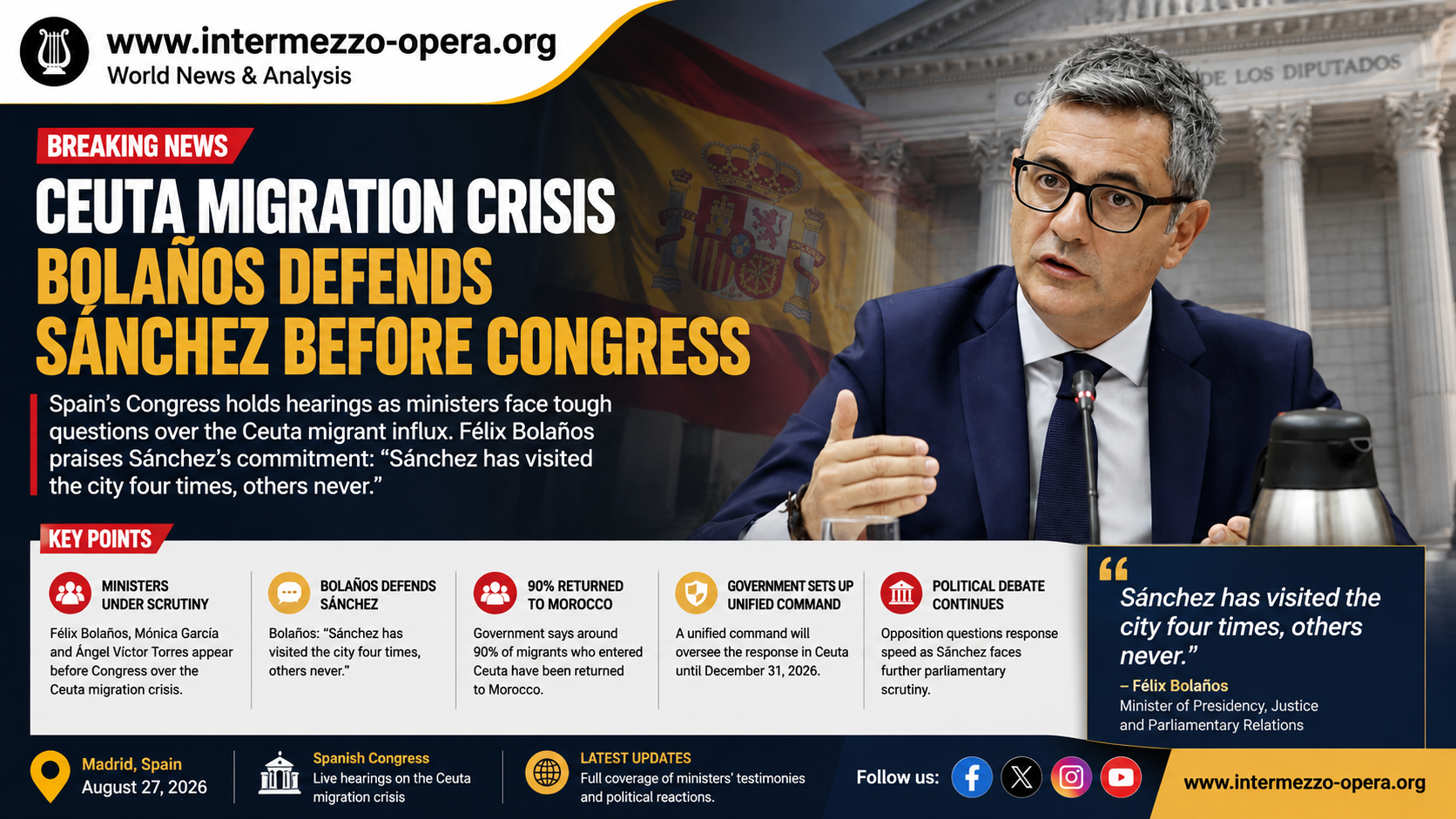
Bolaños Defends Sánchez as Spain’s Congress Debates Ceuta Migration Crisis
MADRID – Spain’s Congress focused on the Ceuta migration crisis as senior ministers faced questions…