Sánchez Clears Morocco of Blame Over Ceuta Crisis, Confirms King Felipe VI Will Visit
 0
0
 0
0
Read Time:2 Minute, 17 Second
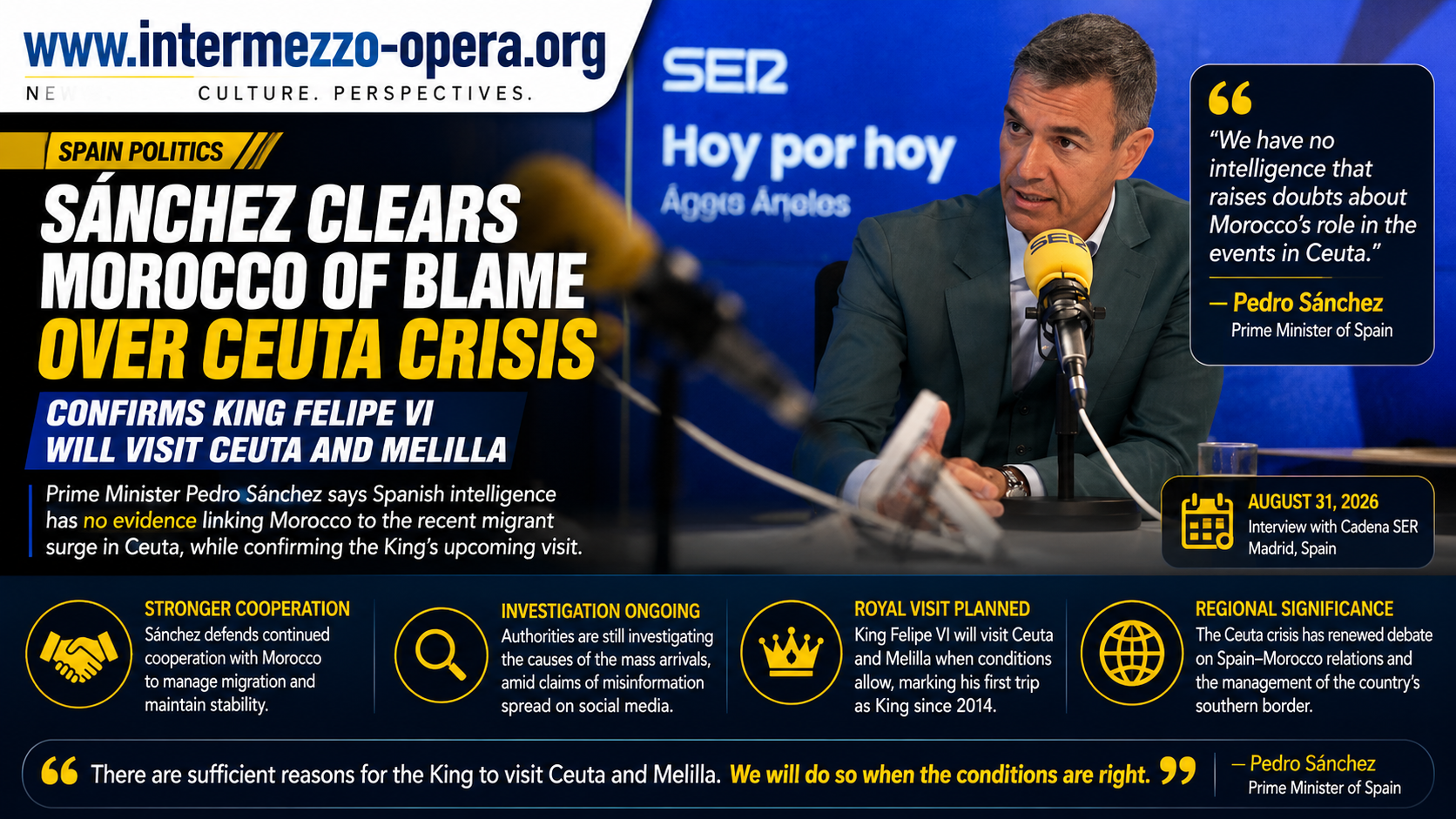
MADRID, Spain – Spanish Prime Minister Pedro Sánchez has rejected suggestions that Morocco was responsible for the recent migration crisis in Ceuta. At the same time, he confirmed plans for King Felipe VI to visit the Spanish autonomous cities of Ceuta and Melilla.
Speaking in an interview with Cadena SER on Monday, August 31, Sánchez said Spanish security forces and intelligence agencies currently have no information linking Moroccan authorities to the mass arrival of migrants in Ceuta at the end of July.
Sánchez Defends Cooperation With Morocco
Sánchez stressed that cooperation between Spain and Morocco remains essential for managing migration and maintaining stability along their shared border.
According to the prime minister, Spanish authorities have found no intelligence that raises doubts about Morocco’s role in the crisis.
He argued that weakening cooperation with Rabat could make the situation worse rather than solve it. Sánchez therefore defended continued dialogue and coordination between the two countries.
Investigation Into Ceuta Crisis Continues
However, Sánchez acknowledged that authorities are still investigating exactly what triggered the unprecedented influx.
He pointed to misinformation circulating on social media as one factor. Sánchez said criminal organizations took advantage of misleading claims surrounding a Spanish Supreme Court ruling on border returns.
He also claimed that networks linked to Russia, Israel and the international far right helped spread misleading information. Those allegations are Sánchez’s account of the government’s assessment and should not be treated as independently established responsibility for the crisis.
King Felipe VI Expected to Visit Ceuta and Melilla
Sánchez also addressed the possibility of King Felipe VI visiting Ceuta and Melilla.
The prime minister said there are sufficient reasons for the monarch to travel to both autonomous cities. He added that the visit will take place once appropriate conditions are in place.
However, Sánchez did not announce a specific date.
The Spanish government and the Royal Household, known as Zarzuela, will coordinate the trip. Felipe VI has not visited Ceuta or Melilla since becoming king in 2014.
Ceuta Crisis Puts Spain-Morocco Relations Under Scrutiny
The migration crisis has renewed political debate in Spain over relations with Morocco and Madrid’s management of its southern border.
Earlier in August, reports indicated that the Spanish government had explored whether contact between Felipe VI and Morocco’s King Mohammed VI could help ease tensions. The Royal Household was also monitoring developments in Ceuta and considering possible diplomatic steps.
Despite criticism from opposition parties, Sánchez continues to defend cooperation with Morocco as a central element of Spain’s response.
For now, the government says investigations into the origins of the crisis remain open. Meanwhile, the proposed royal visit would mark Felipe VI’s first trip to Ceuta and Melilla since taking the throne, giving the visit significant political and symbolic importance.


Happy
0 %

Sad
0 %

Excited
0 %

Sleepy
0 %

Angry
0 %

Surprise
0 %
Related Post

Listen: Why Europe won’t blindly follow Donald Trump’s call to secure the Strait of Hormuz?
Calls from Donald Trump for Western allies to secure the strategic Strait of Hormuz have…