
Portugal Records Second-Worst Wildfire Season Since Pedrógão, Over 53,000 Hectares Burned
 0
0
 0
0
Read Time:2 Minute, 14 Second
Portugal Faces One of Its Worst Wildfire Seasons in Recent History
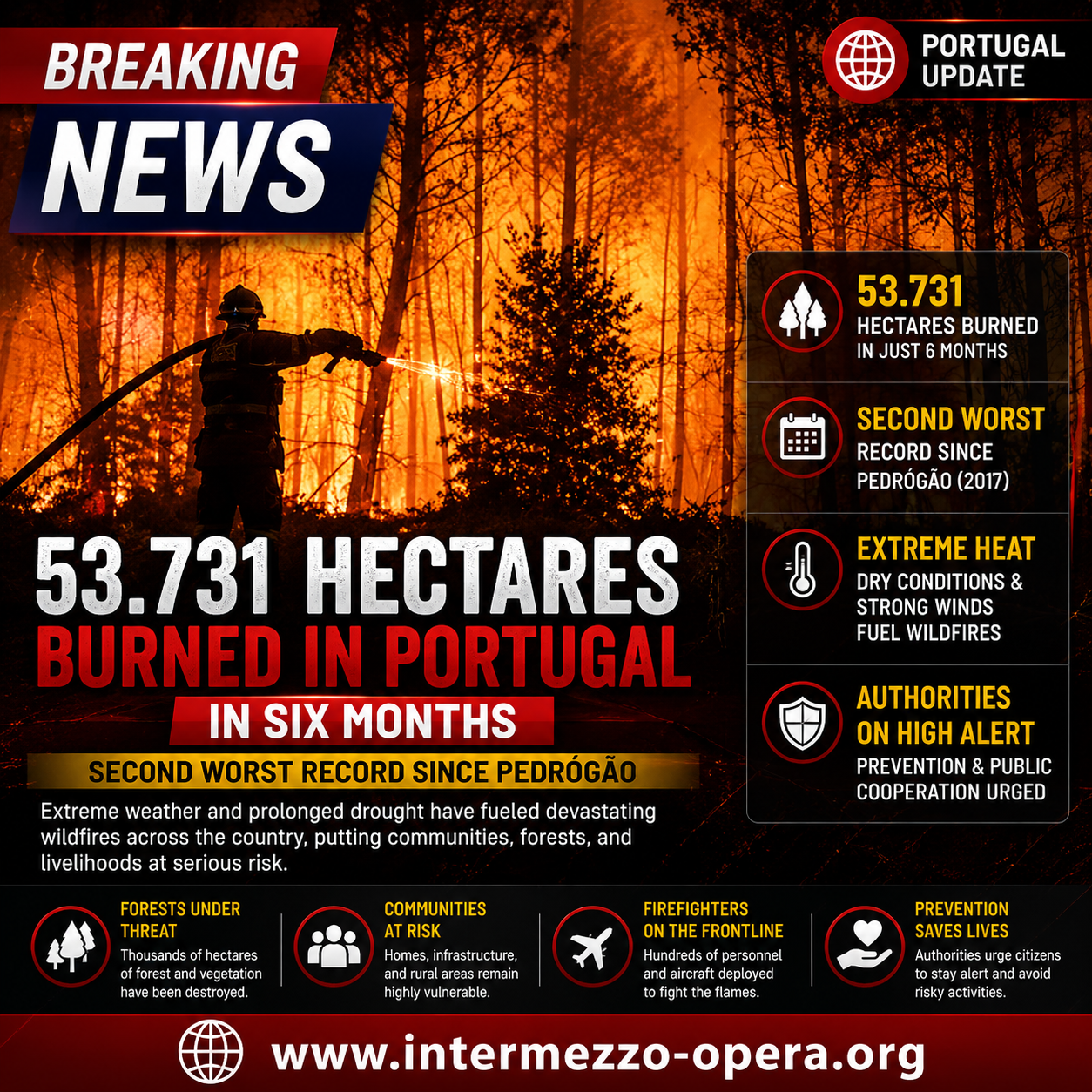
Portugal has recorded 53,731 hectares of land burned during the first six months of the year, making it the country’s second-worst wildfire season since the 2017 Pedrógão Grande tragedy. The latest figures have renewed concerns about wildfire prevention, climate resilience, and the growing impact of prolonged heatwaves across Southern Europe.
Authorities reported that the burned area has increased significantly compared with previous years, highlighting the challenges firefighters and emergency services continue to face during the peak fire season.
Extreme Weather Fuels Larger Wildfires
Experts point to extreme heat, low humidity, and persistent dry conditions as major factors behind the increase in wildfire activity. These weather patterns have created ideal conditions for fires to spread rapidly through forests, grasslands, and rural communities.
Furthermore, strong winds have complicated firefighting operations in several regions. As a result, emergency crews have been forced to deploy additional personnel, aircraft, and equipment to contain multiple active fires simultaneously.
Memories of the Pedrógão Disaster Remain Strong
The latest wildfire statistics have drawn comparisons with the devastating Pedrógão Grande wildfire of 2017, one of Portugal’s deadliest natural disasters. That tragedy prompted major reforms in wildfire management, emergency response systems, and forest maintenance across the country.
Although authorities say preparedness has improved since then, the current season demonstrates that Portugal remains highly vulnerable to extreme wildfire conditions during periods of intense summer heat.
Government Strengthens Prevention Measures
In response to the growing number of wildfires, Portuguese authorities have expanded surveillance efforts, increased patrols in high-risk areas, and reinforced public awareness campaigns. Officials continue urging residents to avoid activities that could accidentally ignite fires, especially during periods of elevated fire danger.
Meanwhile, emergency agencies remain on high alert as weather forecasts indicate that high temperatures could continue in the coming weeks, increasing the possibility of additional wildfire outbreaks.
Climate Change Raises Long-Term Concerns
Environmental researchers warn that climate change is contributing to longer and more intense wildfire seasons across Southern Europe. Rising temperatures, prolonged droughts, and changing rainfall patterns are increasing wildfire risks in Portugal and neighboring countries.
Consequently, experts emphasize the importance of sustainable forest management, stronger prevention strategies, and continued investment in emergency response capabilities to reduce future wildfire damage.
Portugal’s 53,731 hectares of burned land represent one of the country’s most severe wildfire seasons since the Pedrógão disaster. While emergency services continue working to contain active fires, officials stress that prevention, climate adaptation, and public cooperation remain essential for reducing future wildfire risks.
Ultimately, the latest figures highlight the growing environmental challenges facing Portugal as extreme weather events become more frequent and increasingly difficult to manage.


Happy
0 %

Sad
0 %

Excited
0 %

Sleepy
0 %

Angry
0 %

Surprise
0 %
Related Post