

Political Participation in 2026: Why Citizens Want a Stronger Voice in Public Decisions
 0
 0
Read Time:6 Minute, 50 Second
Political participation in 2026 is becoming more important as citizens seek meaningful ways to influence public decisions. Elections remain central to representative government, but voting is only one part of modern political participation.
People also engage through public consultations, community organizations, petitions, civic groups, town halls, and direct communication with public officials. Digital platforms have created additional opportunities, although they have also introduced challenges related to misinformation and political polarization.
For readers of www.intermezzo-opera.org, these changes offer a useful way to understand how the relationship between citizens and institutions is evolving.
Political Participation in 2026 Goes Beyond Elections
Voting remains one of the most widely recognized forms of political participation. According to the OECD’s 2026 Trust Survey, 68% of respondents across surveyed OECD countries believe voting has a moderate or significant influence on government actions.
However, elections happen only periodically.
Citizens interact with public institutions throughout the year. Therefore, many people also expect opportunities to express their views between elections.
Public consultations, petitions, local meetings, civic organizations, and direct communication with officials can provide additional channels.
The challenge is ensuring that people believe these channels actually matter.
Many Citizens Still Feel They Have Limited Influence
There is a noticeable difference between voting and feeling politically influential.
Although 68% of respondents in the OECD survey believed voting influences government actions, only 31% believed people like them had a say in government decisions.
That difference is significant.
Citizens may participate in elections while still feeling distant from everyday decision-making. Therefore, governments face pressure to create meaningful opportunities for participation outside election periods.
The OECD also found a 47-percentage-point trust gap between people who feel they have political voice and those who do not.
This suggests that participation and institutional trust are closely connected.
Public Consultations Offer Another Channel
Governments increasingly use public consultations to gather opinions about proposed policies.
These consultations can involve businesses, experts, community groups, and individual citizens. They may take place through meetings, written submissions, surveys, or digital platforms.
However, participation alone does not guarantee influence.
Only 39% of people surveyed across OECD countries believed participating in a public consultation had moderate or significant influence on government actions. Meanwhile, 35% said the same about attending a town hall.
Therefore, governments need to explain how public input contributes to final decisions.
Local Politics Can Feel More Immediate
National politics often dominates headlines. However, local government can have a more visible effect on daily life.
Local decisions can influence transportation, housing, public spaces, waste management, infrastructure, and community services.
As a result, local participation can provide citizens with a practical entry point into public affairs.
A community meeting about roads or public facilities may feel more relevant than a distant national debate.
Furthermore, the OECD’s 2026 findings indicate that local government tends to receive higher levels of trust than national government across the countries surveyed.
Technology Has Changed Political Participation
Digital technology has dramatically changed how citizens interact with politics.
People can follow public institutions online, read official documents, contact representatives, sign petitions, and participate in political discussions.
Consequently, political communication has become faster.
However, faster communication does not always produce better understanding.
Social media can spread useful information quickly, but misleading claims can travel just as rapidly. Political discussions can also become simplified into short messages that remove important context.
Therefore, digital participation requires strong information literacy.
Reliable Information Supports Better Participation
Citizens need access to reliable information before they can evaluate public policies.
For example, understanding a new economic policy may require information about government spending, taxation, employment, and inflation.
Similarly, evaluating an environmental proposal may require scientific evidence and information about costs.
Therefore, transparency can improve the quality of public debate.
Government agencies can publish data, reports, budgets, and policy explanations. Meanwhile, journalists and independent researchers can examine those claims.
Readers can then compare several credible sources before forming their own conclusions.
Political Participation Faces Practical Barriers
Not everyone has equal opportunities to participate.
Work schedules, family responsibilities, transportation, limited information, and lack of resources can make political engagement difficult.
However, practical barriers are not the only problem.
The OECD found that 40% of respondents across surveyed countries believed elected officials “do not care about people like me.” The report found that this perception was a more common barrier to political influence than limitations involving time, resources, networks, or information.
Therefore, political participation also depends on whether citizens believe institutions will listen.
Civil Society Plays an Important Role
Political participation does not occur only through government institutions.
Civil society organizations can connect citizens around shared interests. These groups may focus on education, environmental protection, economic development, human rights, culture, or community welfare.
They can conduct research, organize discussions, provide services, and communicate public concerns to policymakers.
International IDEA considers public participation an important component of democratic performance. Its 2026 Global State of Democracy report examines factors including voter turnout, civil society freedoms, and citizens’ ability to join organizations.
Therefore, the space available for civic activity can influence the wider political environment.
Political Disagreement Is Normal
Participation does not mean citizens will agree.
Different groups may have competing priorities regarding taxation, public spending, immigration, energy, education, or international relations.
Such disagreement is a normal feature of politics.
The important question is how institutions manage those disagreements.
Clear procedures allow different groups to present arguments without requiring everyone to reach the same conclusion.
Meanwhile, independent institutions can provide rules for resolving disputes.
Trust Depends on More Than Popularity
Public trust should not be confused with approval of every government decision.
Citizens can disagree with a policy while still trusting that institutions follow established procedures.
For example, people may value transparent decision-making even when they dislike the final result.
The OECD’s 2026 survey found that 40% of respondents reported high or moderately high trust in national government, while 43% reported low or no trust. These averages covered 33 OECD countries and five accession candidate countries, so individual national results vary.
The findings show why trust remains an important issue in public governance.
Young People Have New Ways to Participate
Digital communication has created additional channels for younger citizens to engage with public issues.
A person can follow parliamentary debates online, examine public data, join community campaigns, or communicate directly with organizations.
However, online activity is not automatically equivalent to meaningful participation.
Sharing a political post requires little effort. Understanding legislation, attending a consultation, volunteering, or communicating a detailed policy concern requires greater involvement.
Therefore, digital engagement can serve as an entry point rather than an endpoint.
Institutions Also Need to Adapt
Citizens are changing, and public institutions must respond to those changes.
Traditional government communication was often one-directional. Institutions published information, while citizens received it.
Modern communication can be more interactive.
Governments can collect feedback, publish accessible data, explain policy decisions, and report how consultation results were used.
The OECD argues that meaningful participation, greater transparency, evidence-based decisions, and responsible use of new technology can contribute to stronger public trust.
Global Democracy Faces Wider Challenges
Political participation is developing within a difficult international environment.
International IDEA’s Global State of Democracy 2026 report found that more countries experienced declines in democratic performance than improvements for the eleventh consecutive year. The report also describes concerns involving elections, legislatures, freedom of expression, press freedom, and access to justice.
However, political conditions vary greatly between countries.
Therefore, global trends should not be treated as descriptions of every political system. National institutions, laws, political cultures, and historical circumstances remain different.
Political Participation in 2026 Is About Being Heard
Political participation in 2026 extends far beyond casting a ballot. Elections remain fundamental, but citizens increasingly expect opportunities to participate between election cycles.
Public consultations, local meetings, civic organizations, petitions, reliable journalism, and digital communication can all contribute to political engagement.
However, participation becomes more meaningful when citizens can see how institutions respond to their concerns.
For www.intermezzo-opera.org, examining these relationships offers a broader perspective on modern politics. Citizens do not need to agree on every policy. Yet access to reliable information, transparent institutions, and meaningful opportunities to participate can help people make their own informed political decisions.


Happy
0 %

Sad
0 %

Excited
0 %

Sleepy
0 %

Angry
0 %

Surprise
0 %
Related Post
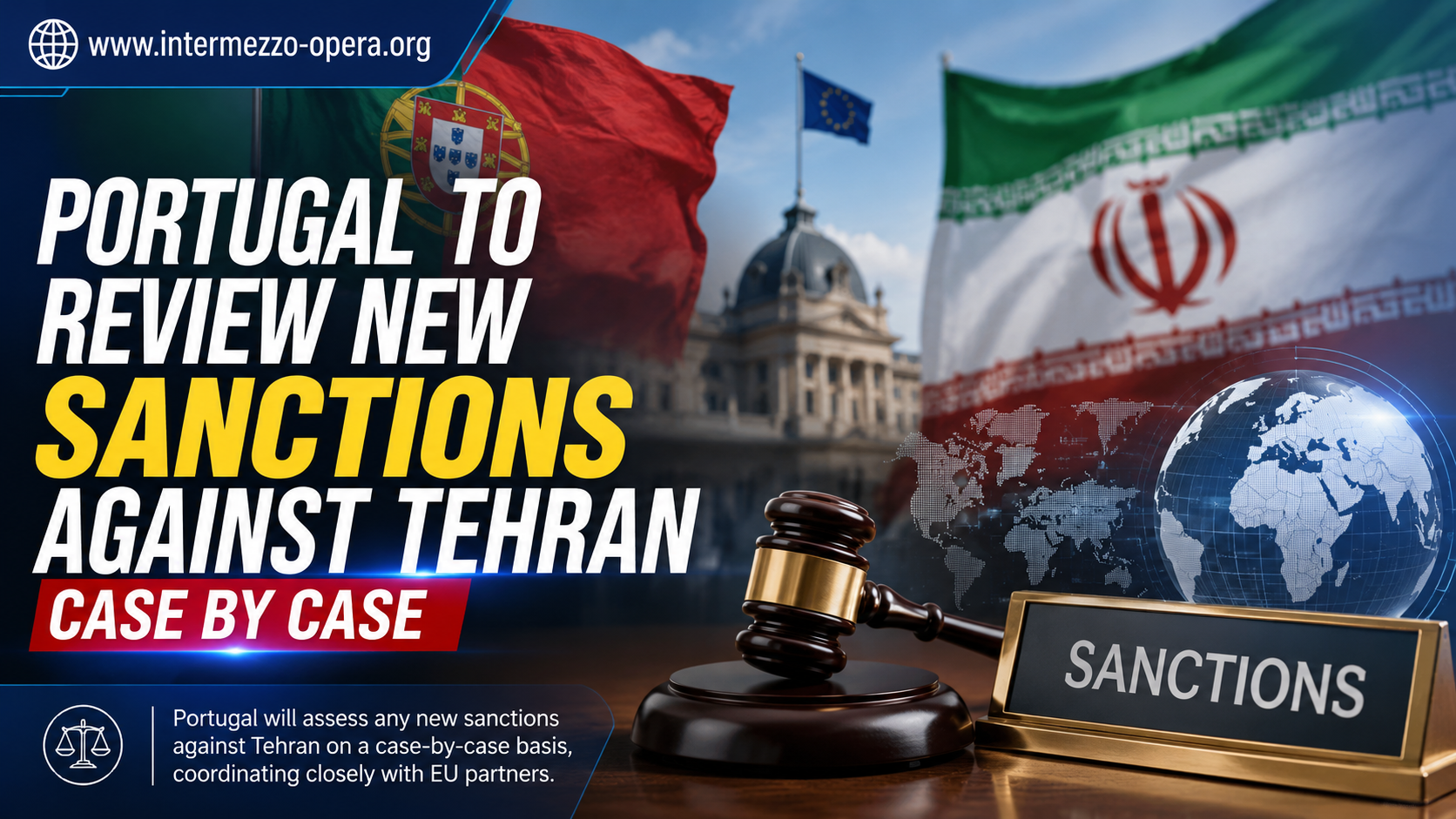
Portugal Signals Case-by-Case Review of New Sanctions Against Tehran
Portugal has indicated that any new sanctions against Tehran will be evaluated on a case-by-case…