Middle Powers in Global Politics: Why a New Group of Nations Is Gaining Diplomatic Influence
 0
 0
Read Time:7 Minute, 20 Second
Middle powers in global politics are receiving greater attention as international relations become more fragmented. Global diplomacy is no longer shaped only by the largest military and economic powers. Countries with significant regional influence are increasingly trying to build partnerships, protect their interests, and keep international cooperation working.
This shift comes at a sensitive moment. The United Nations entered its 81st General Assembly session in September 2026 with a focus on restoring trust, managing transformation, peace, development, digital governance, and multilateral reform.
Middle Powers in Global Politics Gain More Space
A middle power is generally understood as a country with meaningful economic, diplomatic, or regional influence but without the global reach of the largest powers.
However, there is no single definition that fits every country.
What matters is how these nations use their influence. Many rely on diplomacy, regional organizations, trade relationships, and international institutions to increase their voice.
As a result, global politics can involve more actors than traditional great-power competition suggests.
A More Fragmented International System
International politics has become increasingly difficult to manage.
Wars, trade tensions, climate risks, technological competition, and economic uncertainty can push governments toward different strategic groups. At the same time, countries often need cooperation from states outside their closest alliances.
Analysts at the Council on Foreign Relations have described growing fragmentation and a larger role for middle powers seeking room to maneuver between major powers.
Therefore, diplomatic flexibility has become increasingly valuable.
Why Middle Powers Need Multilateral Institutions
International organizations can give smaller and medium-sized countries opportunities that bilateral diplomacy may not provide.
At the UN General Assembly, all 193 Member States have one vote each. This gives countries a formal platform to raise issues, negotiate resolutions, and participate in global debates.
For middle powers, these institutions can multiply diplomatic influence.
A country may lack the military or economic weight of a superpower. However, it can work with several governments to build support around a shared position.
Coalition building therefore becomes an important diplomatic tool.
Regional Partnerships Are Becoming More Important
Regional cooperation can also strengthen the position of middle powers.
Countries facing similar economic or security challenges may coordinate before entering wider international negotiations. In addition, regional institutions can provide platforms for trade, infrastructure, climate policy, and security discussions.
However, regional interests are rarely identical.
Governments may cooperate on one issue while disagreeing strongly on another. Therefore, modern partnerships can be flexible rather than permanent.
This creates a more complicated diplomatic environment.
Trade Creates Both Influence and Vulnerability
Economic relationships are another important part of middle powers in global politics.
Countries with large markets, important natural resources, strategic manufacturing capacity, or major shipping routes can gain diplomatic influence.
However, economic dependence can also create vulnerability.
A government that relies heavily on one export market may face problems when trade relations deteriorate. Likewise, dependence on a limited number of suppliers can become risky during geopolitical tensions.
Therefore, many governments have strong incentives to diversify economic relationships.
Strategic Geography Still Matters
Geography continues to influence politics even in a digital economy.
Countries located near important sea lanes, energy routes, major markets, or contested regions may receive significant diplomatic attention.
However, strategic geography can create pressure as well as opportunity.
A country may face competing expectations from different major powers. As a result, leaders often try to protect national interests without becoming completely dependent on one geopolitical bloc.
That balancing process can shape foreign policy for years.
Technology Is Creating a New Diplomatic Arena
Technology has become another major area of international competition.
Artificial intelligence, semiconductors, cloud infrastructure, telecommunications, and digital platforms now have political as well as economic importance.
Countries must decide how to encourage innovation while addressing security, privacy, and economic concerns.
The UN General Assembly’s current agenda reflects this change. Its 81st-session priorities include digital governance, artificial intelligence, science, technology, and efforts to reduce the digital divide.
Therefore, technology policy is becoming part of diplomacy.
AI Governance Requires Wider Participation
Artificial intelligence provides a clear example of why broader cooperation matters.
AI systems can cross national borders through digital services. Yet countries have different laws, economic interests, and technological capabilities.
A small group of powerful states cannot necessarily address every consequence alone.
Meanwhile, countries with emerging technology sectors want a voice in rules that could affect their economies.
The debate is therefore not only about innovation. It is also about representation and who participates in writing international standards.
Climate Diplomacy Gives Middle Powers Another Role
Climate change creates another area where diplomatic coalitions matter.
Different countries face different risks. Island states may focus heavily on sea-level rise, while agricultural economies may worry about drought or changing rainfall.
Industrial economies may focus on energy transitions.
Because these problems cross borders, cooperation remains necessary even when governments disagree elsewhere.
Climate issues are also part of the agenda surrounding the UN General Assembly’s 2026 high-level discussions.
As a result, climate diplomacy can create partnerships that do not follow traditional geopolitical divisions.
Middle Powers Can Act as Bridges
Some middle powers attempt to maintain working relationships with several competing groups.
This can create opportunities for diplomatic bridge-building.
For example, a country may have security cooperation with one partner while maintaining strong trade relations with another. It may also work through regional organizations on separate issues.
However, balancing relationships is not simple.
Major powers may pressure governments to take clearer positions during serious disputes. Domestic politics can also limit diplomatic flexibility.
Therefore, bridge-building requires careful negotiation.
Domestic Politics Still Shapes Foreign Policy
International strategy does not exist separately from domestic politics.
Governments must consider voters, businesses, workers, political institutions, and public opinion.
A trade agreement may offer long-term economic benefits but face resistance from industries worried about competition.
Similarly, a security partnership may receive support from some groups and criticism from others.
Because of this, foreign policy often reflects both international pressure and domestic priorities.
Global South Countries Seek Greater Representation
Debates about representation have become increasingly visible.
Many developing and emerging economies argue that global institutions should better reflect changes in population, economic activity, and political influence since the mid-20th century.
This discussion affects debates about international financial institutions, development, climate finance, and the United Nations.
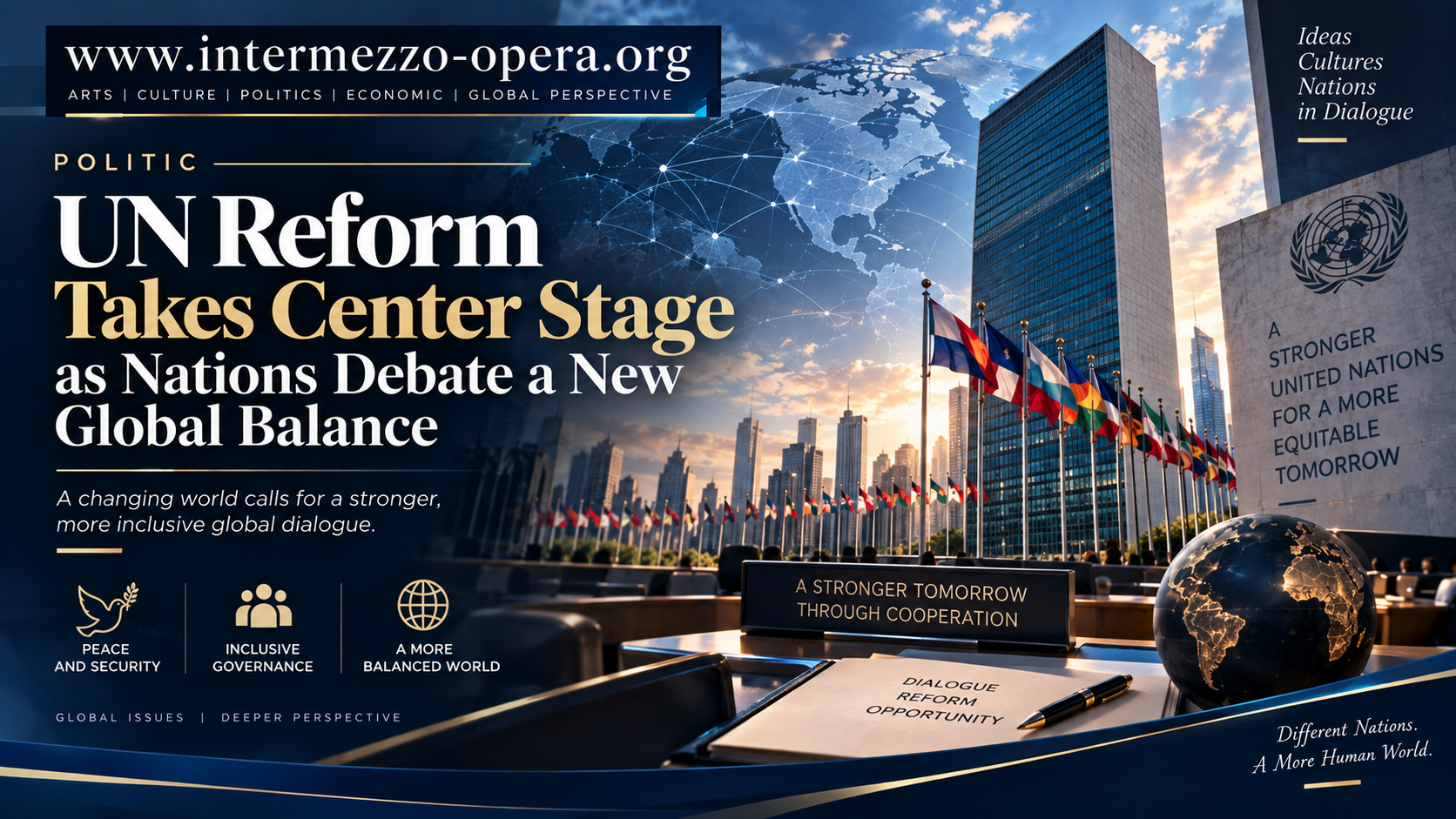
UN reform remains a significant part of the current multilateral agenda. The 81st General Assembly presidency lists renewed multilateralism, UN80 reform, and inclusive global governance among its priorities.
The debate is likely to involve both institutional design and political power.
Reform Is Also About Effectiveness
Representation is only one part of institutional reform.
Another question concerns whether international organizations can operate efficiently.
During the 80th General Assembly session, governments addressed mandate reform as part of the broader UN80 process. The outgoing Assembly president said the session adopted hundreds of resolutions while also pursuing changes aimed at reducing overlapping structures and improving how the organization works.
Therefore, reform debates involve a difficult balance.
Governments want institutions to be more representative. At the same time, they also want them to deliver results.
Competition Does Not Eliminate Cooperation
Countries can compete economically while cooperating on other issues.
Two governments may disagree over trade but still work together on public health. They may compete for investment while participating in the same climate negotiations.
This pattern is likely to remain important.
International relations are rarely divided into perfectly separate camps. Economic networks, supply chains, migration, technology, and environmental problems connect countries in complicated ways.
Therefore, selective cooperation may become increasingly common.
Diplomacy Is Becoming More Flexible
Traditional alliances remain important. However, governments also participate in smaller coalitions built around specific issues.
One partnership may focus on trade. Another may address maritime security. A third may concentrate on technology or climate policy.
This flexible approach allows governments to pursue different interests at the same time.
However, it can also make global politics harder to understand.
Countries that cooperate today may disagree tomorrow when the issue changes.
Middle Powers in Global Politics and the Future Global Order
Middle powers in global politics are unlikely to replace the world’s largest powers. Military strength, economic scale, technological capacity, and financial influence still give major powers enormous advantages.
However, international influence is not determined by size alone.
Coalition building, regional leadership, strategic geography, trade relationships, and diplomatic credibility can give other countries meaningful leverage.
The current UN agenda illustrates how broad the challenge has become. World leaders are confronting conflicts, climate risks, development problems, technological change, and demands for institutional reform at the same time.
Ultimately, middle powers in global politics are becoming important because the international system requires cooperation across a wider group of countries. The emerging global balance may therefore depend not only on competition among major powers, but also on how effectively other nations build partnerships, negotiate differences, and shape the institutions that connect them.


Happy
0 %

Sad
0 %

Excited
0 %

Sleepy
0 %

Angry
0 %

Surprise
0 %
Related Post

Listen: Why Europe won’t blindly follow Donald Trump’s call to secure the Strait of Hormuz?
Calls from Donald Trump for Western allies to secure the strategic Strait of Hormuz have…