lobal Trade Enters a New Era as AI and Energy Risks Reshape the World Economy
 0
0
 0
0
Read Time:3 Minute, 17 Second
Focus Keyphrase: global trade in 2026
SEO Title: Global Trade in 2026 Reshaped by AI and Energy Risks
Slug: global-trade-2026-ai-energy-risks
Meta Description: Global trade in 2026 is entering a new era as artificial intelligence, energy risks and changing supply chains reshape the world economy.
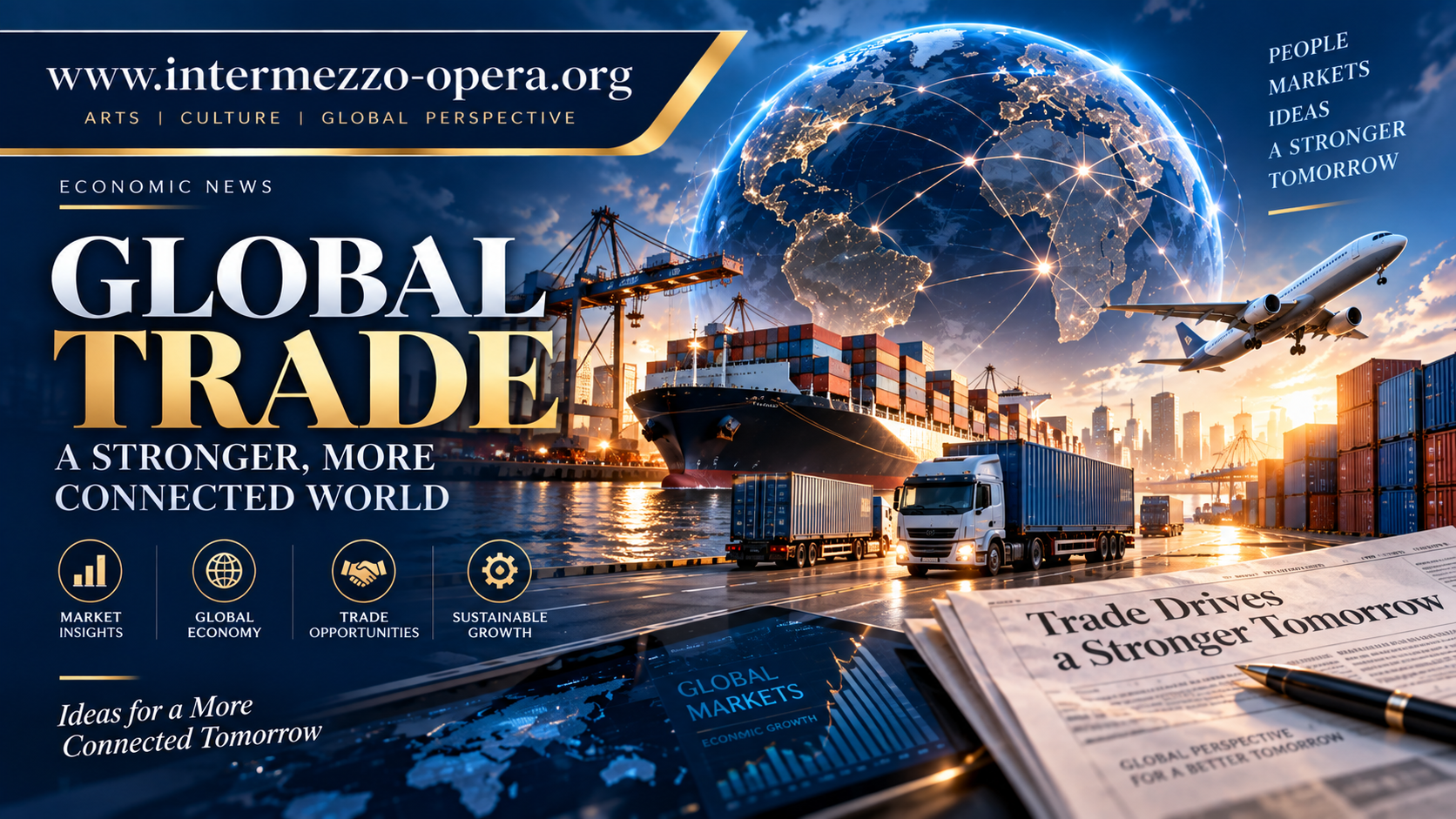
The landscape of global trade in 2026 is changing rapidly as artificial intelligence, energy pressures and shifting supply chains influence the movement of goods and services around the world. After stronger-than-expected trade growth in 2025, the global economy is now entering a more challenging period.
According to the World Trade Organization, world merchandise trade volume increased by 4.6% in 2025. However, the WTO expects growth to slow significantly to 1.9% in 2026 under its baseline scenario.
The slowdown highlights how international commerce is becoming increasingly sensitive to geopolitical tensions, energy costs and changes in technology investment.
AI Becomes a Powerful Driver of Global Trade
Artificial intelligence is no longer only a technology story. It is becoming an important economic force.
Demand for semiconductors, processors, data transmission equipment and other AI-related products helped support international trade during 2025. According to WTO data, trade in AI-enabling goods increased by 21.9% year-on-year to approximately $4.18 trillion. These products accounted for 42% of total global trade growth despite representing only about one-sixth of global trade.
Asia remains particularly important to this transformation. The region accounted for 62% of total trade in AI-enabling goods, according to the WTO’s analysis.
If investment in artificial intelligence remains strong, technology could continue to provide support for global trade in 2026.
Energy Prices Create New Economic Risks
Technology is providing momentum, but energy markets are creating uncertainty.
Higher oil and gas prices can increase manufacturing, transportation and logistics expenses. These additional costs eventually affect businesses and consumers, particularly in economies that depend heavily on imported energy.
The WTO estimates that if crude oil and liquefied natural gas prices remain elevated throughout 2026, merchandise trade growth could fall from its baseline forecast of 1.9% to around 1.4%.
The impact would extend beyond physical goods. International transport, aviation and tourism could also face higher operating costs.
Supply Chains Continue to Transform
Another important development in global trade in 2026 is the transformation of global supply chains.
Companies have spent recent years reconsidering where products are manufactured, assembled and transported. Instead of depending heavily on a single production location, many businesses are seeking greater diversification.
Geopolitical tensions and changing tariff policies are accelerating this transformation. At the same time, emerging markets are becoming increasingly important destinations for international commerce.
The WTO reported that Asia is expected to record merchandise export growth of 3.5% in 2026 under its baseline scenario, among the strongest regional performances projected for the year.
Services Trade Remains More Resilient
While merchandise trade is expected to slow, international services remain relatively resilient.
The WTO projects commercial services trade to grow by 4.8% in 2026 before accelerating slightly to 5.1% in 2027 under its baseline forecast.
Digital services are becoming especially important as businesses increasingly operate across borders without relying entirely on physical transportation.
Software, cloud infrastructure, professional services and other digitally delivered activities illustrate how technology is gradually changing the traditional definition of international trade.
A More Complex Global Economy
The wider economic environment nevertheless remains challenging. The World Bank currently projects global growth at 2.5% in 2026, citing higher energy prices, renewed inflation pressures and geopolitical uncertainty among the major risks facing the world economy.
For businesses and governments, adaptability will therefore become increasingly important.
The future of global trade in 2026 will not be determined by a single economic force. Artificial intelligence could generate new investment and productivity, while energy disruptions and geopolitical tensions could create additional costs.
Together, these developments are creating a global economy in which technology, trade and geopolitics are more closely connected than ever before.


Happy
0 %

Sad
0 %

Excited
0 %

Sleepy
0 %

Angry
0 %

Surprise
0 %
Related Post
Wall Street: America’s Deadly Weapon for World Domination Without War
In today’s interconnected global economy, power is no longer defined solely by military strength. Instead,…