
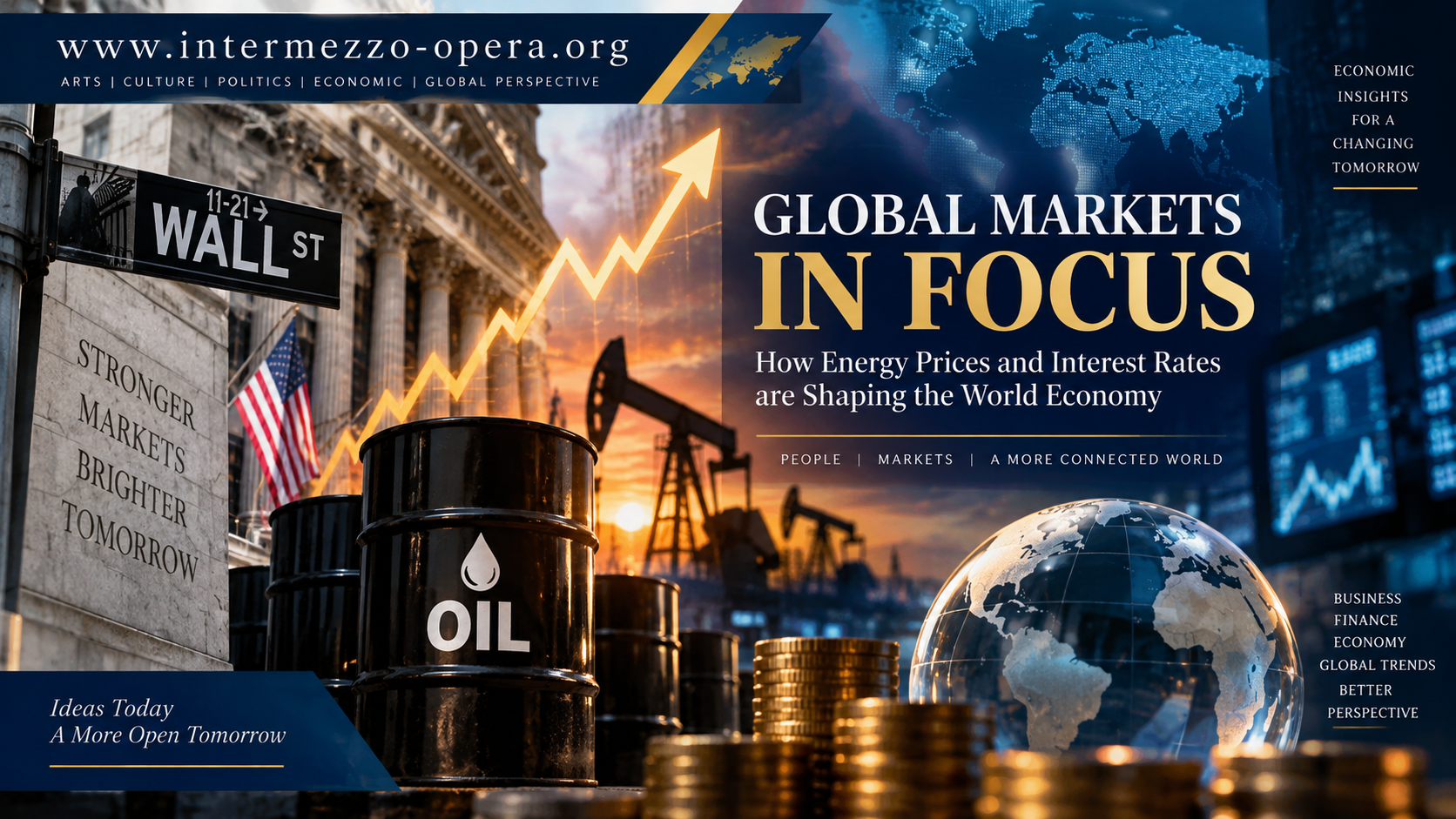
Global Markets Brace for a New Rate Era as Oil Prices Fuel Inflation Concerns
 0
 0
Read Time:2 Minute, 46 Second
Global financial markets are entering another period of uncertainty as major central banks reassess monetary policy amid persistent inflation and elevated energy prices.
The U.S. Federal Reserve began its September 15–16 policy meeting with markets closely watching whether policymakers will change interest rates. Recent inflation pressures and higher oil prices have increased attention on the direction of borrowing costs.
The situation is also being felt across Europe. The European Central Bank raised its three key interest rates by 25 basis points on September 10, citing inflation pressures linked in part to higher energy costs. The ECB said euro-area inflation reached 3.3% in August, up from 2.9% in July.
Oil Prices Put Pressure on the Global Economy
Energy has become one of the biggest factors influencing the current economic outlook. Brent crude has moved toward $110 a barrel, increasing concerns that higher fuel and transportation costs could feed into broader consumer prices.
For businesses, prolonged energy price increases can raise production and logistics expenses. Consumers can also face higher costs for transportation, food and other goods when energy prices remain elevated.
The International Monetary Fund said in September that the global economy had remained resilient despite the energy shock, but warned that risks remain high. The IMF said elevated oil and gas prices, rising debt pressures and stalled disinflation continue to create challenges for policymakers.
Central Banks Face a Difficult Balance
Higher interest rates can help contain inflation by reducing demand and tightening financial conditions. At the same time, higher borrowing costs can weigh on investment, housing activity and consumer spending.
The European Central Bank has already responded with a rate increase, while attention is now focused on the Federal Reserve and other major central banks.
The IMF’s July outlook projected global economic growth of 3.0% in 2026 and 3.4% in 2027. The institution also noted that growth remains uneven, with technology-related demand supporting some economies while geopolitical and energy shocks create pressure elsewhere.
Markets Watch Bonds, Stocks and Currencies
Changes in interest-rate expectations can quickly affect financial markets. Government bond yields have risen alongside expectations of tighter monetary policy, while equity markets have faced additional pressure from higher energy costs.
The U.S. 10-year Treasury yield recently reached 5.03%, according to reporting published on September 16. Higher bond yields can influence financing costs across the economy and affect how investors value financial assets.
Currency markets are also sensitive to differences in interest rates between major economies. Investors therefore continue to monitor central-bank decisions, inflation data, energy prices and economic growth indicators.
The Economic Outlook Remains Uneven
The latest developments do not point to a single economic story across all countries. Some economies continue to show resilient activity, while others face weaker growth alongside higher energy costs.
The IMF has described the global outlook as resilient but exposed to significant downside risks. A prolonged geopolitical conflict, renewed trade tensions or a reassessment of expectations surrounding AI-driven productivity could affect growth and financial markets.
For businesses and investors, the coming months will therefore depend on several interconnected factors: energy prices, inflation, interest rates, global trade and economic growth.
The decisions made by major central banks in September could provide important signals about how policymakers intend to navigate this increasingly complicated economic environment.


Happy
0 %

Sad
0 %

Excited
0 %

Sleepy
0 %

Angry
0 %

Surprise
0 %
Related Post

Coricelli Steps Up Bid for Deoleo, Vows to Keep Spanish Olive Oil Giant Together
Madrid – Italian olive oil group Coricelli is pushing to acquire Deoleo as the battle…