Global Economy Faces Slower Growth as Inflation Pressures Return in 2026
 0
0
 0
0
Read Time:2 Minute, 54 Second
Focus Keyphrase: global economy in 2026
SEO Title: Global Economy in 2026 Faces Slower Growth and Inflation
Slug: global-economy-2026-growth-inflation
Meta Description: The global economy in 2026 faces slower growth, renewed inflation pressures and energy risks as countries navigate an increasingly uncertain outlook.
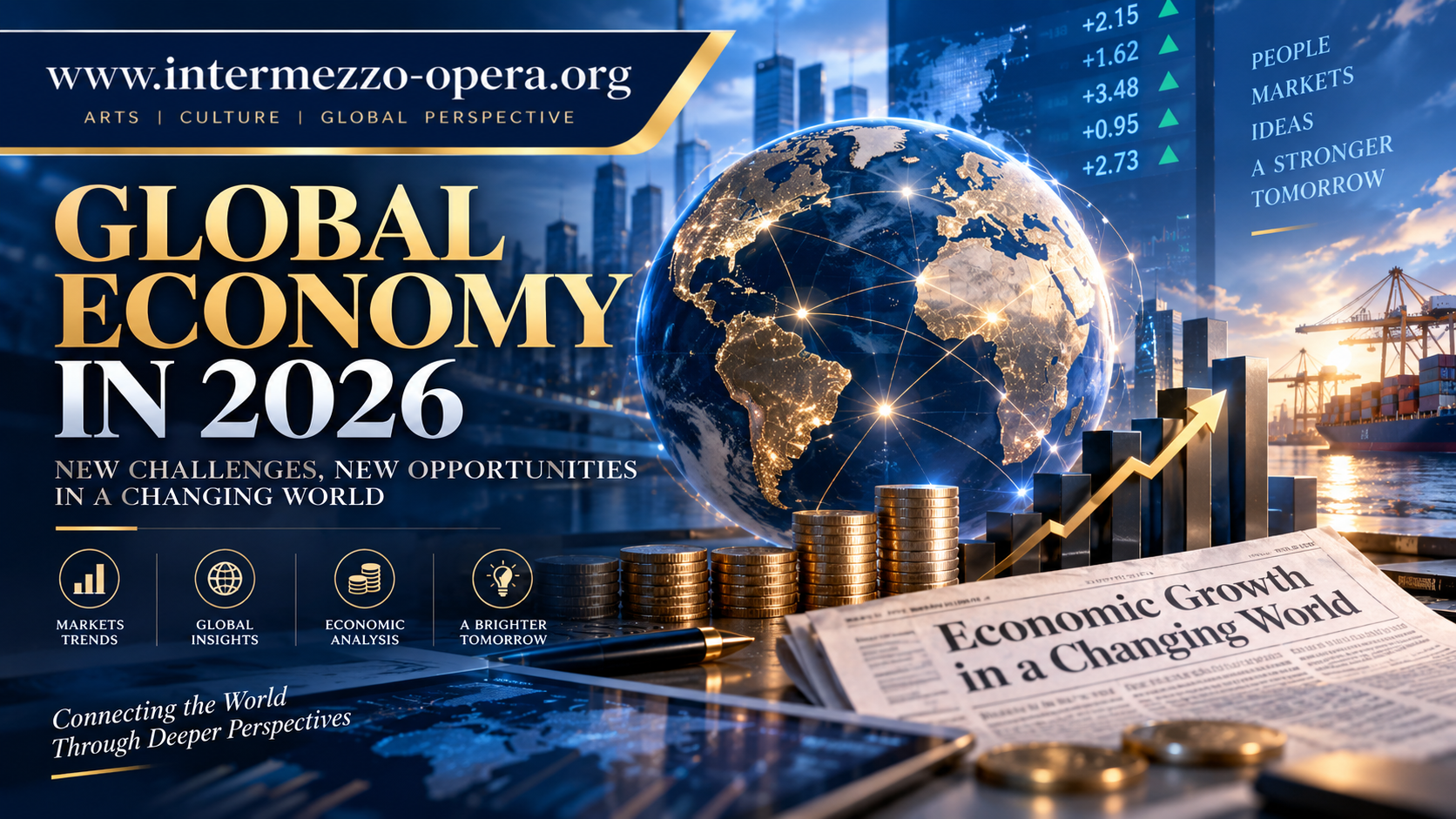
The global economy in 2026 is facing a challenging combination of slower growth, renewed inflation pressures and geopolitical uncertainty. While economic activity has remained more resilient than initially feared, higher energy costs and uneven investment trends are creating new challenges for governments, businesses and consumers.
The International Monetary Fund projected in its July 2026 update that global economic growth would reach 3.0% this year before strengthening to 3.4% in 2027. The IMF also noted that the global disinflation trend has stalled, with headline inflation projected at 4.7% in 2026.
Global Economy in 2026 Shows Uneven Growth
Economic performance is increasingly different across countries. Economies connected to the global technology supply chain are benefiting from strong investment linked to artificial intelligence and other emerging technologies.
However, energy-importing countries remain more exposed to higher commodity prices. This creates additional pressure on production costs, household spending and government budgets.
The IMF said the impact varies significantly depending on countries’ exposure to geopolitical shocks and their position in the technology value chain. Energy exporters outside conflict areas may benefit from improved terms of trade, while vulnerable import-dependent economies face greater pressure.
Inflation Returns as a Major Economic Concern
Inflation remains one of the biggest issues affecting the global economy in 2026. Rising energy and food prices can quickly increase transportation, manufacturing and household expenses.
According to the IMF, global headline inflation is expected to rise from 4.1% in 2025 to 4.7% in 2026 before easing to 3.9% in 2027. This means central banks may need to remain cautious even as governments seek stronger economic growth.
The OECD has also highlighted inflation risks. Its 2026 interim outlook projected G20 headline inflation at 4.0% this year before moderating to 2.7% in 2027.
Technology Investment Provides Economic Support
Despite these challenges, technology remains an important source of economic momentum. Investment related to artificial intelligence, digital infrastructure and advanced manufacturing is helping support activity in several economies.
The IMF identified accelerated technology demand as one factor offsetting some of the negative impact from geopolitical and energy-related shocks.
This trend could become increasingly important for businesses. Companies capable of improving productivity through automation, AI and digital services may be better positioned to navigate an environment of higher costs and uncertain demand.
Energy Prices Remain a Key Risk
Energy markets are another major factor shaping the economic outlook. Higher oil and gas prices can affect almost every part of an economy, from transportation and manufacturing to food production and household expenses.
The OECD warned that persistent disruptions and further increases in energy prices could weaken economic growth while adding to inflation. Its March outlook projected global GDP growth of 2.9% in 2026 and 3.0% in 2027.
What Comes Next for the Global Economy?
The outlook remains uncertain. Stronger technology investment and improving financial conditions could support economic activity, but geopolitical tensions, volatile commodity prices, trade fragmentation and financial-market corrections remain significant risks.
For the global economy in 2026, the central challenge is balancing growth with price stability. Governments and central banks will need to manage short-term pressures while encouraging investment and productivity that can strengthen economies over the longer term.


Happy
0 %

Sad
0 %

Excited
0 %

Sleepy
0 %

Angry
0 %

Surprise
0 %
Related Post

Montecon Uruguay Ends $600 Million Claim After Five-Year Port Dispute
Montecon Uruguay has entered a new chapter after Neltume Ports, the majority shareholder of Montecon,…