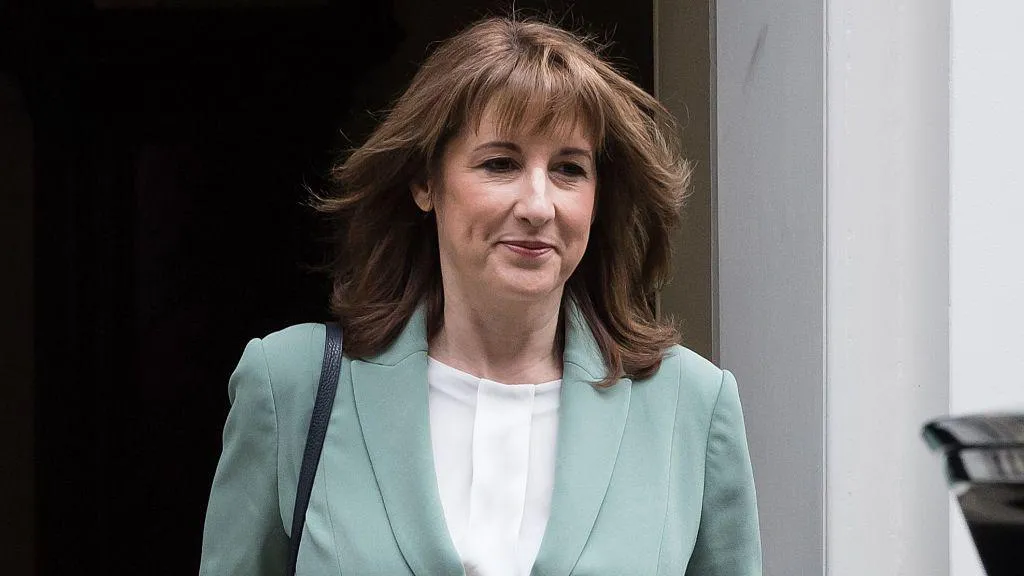

Giorgia Meloni Sets Historic Stability Record as Italy Looks Toward 2027 Election
 0
0
 0
0
Read Time:7 Minute, 0 Second
The Italian political landscape is entering a fascinating new phase. Prime Minister Giorgia Meloni’s government has become Italy’s longest-serving uninterrupted administration since World War II, an extraordinary milestone for a country historically associated with rapidly changing governments.
Meloni’s administration reached 1,413 consecutive days in office, surpassing the record established by Silvio Berlusconi’s government between 2001 and 2005. The achievement highlights an unusual period of political stability in Italy, but it comes as new political forces emerge and attention increasingly turns toward the country’s next general election.
The milestone is therefore more than a symbolic record. It raises a larger question about whether Italy has entered a genuinely more stable political era—or whether the country’s famously unpredictable politics are simply preparing for another transformation.
Italian Political Landscape Reaches a Historic Moment
Italy has experienced dozens of governments since the establishment of the republic after World War II.
Coalition disagreements, party fragmentation and parliamentary crises have repeatedly shortened the lifespan of Italian administrations.
Meloni’s government has broken that pattern.
She took office in October 2022 after her Brothers of Italy party emerged as the dominant force in a right-wing coalition. Nearly four years later, the coalition has remained intact despite economic challenges, European political disputes and significant international uncertainty.
That longevity has become one of Meloni’s most notable political achievements.
The Associated Press reported that her government officially surpassed Berlusconi’s previous postwar record after reaching 1,413 days without interruption.
Why Meloni’s Government Has Survived
Political stability does not necessarily mean the absence of disagreement.
Meloni governs alongside coalition partners with their own political identities and priorities. However, her administration has largely avoided the internal breakdowns that brought down many previous Italian governments.
Her political strategy has also been more pragmatic than some observers initially expected.
Since taking office, Meloni has maintained cooperation with the European Union and NATO while preserving her conservative political identity domestically.
Her government has emphasized fiscal discipline, migration controls and economic stability. Reuters notes that unemployment has fallen and irregular immigration has declined during her administration, although significant structural problems remain.
A Different Relationship With Europe
Before becoming prime minister, Meloni was frequently associated with strong criticism of European institutions.
Government responsibility has produced a more complicated relationship.
Italy remains deeply integrated into the European Union, the eurozone and Europe’s economic architecture. Consequently, Rome’s decisions on government spending, migration, Ukraine and industrial policy cannot easily be separated from broader European priorities.
Meloni has therefore attempted to combine national conservative politics with pragmatic engagement in Brussels.
That balancing act has helped Italy avoid some of the direct confrontations with European institutions that once appeared possible.
But Italy’s Political Right Is Changing
Meloni’s greatest political challenge may eventually come from her own side of the political spectrum.
Former general Roberto Vannacci has created a new party called Futuro Nazionale, which has rapidly gained attention in Italian politics.
Reuters reported that the party has already emerged as Italy’s fourth-most-popular political force in polling, potentially disrupting the established balance within the Italian right.
Vannacci advocates a significantly more confrontational approach toward European integration.
Speaking at the TEHA Ambrosetti business conference in Cernobbio, he argued that Europe should halt further political integration and instead operate primarily as a cooperative framework between sovereign nations.
His rise creates an intriguing problem for Meloni.
Competition on the Right Could Reshape the 2027 Election
For several years, Meloni successfully consolidated conservative voters around Brothers of Italy.
A new party positioned further to the right could fragment that electorate.
Reuters has noted that Vannacci’s growing movement complicates the outlook for Meloni’s coalition ahead of parliamentary elections expected in 2027.
That does not automatically mean Meloni is losing control.
Brothers of Italy remains the country’s strongest individual political force, and Meloni continues to occupy the powerful position of incumbent prime minister.
But Italian elections are ultimately determined not only by individual party popularity but also by coalition mathematics.
Even relatively modest changes in support can therefore have significant consequences.
Electoral Reform Could Become Crucial
The rules governing Italy’s next election could also become part of the political battle.
Meloni has advocated changes intended to produce stronger parliamentary majorities and more durable governments.
Supporters argue that Italy needs electoral rules capable of preventing the instability that characterized much of its postwar political history.
Critics, however, worry that reforms designed around majority bonuses could disproportionately strengthen the largest political coalition. Reuters reported that the proposed changes have already generated debate about whether political stability could come at the expense of broader representation.
The issue is particularly important because Italy’s political system has repeatedly struggled to transform election victories into durable governing majorities.
Migration Remains a Defining Political Issue
Migration is likely to remain central to the Italian political landscape heading into 2027.
Meloni built much of her political identity around stronger border controls and restrictions on irregular migration.
Her government has pursued agreements with countries outside the European Union while advocating broader European cooperation on migration management.
The debate is simultaneously evolving across Europe.
Five EU countries recently agreed on a model for establishing so-called return hubs outside the European Union for people whose asylum applications have been rejected, with implementation potentially beginning as early as 2027.
The development shows how policies once associated primarily with Europe’s political right are increasingly influencing mainstream European migration policy.
Italy Is Part of a Wider European Shift
Italy’s political transformation cannot be viewed in isolation.
Across Europe, traditional party systems are being challenged.
Germany’s AfD has just recorded a historic result in Saxony-Anhalt, winning around 44% of the vote.
France is already preparing for its consequential 2027 presidential election, where President Emmanuel Macron cannot seek another term and numerous candidates are competing to replace him.
Sweden, meanwhile, will hold a parliamentary election on September 13, with recent polling showing the centre-left and governing right-wing blocs separated by only a narrow margin.
Taken together, these developments reveal a European political environment undergoing substantial change.
Political Stability Has Economic Consequences
Italy’s unusual period of government stability also matters economically.
Businesses and investors generally benefit from predictable policy environments, particularly in countries carrying significant public debt.
Political crises can raise government borrowing costs and complicate long-term investment decisions.
For Italy, maintaining market confidence remains particularly important because the country must balance economic growth with fiscal discipline.
A stable government can make long-term reforms easier to implement, although political longevity alone cannot resolve structural economic problems.
The real test is whether stability produces measurable improvements in productivity, investment and household living standards.
Meloni Faces the Challenge of Turning Stability Into Results
Surviving in office and succeeding politically are different achievements.
Meloni has demonstrated that her coalition can remain together.
The next challenge is convincing voters that political stability has improved their lives.
Cost-of-living pressures, wages, taxation, public services and employment are likely to become increasingly important as the 2027 election approaches.
Opposition parties will attempt to shift the debate away from government longevity and toward the administration’s policy record.
Meanwhile, new competitors on the right may argue that Meloni has become too moderate after nearly four years in government.
This creates pressure from multiple directions.
Europe Will Be Watching Italy’s 2027 Election
Italy is the European Union’s third-largest economy and one of its most influential member states.
Its political direction therefore matters beyond Rome.
Questions surrounding European integration, migration, fiscal rules, relations with the United States, support for Ukraine and Europe’s approach to Russia could all be affected by the composition of Italy’s next government.
Meloni’s transformation from opposition leader to one of Europe’s longest-serving current leaders has already changed perceptions of Italian politics.
The 2027 election will determine whether that transformation becomes lasting.
A Stability Record, but an Uncertain Future
Giorgia Meloni has achieved something unusual in modern Italian politics: longevity.
Her government has surpassed the previous postwar record for uninterrupted time in office, giving Italy a degree of political continuity rarely seen in recent decades.
Yet the political environment around her is changing rapidly.
New parties are emerging, competition within the right is intensifying and voters will soon decide whether stability itself is enough reason to extend Meloni’s mandate.
Italy’s next political chapter may therefore be defined by an intriguing contradiction.
The country has rarely looked so politically stable—just as the competition for its future begins to intensify.


Happy
0 %

Sad
0 %

Excited
0 %

Sleepy
0 %

Angry
0 %

Surprise
0 %
Related Post
Juliana Stratton wins Illinois Democratic primary for Senate. She could become the sixth Black woman senator in US history
Juliana Stratton has won the Democratic primary for the U.S. Senate seat in Illinois, positioning…