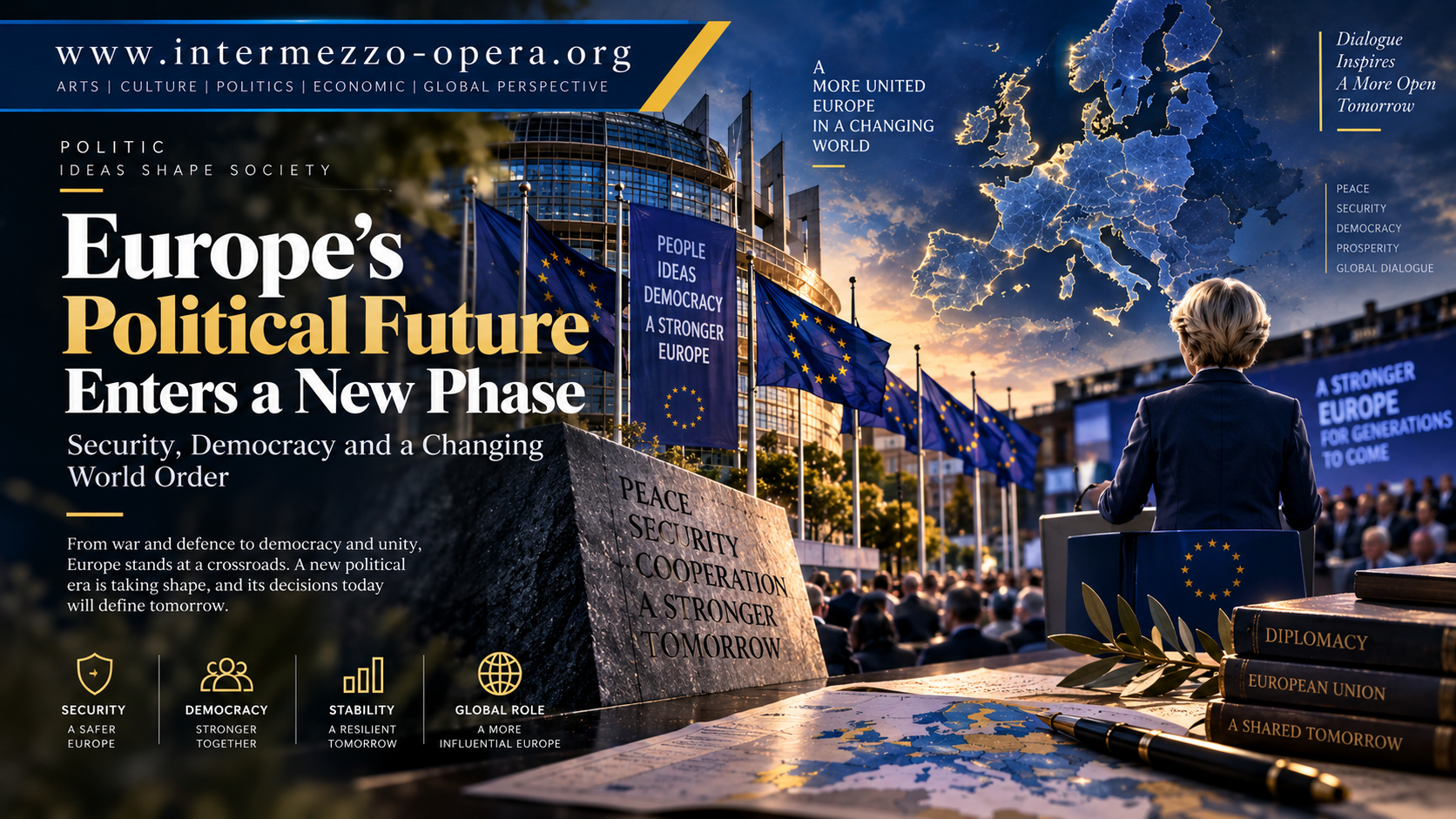
Europe’s Political Future Enters a New Phase as Security and Democracy Take Center Stage
 0
0
 0
0
Read Time:3 Minute, 15 Second
Europe is entering a major political transition. Security, Ukraine, defence and public trust are now shaping the continent’s political debate.
At the same time, the rise of nationalist parties is putting pressure on traditional political groups. Germany has become one of the clearest examples of this change.
Germany Sends a Strong Political Signal
The recent election in Saxony-Anhalt created a major political shock. The Alternative for Germany, or AfD, recorded its strongest result in the state.
The result has increased pressure on Germany’s mainstream parties. It also raised questions about the future of the political balance in Europe.
However, the impact goes beyond Germany.
Other European countries are also facing stronger nationalist movements. Therefore, mainstream parties must respond to voters who are increasingly concerned about migration, security and the economy.
Security Is Changing Europe’s Politics
Security has become one of the biggest political issues in Europe.
Russia’s war against Ukraine continues to influence decisions in Brussels and national capitals. At the same time, European governments are debating how to strengthen their own defence capabilities.
The EU has set a goal of improving defence readiness by 2030. Leaders also want to reduce strategic dependencies and strengthen Europe’s defence industry.
This policy could reshape European politics for years.
Defence spending is increasing. Governments are also discussing drones, air defence, cyber security and military technology.
As a result, security policy is no longer only a military issue. It has become an important part of Europe’s economic and political strategy.
Ukraine Remains at the Center
Ukraine remains another major political challenge.
The European Union continues to support Ukraine’s independence and territorial integrity. It also supports diplomatic efforts toward a lasting peace.
More recently, the European Commission approved €6.1 billion in additional support for Ukraine’s air and missile defence, ammunition, drones and electronic warfare needs.
Therefore, Europe is taking a stronger role in the war and its wider security consequences.
This also creates political pressure.
European governments must balance support for Ukraine with public concerns about defence spending and domestic economic needs.
Europe Wants More Strategic Independence
Another major political trend is Europe’s effort to become more independent in security and foreign policy.
European leaders are increasingly discussing how to reduce reliance on the United States. This does not mean Europe wants to abandon NATO.
Instead, the debate is about building stronger European capabilities within the wider transatlantic security system. The EU has also stressed that stronger European defence should complement NATO.
France and Germany are also pushing for better coordination of European foreign policy. Their efforts focus on making EU diplomacy more effective and more united.
Democracy Faces a New Test
Meanwhile, Europe is dealing with another challenge.
Public trust in traditional political institutions is under pressure. Economic concerns, migration, security fears and political polarization are changing voter behavior.
The rise of the AfD shows how quickly political movements can gain support when voters become frustrated with established parties.
However, the response from European governments will be important.
If mainstream parties ignore voter concerns, nationalist movements could gain more support. On the other hand, political responses that deepen division could create new problems for democratic institutions.
A New European Political Balance
Europe is now facing several changes at the same time.
Security priorities are rising. Defence spending is increasing. Nationalist parties are gaining influence. Meanwhile, the EU is trying to strengthen its role on the global stage.
The next few years could therefore become a turning point.
Europe must protect democracy while responding to new security threats. It must also maintain cooperation between member states despite growing political differences.
The central question is no longer whether Europe is changing. The question is what kind of Europe will emerge from this political transformation.
The answer will depend on elections, public trust, security decisions and the ability of European leaders to work together.


Happy
0 %

Sad
0 %

Excited
0 %

Sleepy
0 %

Angry
0 %

Surprise
0 %
Related Post
Agency Linked to Paraguay’s “Red Desinformante” Draws Scrutiny as Camilo Pérez Campaign Questions Emerge
A digital communications agency previously linked by investigative reporting to Paraguay’s so-called “Red Desinformante” has…