
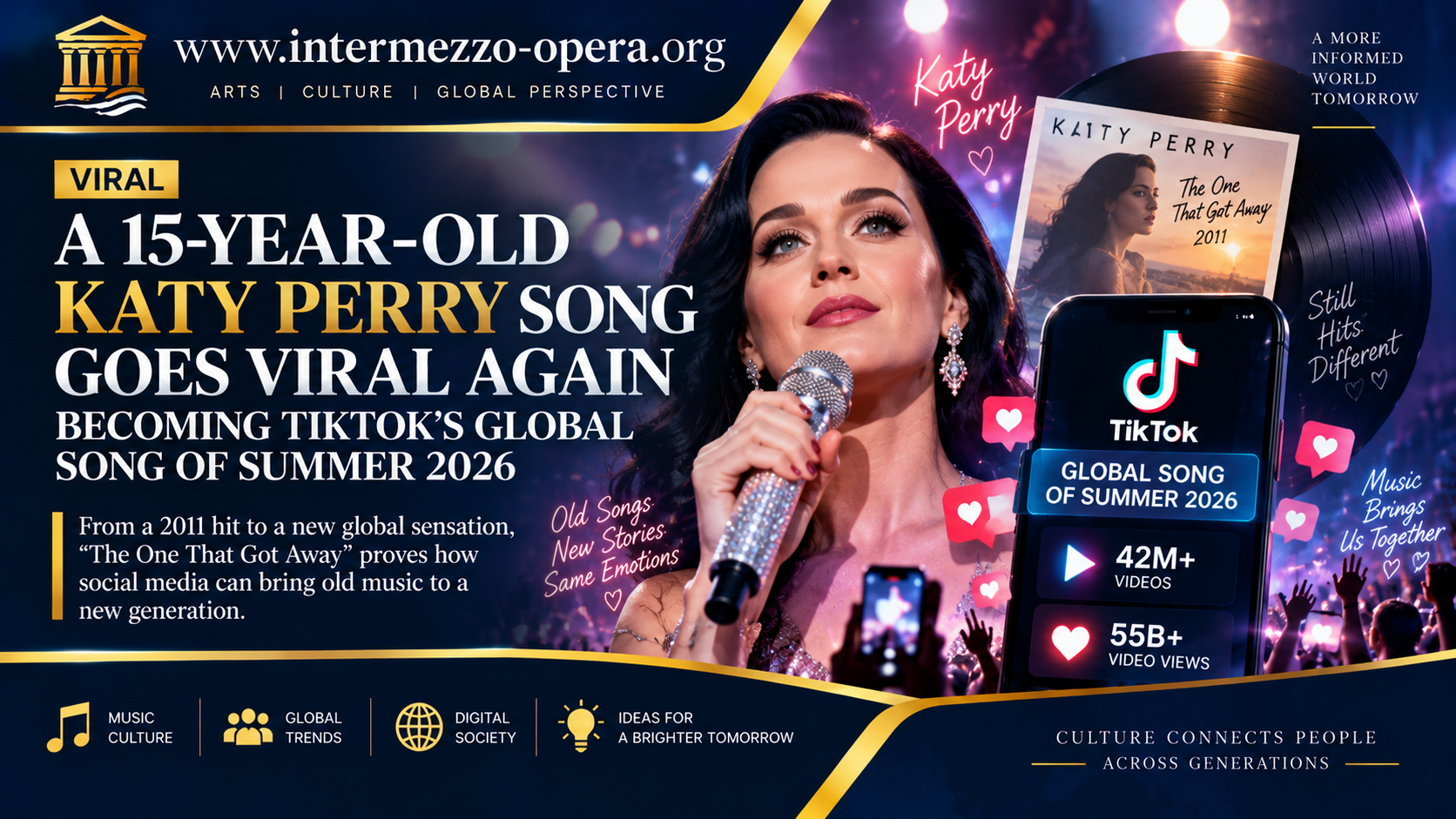
A 15-Year-Old Katy Perry Song Goes Viral Again, Becoming TikTok’s Global Song of Summer 2026
 0
0
 0
0
Read Time:7 Minute, 9 Second
A remarkable example of how social media can rewrite music history has emerged in 2026. Katy Perry’s “The One That Got Away,” originally released as a single in 2011, has returned to global attention after becoming TikTok’s No. 1 Global Song of the Summer 2026.
The revival illustrates an increasingly powerful phenomenon in modern culture: old music going viral years—or even decades—after its original release.
According to TikTok, the song was used to soundtrack more than 42 million videos during its resurgence and accumulated more than 55 billion video views. Its renewed popularity also pushed the track back onto charts around the world, including the Billboard Global 200.
What was once a hit associated with the early 2010s has suddenly become part of the soundtrack of another generation.
Old Music Going Viral Changes the Meaning of a “Hit”
Traditionally, popular songs followed a relatively predictable cycle.
A record label released a single, radio stations promoted it, television appearances increased visibility and listeners purchased physical copies or downloads.
Eventually, most songs disappeared from the charts.
Streaming and short-form video have disrupted that timeline.
A song no longer needs to be new to become culturally relevant.
TikTok users can discover an older recording, attach it to a popular format and introduce it to millions of people who may never have heard the original release.
“The One That Got Away” is a striking demonstration of that transformation.
From 2011 Single to 2026 Viral Phenomenon
“The One That Got Away” originally appeared on Perry’s highly successful Teenage Dream album and was released as a single in 2011.
Fifteen years later, the song found an entirely different audience.
TikTok officially named it its Global Song of the Summer for 2026, describing a season in which users rediscovered established songs alongside emerging artists and new releases.
The scale of the revival is particularly significant.
More than 42 million TikTok creations used the track, while videos featuring it collectively generated over 55 billion views.
Those numbers demonstrate how dramatically the mechanisms of music discovery have changed.
Why Are Old Songs Becoming Popular Again?
Nostalgia is certainly part of the explanation, but it is not the whole story.
A teenager discovering a 15-year-old song today may have little or no nostalgia attached to it. For that listener, the track can effectively function as new music.
Social media removes recordings from their original historical context.
A song released in 1985, 2005 or 2011 can appear directly beside music released yesterday.
Algorithms care less about age than engagement.
If people repeatedly watch, share and recreate videos using a particular sound, the platform can continue exposing that recording to larger audiences.
This gives older music an opportunity that previous generations rarely experienced.
TikTok Has Become a Music Discovery Engine
Short-form video has evolved into an important part of the global music ecosystem.
Songs can become associated with dances, transformations, jokes, travel videos, fashion clips, emotional storytelling or entirely unexpected trends.
Once a sound becomes recognizable, repetition can accelerate its popularity.
TikTok’s own 2026 summer review highlights how its community simultaneously discovered new artists and rediscovered older favorites.
Germany offered another striking example.
KITSCHKRIEG, Blumengarten and Shirin David’s “Gut Genug” became Germany’s top TikTok summer track, while an international mishearing of its lyrics—“Doobie Scoot Canoe”—developed into an internet phenomenon that attracted participation from major global artists.
Music is increasingly becoming inseparable from meme culture.
A New Generation Can Rewrite a Song’s Identity
A revived song does not necessarily retain its original meaning.
When “The One That Got Away” appeared in 2011, listeners encountered it within the context of Katy Perry’s album, radio promotion, music videos and contemporary pop culture.
A TikTok user discovering the song in 2026 may encounter only a few seconds first.
That fragment could accompany a romantic story, humorous clip, nostalgic montage or personal memory.
Millions of individual interpretations can therefore create a second cultural identity for the same recording.
The artist releases the song once.
The internet continually reinvents it.
Music Catalogues Are Becoming Living Archives
The phenomenon also changes the commercial value of older recordings.
Music catalogues were once treated primarily as historical libraries that generated relatively predictable royalties.
Streaming platforms have transformed them into potentially renewable assets.
Any recording can theoretically experience another wave of popularity.
A film, television series, celebrity moment, meme or viral video can suddenly send listeners searching for a song released years earlier.
For musicians and rights holders, this means the commercial lifespan of a recording may be much longer than previously assumed.
Viral Culture Is Blurring Musical Generations
There was once a clearer distinction between the music consumed by different generations.
Parents had their records. Teenagers had current radio hits. Older recordings were frequently classified as classics or nostalgia.
Streaming platforms place everything inside the same library.
TikTok takes this further by presenting music without necessarily emphasizing its release date.
A 17-year-old listener can move from a 2026 release to a song from 2011 within seconds.
The result is a culture in which musical eras increasingly overlap.
Old and new compete for attention on almost equal terms.
This Phenomenon Extends Beyond Pop Music
The implications extend far beyond contemporary pop.
Classical music, opera, jazz and traditional recordings can also experience sudden digital revivals.
A short section of an aria could become attached to a viral video trend.
A century-old composition could become the soundtrack to millions of clips.
A forgotten performance might be rediscovered after appearing in a television series.
For a cultural platform such as intermezzo-opera.org, this development is particularly fascinating because it demonstrates that digital platforms do not only promote new culture.
They can also revive cultural memory.
Could Opera Have Its Own Viral Revival?
Opera may appear distant from TikTok culture, but the two worlds are not necessarily incompatible.
Opera contains exactly the qualities that short-form video often rewards: dramatic emotional peaks, recognizable melodies, powerful voices and visually spectacular performances.
A few seconds from an aria can communicate emotion without requiring audiences to understand the entire opera.
That creates an unusual opportunity.
Someone who has never entered an opera house could first encounter Puccini, Verdi or Mozart through a viral video.
The experience would obviously be very different from attending a complete performance, but it could become an entry point.
Digital virality can therefore function as cultural discovery.
Algorithms Are Becoming Cultural Gatekeepers
There is also a more complicated side to this transformation.
Historically, record labels, radio programmers, critics and music television executives played enormous roles in deciding which songs reached mass audiences.
Today, algorithms increasingly participate in that process.
Recommendation systems analyze engagement and determine which sounds appear repeatedly on users’ screens.
This can democratize discovery by allowing unexpected songs to break through without traditional promotion.
But it also concentrates significant cultural influence inside technology platforms.
The question of who—or what—decides what becomes popular is therefore changing.
Artists Now Compete Across Decades
Contemporary musicians no longer compete only against other contemporary musicians.
They effectively compete against the entire history of recorded music.
A newly released song can appear in the same recommendation feed as a track from 2011, 1991 or 1971.
That creates extraordinary variety for listeners.
For artists, however, it also means attention has become even more competitive.
The success of “The One That Got Away” demonstrates that an established catalogue can unexpectedly become culturally dominant again.
The Internet Has Changed Music’s Relationship With Time
The viral revival of Katy Perry’s song reveals something larger about modern culture.
Digital platforms are weakening the traditional relationship between popularity and time.
A song does not necessarily become culturally obsolete simply because its original promotional cycle has ended.
It can disappear for years and return when the right audience, trend and algorithm converge.
That makes modern popular culture increasingly unpredictable.
Yesterday’s forgotten track can become tomorrow’s global soundtrack.
A 2011 Song Becomes the Sound of Summer 2026
Perhaps the most striking part of the story is its simplicity.
“The One That Got Away” did not need to be rewritten to belong to 2026.
A new generation simply found it.
More than 42 million TikTok videos later, a song released fifteen years earlier had become the platform’s biggest global soundtrack of the summer.
The phenomenon demonstrates that in the streaming era, music no longer follows a straight line from release to popularity to nostalgia.
Songs can have second lives.
Sometimes, those second lives can become even more culturally surprising than the first.


Happy
0 %

Sad
0 %

Excited
0 %

Sleepy
0 %

Angry
0 %

Surprise
0 %
Related Post
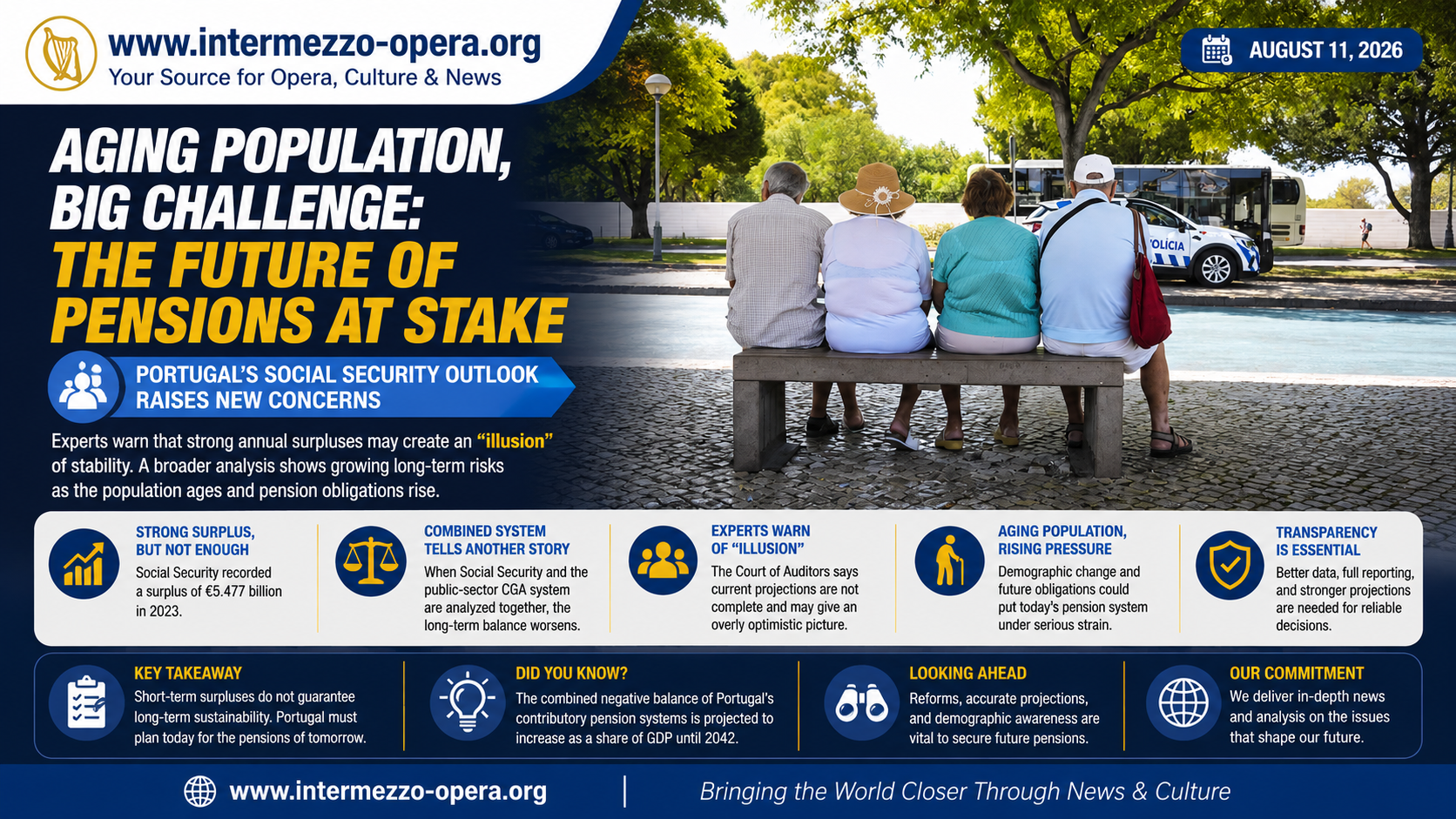
Portugal’s Social Security Outlook Under Scrutiny as Experts Warn Against “Illusion” of Financial Stability
LISBON – The long-term outlook for Portugal’s Social Security system is facing renewed scrutiny. Concerns…