
Spain Adds Record 64,400 New Retirees in First Half as Pension Pressure Grows
 0
0
 0
0
Read Time:2 Minute, 50 Second
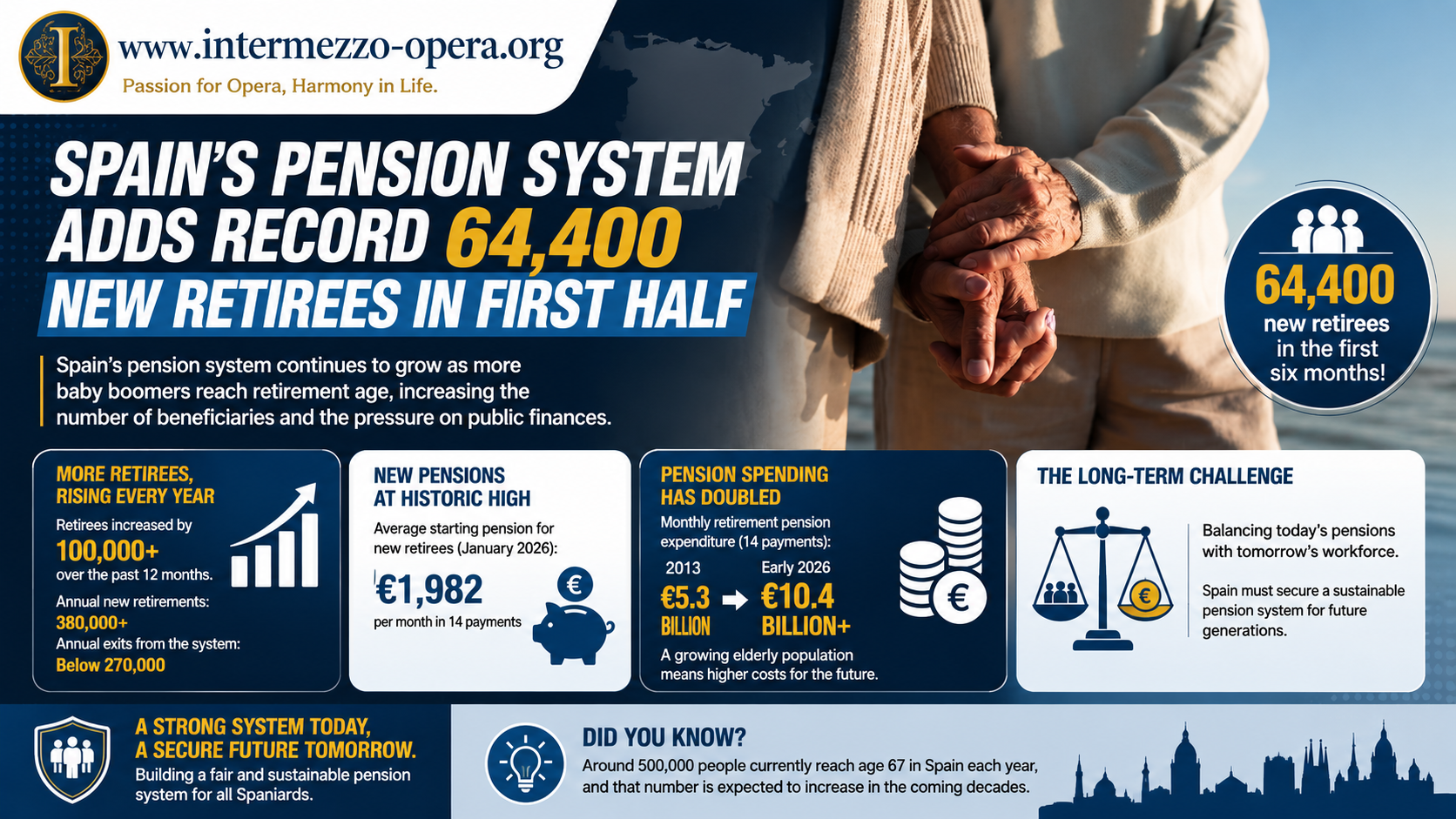
MADRID – Spain’s pension system continues to expand as a growing number of workers reach retirement age. Around 64,400 additional retirees were added to the system during the first half of the year, marking a record increase for the first six months.
The rise reflects an important demographic shift in Spain. In particular, members of the large baby-boom generation are increasingly reaching retirement age.
As a result, the number of pension recipients is rising. At the same time, the financial burden on the Social Security system is becoming increasingly significant.
Spain’s Pension System Sees More Retirees
The arrival of thousands of new retirees is not an isolated development.
Spain has been recording steady growth in its retired population. Social Security figures reported earlier in 2026 showed an increase of more than 100,000 retirees over a 12-month period.
Meanwhile, annual new retirement registrations have been running above 380,000, while annual exits from the system have remained below 270,000.
Therefore, the total number of people receiving retirement pensions continues to increase.
This trend is expected to remain important in the coming years as more baby boomers leave the labour market.
Baby Boom Generation Drives Retirement Growth
Demographics are one of the main factors behind the increase.
Spain has a large generation of workers who are now approaching or reaching retirement age. According to estimates cited by financial experts, roughly 500,000 people are currently reaching age 67 each year.
Moreover, that figure could gradually increase over the coming decades.
This creates two challenges.
First, more people are becoming eligible for pensions. Second, many new retirees have long contribution histories and relatively strong previous salaries.
Consequently, some of them qualify for higher pensions than earlier generations.
New Retirement Pensions Are Also Rising
The increase in the number of retirees is only one side of the story.
The average starting pension for new retirees under Spain’s General Regime reached €1,982 per month in 14 payments in January 2026, according to Social Security data reported by El Confidencial.
That level was described as a historic high.
Therefore, pension expenditure is being affected by both the growing number of beneficiaries and the value of newly awarded pensions.
Retirement Pension Spending Has Increased Sharply
The financial impact has become increasingly visible.
Monthly expenditure on retirement pensions has roughly doubled compared with 2013. It increased from around €5.3 billion per month at that time to more than €10.4 billion per month by early 2026, calculated across 14 annual payments.
Population ageing is one reason behind this growth.
However, longer life expectancy and higher pensions among some new retirees also contribute to the pressure on public finances.
Spain Faces a Long-Term Pension Challenge
The growing number of retirees has renewed attention on the long-term sustainability of Spain’s public pension system.
A pension system must balance contributions from workers and employers with payments made to retirees and other beneficiaries.
However, demographic changes can make that balance more difficult.
As larger generations retire, Spain will need to finance pensions for a growing elderly population while maintaining a sufficient base of workers contributing to Social Security.
The challenge is therefore not simply the 64,400 new retirees recorded during the first half. Instead, the figure highlights a broader demographic transformation that is expected to influence Spain’s economy and public finances for years to come.


Happy
0 %

Sad
0 %

Excited
0 %

Sleepy
0 %

Angry
0 %

Surprise
0 %
Related Post

Paraguay Weighs MIC-Senatur Merger to Create New Ministry of Industry, Commerce and Tourism
Paraguay’s MIC-Senatur merger is back in focus as authorities consider a major restructuring of the…