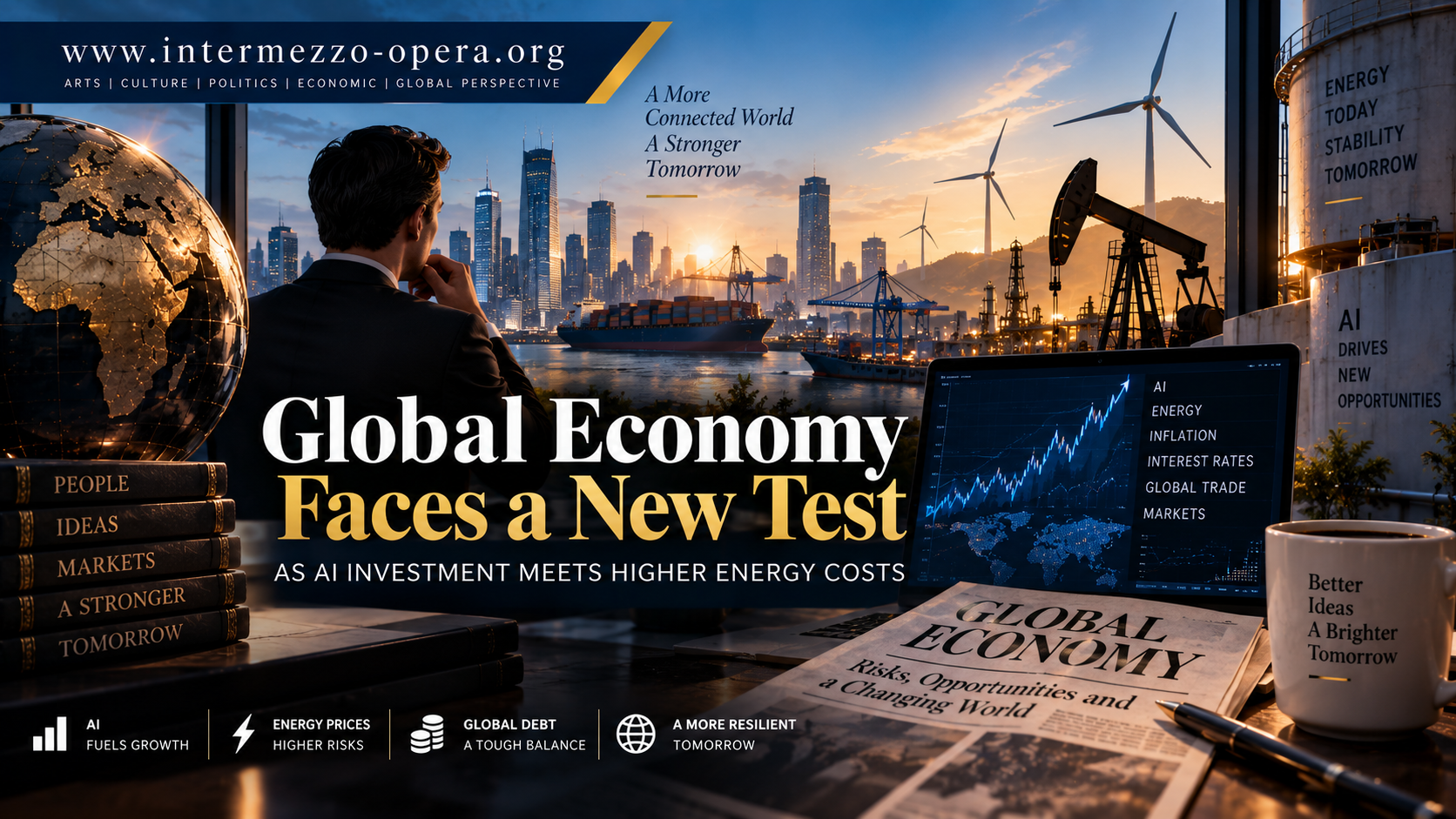
Global Economy Faces a New Test as AI Investment Meets Higher Energy Costs
 0
0
 0
0
Read Time:2 Minute, 47 Second
The global economy is entering a difficult new phase. Growth is still moving forward, but energy costs, inflation, debt, and geopolitical risks are creating fresh pressure.
The International Monetary Fund expects global growth to reach around 3% in 2026. However, the IMF says risks remain high as the energy shock continues to affect countries around the world.
AI Becomes a Major Economic Driver
At the same time, artificial intelligence is giving the global economy a new source of growth.
Companies are investing heavily in AI systems, chips, data centers, and power infrastructure. As a result, countries connected to the technology supply chain are seeing stronger economic activity.
The IMF says AI investment is helping support growth, especially in the United States and economies such as South Korea that are closely linked to the technology sector.
However, this growth also needs large amounts of energy. That creates a new challenge for businesses and governments.
Energy Costs Put Pressure on Businesses
Energy remains one of the biggest economic concerns.
Higher oil and gas prices can raise the cost of transport, production, and electricity. In turn, companies may face higher operating costs.
Consumers can also feel the impact. Higher energy prices can reduce household spending power.
The IMF says the energy shock is not over. Countries also need to rebuild their oil and gas reserves, while energy demand is expected to rise.
Inflation Is Still a Concern
Inflation has also become harder to control.
The IMF says the global disinflation process has stalled in many countries. That means central banks still need to pay close attention to price stability.
Meanwhile, the European Central Bank expects euro area inflation to reach around 3% in 2026 before easing later. The ECB also points to energy prices and the Middle East conflict as major risks.
Therefore, businesses must prepare for a more uncertain cost environment.
Global Debt Adds Another Challenge
Debt is another major issue.
Global public debt is now close to 100% of world GDP, according to the IMF. The level is expected to rise further.
Because of that, governments have less room to respond when a new economic shock arrives. Developing countries can face even greater pressure because borrowing costs may remain high.
At the same time, governments still need to invest in infrastructure, energy, education, and technology.
A New Economic Balance
The global economy is now being pulled in two directions.
On one side, energy costs and geopolitical tensions create pressure. On the other side, AI investment is supporting demand and creating new business opportunities.
This situation could change the global economic map. Countries with strong technology industries may gain more from the AI boom. Meanwhile, countries that depend heavily on imported energy may face greater pressure.
The IMF expects global growth to remain around 3% in 2026 before rising to 3.4% in 2027, although the outlook remains uneven across countries.
What Businesses Should Watch
Businesses will need to watch several factors closely. Energy prices, interest rates, AI investment, trade, and consumer spending could all influence growth.
At the same time, companies that can use technology to improve productivity may find new opportunities.
The global economy is not standing still. AI is creating new opportunities, while energy and debt are creating new risks. The ability to adapt may become the most important advantage for businesses in the years ahead.


Happy
0 %

Sad
0 %

Excited
0 %

Sleepy
0 %

Angry
0 %

Surprise
0 %
Related Post
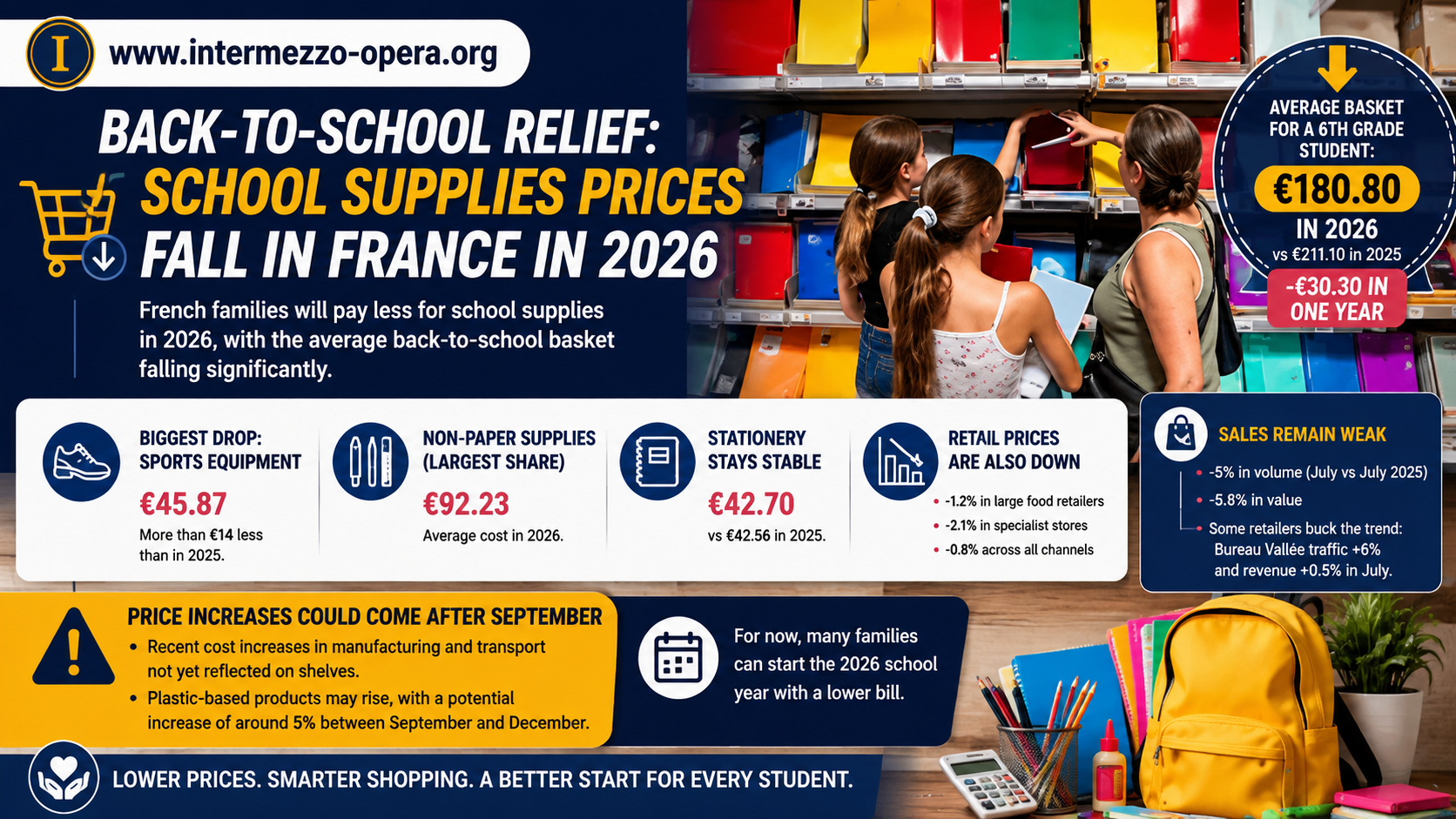
Back-to-School Costs Fall in France as Families Get Relief on Supplies
Paris – French families are receiving some welcome news ahead of the 2026 school year.…