Global Economy Faces a New Test as AI Investment and Energy Risks Reshape Growth in 2026
 0
0
 0
0
Read Time:6 Minute, 4 Second
The global economy in 2026 is being pulled in two very different directions. Rapid investment in artificial intelligence and digital infrastructure is supporting economic activity, while geopolitical tensions, energy-market disruptions and persistent inflation are creating new risks for households and businesses.
The International Monetary Fund’s July 2026 update projects global growth of around 3.0% in 2026, followed by an acceleration to 3.4% in 2027. The IMF describes an increasingly uneven global environment in which countries connected to the technology boom may perform better than economies heavily exposed to expensive energy and external shocks.
This combination of technological optimism and geopolitical uncertainty is creating one of the most complicated economic environments of recent years.
Global Economy in 2026 Remains Resilient
Despite multiple shocks, the global economy in 2026 has not fallen into a broad global recession.
Instead, growth has become increasingly uneven.
The IMF expects global growth to slow from the average recorded in 2024–2025 before recovering in 2027. Meanwhile, the OECD has also highlighted the resilience provided by technology-related investment, although its forecasts have differed because of assumptions about energy disruptions and geopolitical conditions.
The important story is therefore not simply whether the world economy is growing.
It is where that growth is coming from.
Technology-intensive economies are benefiting from investment in computing infrastructure, semiconductors, software and artificial intelligence. Other countries face greater pressure from energy costs, inflation and weaker external demand.
AI Investment Becomes a Powerful Economic Driver
Artificial intelligence is rapidly moving from a technology story into an economic story.
The AI boom requires enormous investment in data centers, computer chips, servers, electricity generation, software and communications infrastructure.
That spending is supporting industries far beyond technology companies themselves.
The IMF has noted that AI-related investment has become an increasingly significant contributor to economic activity. The expansion also has international consequences because demand for servers, semiconductors and other components is reshaping global supply chains.
For countries involved in these supply chains, the opportunity could be substantial.
Economies capable of producing advanced electronics, providing digital services or supplying the energy required for data centers may attract greater investment.
AI Could Eventually Improve Productivity
Investment represents only the first stage of AI’s potential economic impact.
The bigger question is productivity.
If businesses can use artificial intelligence to complete tasks more efficiently, reduce administrative costs and help employees make better decisions, economic output could eventually increase without requiring a proportional increase in working hours.
The World Bank says AI could become an important catalyst for economic growth. In the near term, the effect is expected to come primarily through investment, while longer-term benefits would depend more heavily on productivity improvements.
However, the scale of those productivity gains remains uncertain.
Businesses still need appropriate infrastructure, skilled employees and effective management to convert AI technology into measurable economic improvements.
Energy Prices Create the Opposite Pressure
Technology may be supporting growth, but energy disruption creates a very different economic force.
Higher oil, natural gas and other commodity prices can increase transportation, manufacturing and electricity costs.
Businesses may respond by raising prices, reducing investment or accepting lower profit margins.
Households can also be affected because higher energy costs leave consumers with less money available for other purchases.
The OECD has warned that disruptions affecting energy supplies and important commodities can increase inflation while simultaneously weakening demand.
This creates a difficult environment for policymakers.
Inflation Complicates Central Bank Decisions
Inflation remains another major challenge for the global economy in 2026.
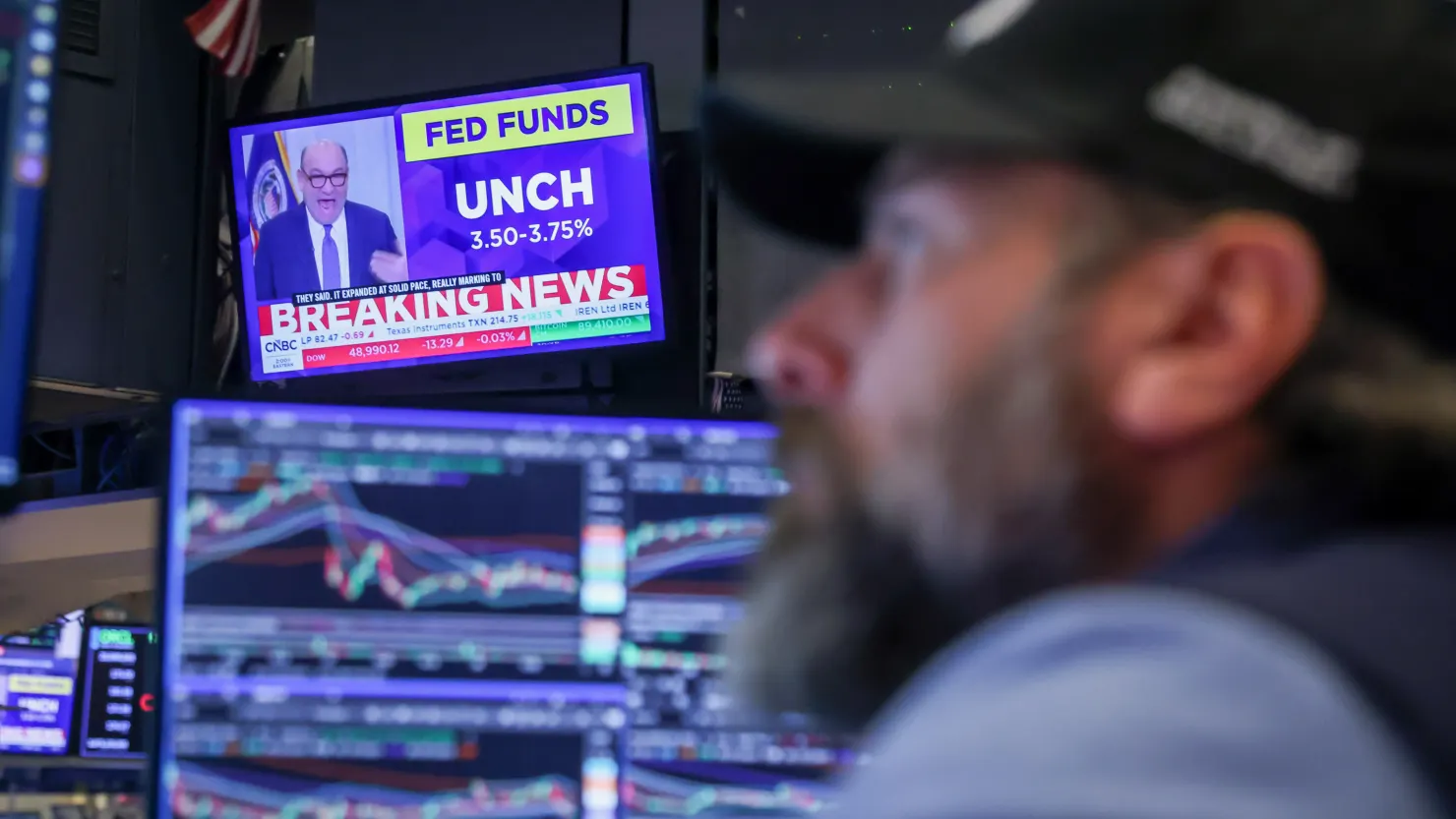
According to the IMF’s July update, global headline inflation is projected to rise from 4.1% in 2025 to 4.7% in 2026, before declining to 3.9% in 2027.
Higher inflation can make monetary policy particularly complicated.
Central banks may want to reduce interest rates to encourage investment and economic activity. However, lowering rates too quickly can potentially strengthen inflationary pressure.
Keeping rates high for too long creates another problem because expensive credit can discourage business investment, housing activity and household spending.
Central banks therefore have to balance economic growth against price stability.
Technology Is Changing Global Trade
The AI boom is also changing international trade.
Modern artificial intelligence systems require sophisticated supply chains connecting semiconductor manufacturers, data-center operators, energy providers and technology companies across different countries.
The IMF expects world trade volume growth to slow from 5.0% in 2025 to approximately 3.5% in 2026, before recovering to 4.3% in 2027.
At the same time, technology-related trade flows remain an important source of momentum.
This means globalization is not necessarily disappearing. Instead, the geography of international commerce is evolving.
Countries with strong semiconductor, electronics and digital-service industries may become increasingly important nodes in the global economy.
Emerging Markets Face Different Opportunities
The changing environment creates both opportunities and vulnerabilities for emerging economies.
Countries integrated into technology supply chains can benefit from foreign investment and growing demand for electronics, digital services and infrastructure.
However, emerging economies dependent on imported energy may face significantly different conditions.
Higher energy costs can weaken trade balances, increase inflation and put pressure on national currencies.
The IMF’s latest assessment emphasizes this divergence: economies participating strongly in the technology cycle may receive a growth boost, while vulnerable energy importers can experience greater economic pressure.
Therefore, the economic impact of current global trends will not be distributed evenly.
Businesses Need to Adapt to a Two-Speed Economy
Companies are facing a similar divide.
Technology-related sectors may experience rapid investment and expanding demand, while businesses exposed to energy prices, high financing costs or weak consumer spending may encounter more difficult conditions.
Successful companies will increasingly need flexibility.
Diversifying suppliers can reduce exposure to supply-chain disruptions. Energy efficiency can help companies manage higher operating costs, while digital investment can potentially improve productivity.
Businesses also need to evaluate technology realistically.
Investing in AI simply because it is popular does not guarantee higher productivity. Companies must identify applications that actually improve operations or create value for customers.
Workers and Skills Remain Essential
Technology investment alone cannot determine economic success.
Workers remain central to the transformation.
As AI changes workplaces, employees may need stronger digital, analytical and problem-solving capabilities. Some routine tasks could become automated, while new roles may emerge around data, cybersecurity, AI management and technology infrastructure.
Education and workforce training therefore have direct economic importance.
Countries that combine technological infrastructure with skilled workers may be better positioned to capture productivity gains from AI.
Global Economy in 2026 Enters a Period of Transformation
The global economy in 2026 is neither experiencing a simple technology boom nor facing a straightforward economic downturn.
Both forces are operating simultaneously.
Artificial intelligence is encouraging major investment and creating new opportunities for productivity growth. At the same time, energy disruptions, geopolitical uncertainty, inflation and changing trade relationships continue to create substantial risks.
The IMF’s current projections suggest that global growth can continue despite these pressures, but the benefits are likely to remain uneven across countries and industries.
The defining economic question may therefore be whether technological investment can translate into broad productivity gains quickly enough to offset the pressures created by energy costs, geopolitical fragmentation and inflation.
For governments, businesses and investors, adaptability will be essential as the global economy moves through this increasingly technology-driven but uncertain period.


Happy
0 %

Sad
0 %

Excited
0 %

Sleepy
0 %

Angry
0 %

Surprise
0 %
Related Post

Vineyard Uprooting Divides Douro Wine Sector as Producers Seek Deal to End Crisis
The Douro wine crisis is entering another difficult phase as disagreements over vineyard uprooting complicate…