Milei Rejects State Intervention as Argentina Debates Rising Loan Delinquency
 0
0
 0
0
Read Time:4 Minute, 36 Second
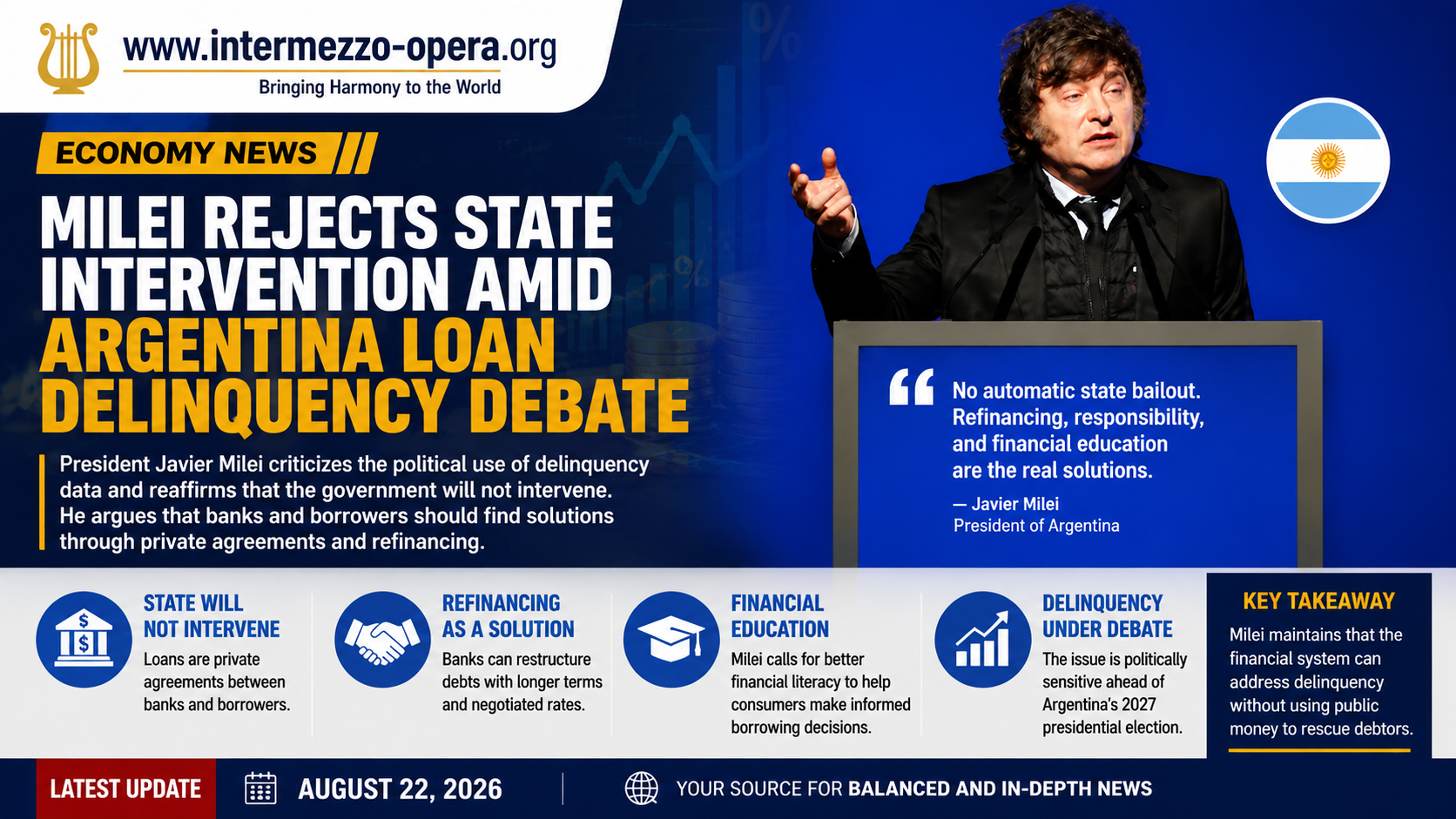
Argentina loan delinquency is fueling debate as President Javier Milei rejects state intervention and argues that banks should handle debt refinancing.
Argentina loan delinquency has become a growing economic and political issue. However, President Javier Milei has rejected calls for direct government intervention to help borrowers struggling with debt.
Milei argues that the increase in delinquency should not automatically be blamed on his administration’s economic policies. Instead, he says the issue must be examined within a broader financial context.
Moreover, the president believes banks and borrowers should resolve repayment problems through private agreements. Therefore, his government does not plan to introduce a state bailout for debtors.
Argentina Loan Delinquency Sparks Debate
The debate over Argentina loan delinquency has intensified as households face difficulties meeting financial obligations.
According to Milei, the issue has also become part of the political debate ahead of Argentina’s 2027 presidential election. He accused opposition groups of using delinquency figures for electoral purposes.
However, concerns about household debt remain significant.
Private estimates and financial-sector data have pointed to rising payment problems. Meanwhile, consumer credit has also faced pressure during 2026.
As a result, the debate now goes beyond banks. It also involves household finances, interest rates, wages and consumer spending.
Milei Rejects Government Assistance
Milei has made his position on government intervention clear.
He argues that loans are agreements between private parties. Therefore, taxpayers should not automatically bear the cost when borrowers cannot repay their debts.
The president has previously used strong language to emphasize personal responsibility in borrowing decisions. At the same time, he has supported refinancing as a market-based solution.
In other words, Milei favors agreements between banks and their clients. He does not favor a government-funded rescue program.
Banks Can Refinance Troubled Debt
Although Milei opposes state assistance, he says borrowers still have options.
According to the president, banks are refinancing delinquent debts under longer repayment plans. He cited arrangements with rates around 20% over three years in his latest remarks.
Therefore, Milei sees refinancing as a possible solution.
Instead of transferring private debt to the government, borrowers and lenders can negotiate new repayment conditions.
Moreover, banks have an incentive to reach agreements. Recovering part or all of a loan can be preferable to allowing the debt to remain unpaid.
Milei Calls for More Financial Education
Another part of Milei’s argument focuses on financial literacy.
The president believes Argentina needs greater financial education. In his view, consumers should better understand interest rates, repayment terms and the risks involved before taking a loan.
Therefore, he sees education as more sustainable than direct government assistance.
Financial literacy can help borrowers compare different credit products. In addition, it can help households understand the total cost of borrowing.
However, critics of the government’s position point to wider economic pressures. They argue that household debt cannot be analyzed only through individual borrowing decisions.
Government Says Economic Policy Is Not to Blame
Milei has also rejected claims that his economic program caused the rise in delinquency.
According to the president, there are not enough grounds to directly blame government policy for the current situation. Instead, he linked part of the deterioration to financial volatility surrounding the 2025 election period.
He also compared Argentina’s delinquency levels with those seen in other countries.
Therefore, the government considers the problem manageable within the financial system rather than evidence of a broader systemic crisis.
Nevertheless, the issue remains politically sensitive.
Caputo Also Rules Out Official Intervention
Economy Minister Luis Caputo has taken a similar position.
Caputo has said that lending involves a private bank providing credit to a private borrower. Consequently, he believes there is limited justification for direct government involvement.
Meanwhile, the government has pursued extensive financial deregulation.
Several interest-rate controls have been removed since Milei took office. These changes affected deposits and different categories of credit.
Therefore, intervention in household debt would conflict with the government’s broader market-oriented approach.
Consumer Credit Faces Pressure
The controversy comes as consumer lending faces a challenging environment.
According to data cited by CEPA, peso-denominated consumer credit contracted in real terms during every month of 2026 covered by its analysis. This category includes personal loans and credit cards.
At the same time, household payment delays have increased.
For that reason, critics warn that delinquency could affect consumption. It could also make future access to credit more difficult for some households.
However, Milei argues that the financial system can address these problems without a government bailout.
Refinancing Becomes the Preferred Solution
For the administration, refinancing remains one of the main tools available to troubled borrowers.
A bank can extend repayment periods or negotiate different conditions. As a result, monthly payments may become more manageable.
Moreover, this approach keeps the responsibility between lender and borrower.
The government can encourage financial institutions to find solutions. However, Milei insists that encouragement is different from forcing banks to act or using public money to cover private debts.
Political Debate Is Likely to Continue
The debate over Argentina loan delinquency is unlikely to disappear soon.
On one side, Milei maintains that individual responsibility and private refinancing should remain central. He also argues that financial education must improve.
On the other side, critics continue to highlight the financial pressure facing Argentine households.
Therefore, delinquency is becoming both an economic and political issue.
For now, however, Milei has reaffirmed his position. The Argentine government does not plan to intervene directly to rescue delinquent borrowers. Instead, the administration expects banks and customers to negotiate solutions within the financial system.


Happy
0 %

Sad
0 %

Excited
0 %

Sleepy
0 %

Angry
0 %

Surprise
0 %
Related Post

Spanish Banks Hold Mortgage Rates Steady as Euribor Rises, but Mixed Loans Become More Expensive
MADRID – Spain’s mortgage market is entering a new period of uncertainty. Despite the renewed…