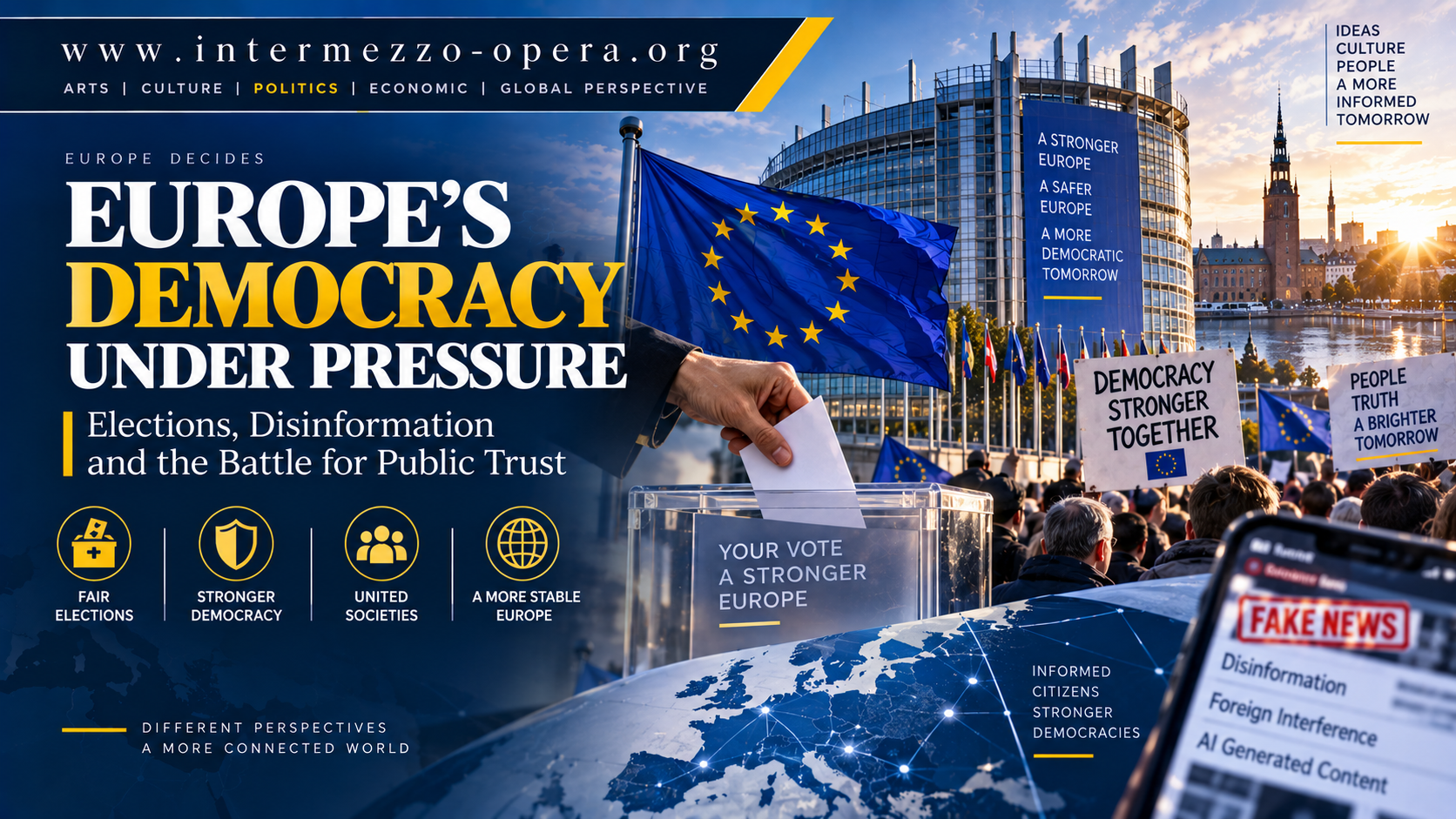
Europe’s Democracy Under Pressure: Elections, Disinformation and the Battle for Public Trust
 0
0
 0
0
Read Time:3 Minute, 0 Second
Europe is entering a critical political moment.
Across the continent, elections are becoming more than a contest between political parties. They are also a test of public trust, digital security, and democratic resilience.
This issue is especially visible in Sweden, where voters are going to the polls on September 13, 2026. Migration, welfare, crime, security, and foreign policy are among the key issues shaping the election.
Sweden Shows Europe’s Political Challenge
Sweden’s election could change the balance of power in the country.
The Social Democrats are seeking a return to government. Meanwhile, the current centre-right coalition is trying to remain in power with support from the Sweden Democrats.
Migration has become one of the biggest political issues.
Both major sides now support a more controlled migration policy than Sweden had before the 2015 migration crisis. However, they differ on how strict the rules should be.
Therefore, the Swedish election shows how migration can reshape the political centre.
Disinformation Becomes a New Threat
Politics is also moving deeper into the digital world.
False information can spread quickly through social media. Artificial intelligence can make the problem even harder to control.
Swedish authorities have prepared for possible foreign interference during the election. Their preparations include risks linked to cyberattacks, fake content, hacked material, and AI-generated information.
As a result, protecting an election now requires more than protecting polling stations.
Governments must also protect information.
Europe Wants Stronger Democratic Protection
The European Union has already placed democracy high on its political agenda.
EU leaders want to strengthen democratic debate, protect free media, and fight foreign interference. They also want technology companies to take greater responsibility for the impact of online platforms on public debate.
This policy is becoming more important as European societies become more divided.
People receive news from many different sources. Some sources are reliable. Others are not.
Because of that, citizens need better access to trusted information.
The Far Right Gains More Attention
Political change is also visible in Germany.
The Alternative for Germany, or AfD, recently won a major state election in Saxony-Anhalt. The result renewed debate about the growth of far-right parties in Europe.
The result does not mean that the far right will automatically dominate European politics.
However, it shows that voter dissatisfaction can create major political shifts.
Migration, economic pressure, crime, and concerns about traditional political parties are helping shape this debate.
Security Is Changing Political Priorities
At the same time, European politics is becoming more focused on security.
Russia’s war against Ukraine has pushed defence higher on the EU agenda. European leaders want stronger defence readiness by 2030 and want to reduce strategic dependence on outside suppliers.
This change affects domestic politics as well.
Governments must decide how much money should go to defence. They must also balance security spending with housing, welfare, education, and other public needs.
That debate could become even stronger in future elections.
Trust Will Shape Europe’s Future
Europe now faces a simple but difficult question.
Can democratic institutions keep public trust during a period of rapid political change?
The answer will depend on several factors. Elections must remain fair. Information must be trustworthy. Political debate must remain open. At the same time, governments must respond to real concerns about security, migration, and the economy.
Europe cannot remove political disagreement.
Instead, it must make sure that disagreement remains part of a healthy democratic process.
For that reason, the next phase of European politics may be defined not only by who wins elections, but also by how well Europe protects truth, trust, and democratic debate.


Happy
0 %

Sad
0 %

Excited
0 %

Sleepy
0 %

Angry
0 %

Surprise
0 %
Related Post
Tariffs, travel bans and firing bureaucrats: What’s in store for a second Trump term?
The return of Donald Trump to the White House signals a major shift in U.S.…