AfD Victory Shakes German Politics as Europe Watches the Rise of the Far Right
 0
0
 0
0
Read Time:5 Minute, 35 Second
German politics has entered a more uncertain period after the Alternative for Germany secured a historic victory in the eastern state of Saxony-Anhalt, intensifying questions about the future of Germany’s traditional political establishment and the growing influence of right-wing parties across Europe.
The result represents the AfD’s biggest electoral success to date and has attracted attention far beyond Germany. Political parties across Europe are now studying what the vote could mean for migration policy, European integration, relations with Russia and the ability of mainstream parties to respond to dissatisfied voters.
German Politics Faces a New Reality
For decades, Germany’s major mainstream parties dominated federal and regional government while parties on the political extremes remained largely isolated.
That balance is becoming harder to maintain.
The AfD’s performance in Saxony-Anhalt demonstrated that the party can translate dissatisfaction with immigration, economic conditions and national leadership into substantial electoral support.
For German politics, the challenge is particularly significant because other parties have generally maintained a political “firewall” against governing with the AfD.
This means a strong AfD result does not automatically translate into control of government. However, the larger the party becomes, the more complicated coalition-building becomes for its rivals.
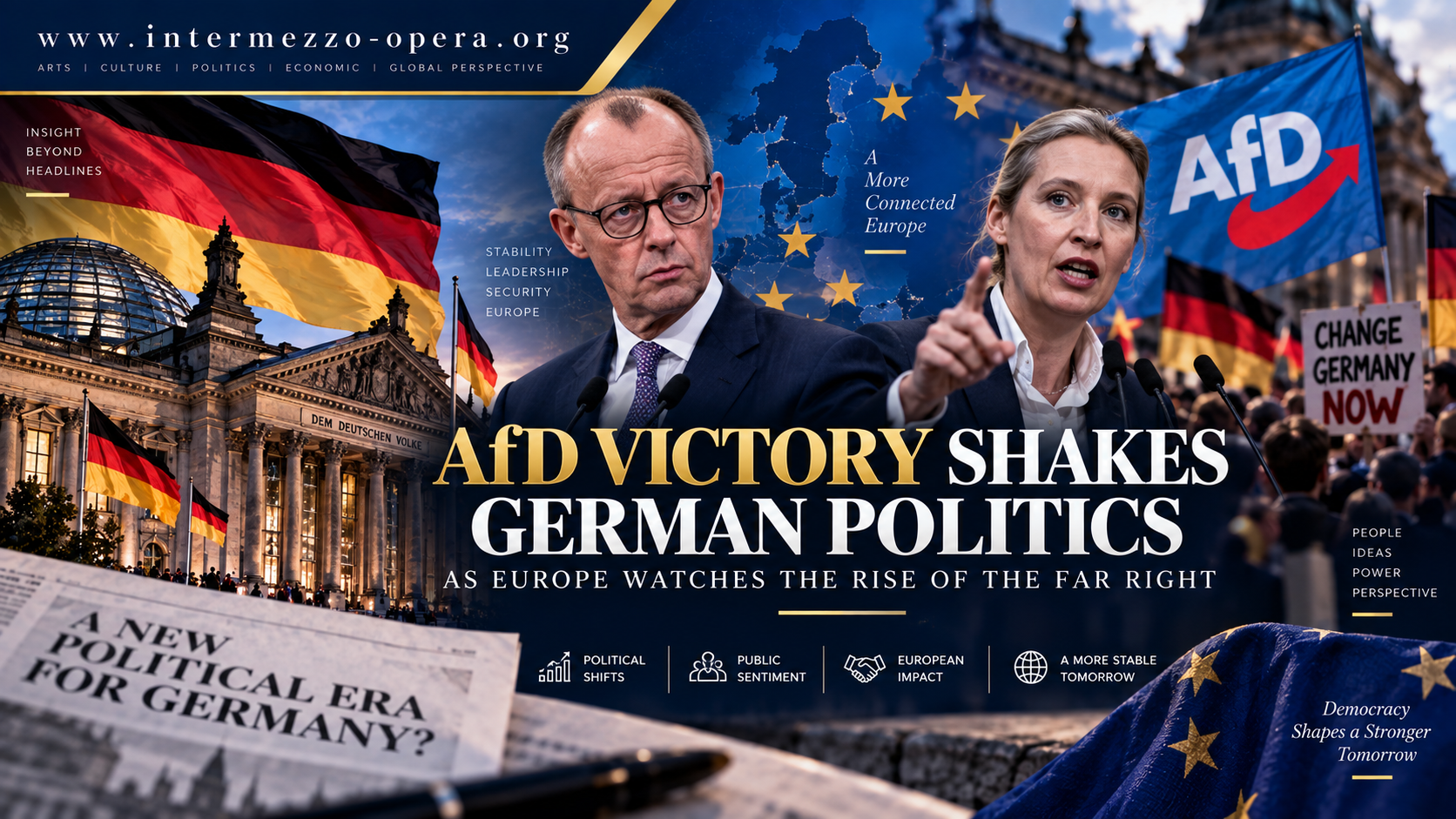
Friedrich Merz and Alice Weidel Clash in Parliament
The political tension became particularly visible on September 9 when Chancellor Friedrich Merz confronted AfD leader Alice Weidel during a heated Bundestag debate.
Weidel argued that the Saxony-Anhalt result showed voters wanted a fundamental change in government policy.
Merz responded with a fierce attack on the AfD’s migration agenda, particularly its use of the term “remigration.” He accused the party of promoting policies that would threaten Germany’s social and economic foundations.
The confrontation illustrates how German politics may become increasingly polarized as mainstream parties attempt to respond to AfD gains without adopting the party’s broader political program.
Migration Remains at the Center of the Debate
Migration continues to be one of the most powerful issues reshaping European politics.
Germany has already moved toward tougher policies against irregular migration, while the AfD argues that the government has not gone far enough.
The debate extends beyond border controls.
Political arguments now involve citizenship, integration, deportation policies and the broader question of what Germany’s immigration system should look like in the coming decade.
Similar debates are taking place elsewhere in Europe. Parties campaigning for stricter immigration policies have gained influence in several countries, making migration an increasingly important factor in both national elections and EU policymaking.
AfD Victory Draws International Attention
The Saxony-Anhalt election has also taken on an international dimension.
U.S. President Donald Trump publicly celebrated the AfD result on social media, prompting criticism in Germany. Chancellor Merz subsequently cancelled a scheduled telephone conversation with Trump.
Dirk Wiese, a senior member of Merz’s coalition partner, described the intervention as unacceptable interference in Germany’s domestic politics.
The episode demonstrates how developments in German politics increasingly intersect with wider ideological debates between political movements in Europe and the United States.
Germany’s domestic elections are therefore being watched not merely as regional contests but as indicators of broader political change across Western democracies.
Europe’s Far Right Is Growing, but the Picture Is Complicated
The AfD result has revived discussion about a continent-wide shift toward the political right.
Right-wing and far-right parties have gained influence in Italy, Finland, Croatia and Slovakia, while France’s National Rally and Spain’s Vox remain significant political forces.
However, describing Europe as experiencing a uniform far-right wave would oversimplify the situation.
AP notes that these movements have also encountered setbacks in several countries, while their ability to transform electoral support into lasting government power varies considerably.
Different national political systems, coalition arrangements and voter priorities continue to produce very different outcomes.
Mainstream Parties Face a Voter Confidence Problem
The deeper issue may be dissatisfaction with established political institutions.
A recent study covering voters in France, Germany, Italy, the Netherlands, Poland and the United Kingdom found widespread support for a stronger and more united Europe, but considerably less confidence that political leaders can actually achieve it.
Around 73% of respondents expressed a vision involving European unity, peace, security or prosperity, while 56% believed Europe’s future was in danger.
That combination creates a difficult political environment.
Voters may still support European cooperation while simultaneously becoming frustrated with the parties traditionally responsible for managing it.
Populist and anti-establishment movements can benefit from precisely this gap between political expectations and confidence in existing institutions.
Economic Concerns Also Shape German Politics
Migration is not the only explanation for changing voting patterns.
Germany has faced weak economic growth, industrial uncertainty, higher energy costs and questions about the competitiveness of its manufacturing sector.
Economic frustration can reinforce political dissatisfaction when voters believe established parties are failing to improve living standards or provide a convincing long-term strategy.
This connection between economics and politics is increasingly visible across Europe.
Only 15.7% of the 383 recommendations contained in Mario Draghi’s major report on European competitiveness had been fully implemented by July 2026, according to an assessment cited by the Financial Times. National resistance and competing political priorities have slowed several major reforms.
For parties such as the AfD, these unresolved economic concerns provide another opportunity to challenge mainstream governments.
The AfD’s Rise Could Influence European Politics
Germany is the European Union’s largest economy and one of its most influential political powers.
Changes in German politics therefore have consequences for debates in Brussels.
A stronger AfD could increase domestic pressure over migration, climate regulation, European integration, sanctions against Russia and Germany’s support for Ukraine.
Even without entering the federal government, a party can influence policy by changing what competing parties believe voters expect from them.
This indirect influence may prove just as important as the number of seats the AfD controls.
German Politics Enters a Critical Period
The Saxony-Anhalt result does not mean Germany has suddenly moved entirely toward the far right. Nor does it guarantee that the AfD will eventually lead the federal government.
It does, however, demonstrate that the boundaries of German politics are changing.
Mainstream parties now face the difficult task of understanding why voters are moving toward alternatives while maintaining their own political identities. At the same time, the AfD must demonstrate whether regional electoral victories can translate into broader and sustainable political power.
Germany’s next political battles will therefore be watched closely across Europe.
The outcome could help determine whether the Saxony-Anhalt election becomes remembered primarily as a regional protest vote—or as an important milestone in a much larger transformation of European politics.


Happy
0 %

Sad
0 %

Excited
0 %

Sleepy
0 %

Angry
0 %

Surprise
0 %
Related Post

Javier Milei Remains Highly Active Online, but Engagement With His Posts Is Falling
Argentine President Javier Milei remains highly active on social media, an arena that has played…