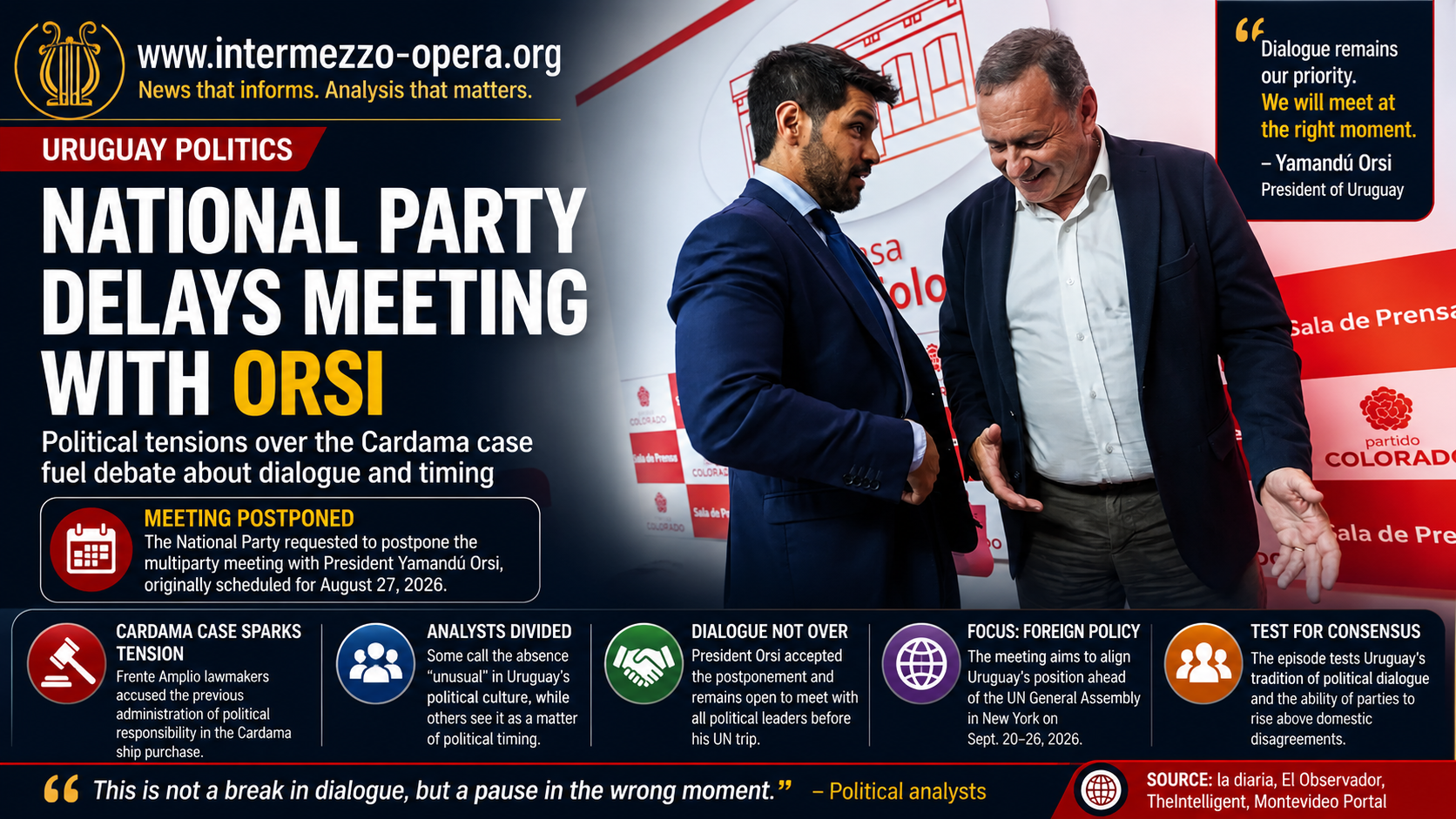
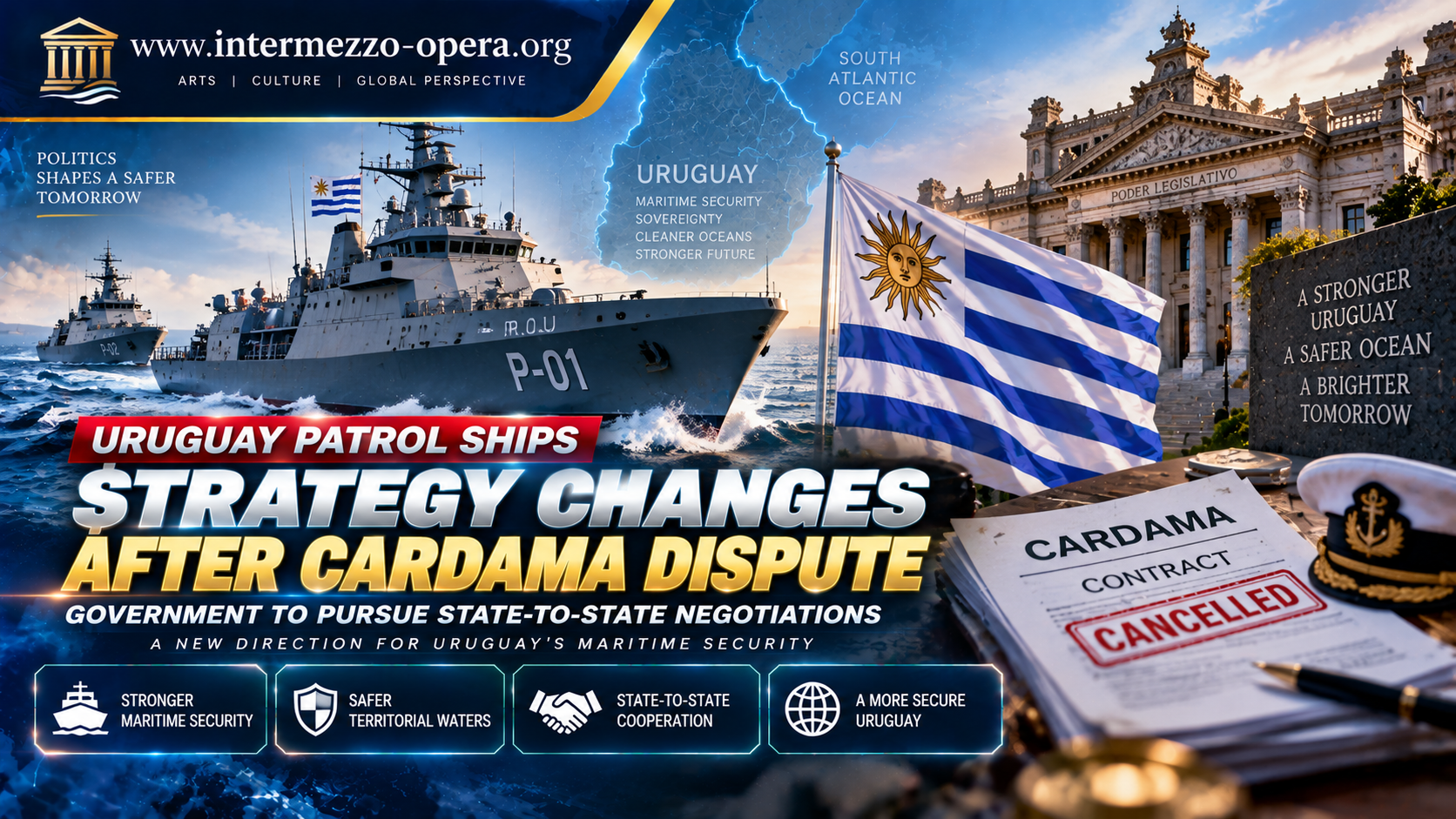
Uruguay Patrol Ships Strategy Changes After Cardama Contract Dispute
 0
0
 0
0
Read Time:6 Minute, 16 Second
The Uruguay patrol ships program is entering a new phase after the government decided to prioritize state-to-state negotiations for the acquisition of new offshore patrol vessels. Defense Minister Sandra Lazo confirmed the change on September 4, 2026, following the cancellation of the controversial contract with Spanish shipyard Cardama.
The decision represents an important shift in Uruguay’s defense procurement policy. Instead of relying primarily on a commercial agreement with a private shipbuilder, the administration of President Yamandú Orsi wants to negotiate directly with other governments.
The government believes this approach could provide greater institutional guarantees while helping Uruguay obtain the vessels needed to protect its territorial waters.
Uruguay Patrol Ships Will Follow a New Procurement Model
The government is now exploring direct agreements with countries capable of supplying offshore patrol vessels.
Lazo explained that Uruguay is moving toward a state-to-state procurement model. The objective is to avoid some of the difficulties that emerged during the previous Cardama process.
This does not necessarily mean that the ships must be constructed by a foreign government-owned shipyard. Instead, negotiations would take place between governments, providing a stronger institutional framework for the transaction.
The change could also allow Uruguay to evaluate financing, technical support, training and maintenance as part of a broader government agreement.
Cardama Contract Triggered a Political Controversy
The new strategy cannot be separated from the Cardama dispute.
Uruguay signed a contract with Spanish shipyard Francisco Cardama SA on December 15, 2023, for the construction of two offshore patrol vessels for the Uruguayan Navy.
The agreement was reached during the administration of former President Luis Lacalle Pou.
However, serious questions later emerged regarding guarantees associated with the contract.
President Orsi’s government formally terminated the agreement on February 13, 2026, citing serious contractual breaches.
According to the government, problems were identified with both the performance guarantee and documentation connected to the reimbursement guarantee.
Government Said a Key Guarantee Did Not Exist
One of the most serious issues involved the guarantee intended to ensure compliance with the contract.
When the government investigated the company that was supposed to have issued the guarantee, officials said they discovered that the company was not operating at the address provided.
Uruguay’s ambassador to the United Kingdom was instructed to visit the location connected to Eurocommerce. According to the presidency, a real estate business was operating there instead.
The Orsi administration subsequently described the situation as sufficiently serious to justify terminating the agreement.
The government also said Cardama itself acknowledged that the performance guarantee did not exist.
Parliamentary Investigation Deepened the Debate
The Cardama case quickly became a major political controversy.
A parliamentary commission spent six months investigating the procurement process. It held 17 sessions and heard testimony from numerous officials and other participants before concluding its work on August 21, 2026.
However, lawmakers did not reach a single political interpretation of what had happened.
Four different reports were submitted to the General Assembly.
Government-aligned lawmakers focused heavily on failures and alleged irregularities surrounding the original procurement process, while opposition representatives challenged aspects of the Orsi administration’s handling of the contract termination.
The complete parliamentary file was unanimously forwarded to prosecutors.
Both Governments Face Political Questions
The controversy crosses Uruguay’s political divide.
The Cardama agreement was signed under the previous Lacalle Pou administration, while the decision to terminate it was made under Orsi.
Former Defense Minister Javier García has defended the original procurement decision and accepted political responsibility for signing the agreement. He has also questioned the current government’s interpretation of technical reports connected to the case.
Meanwhile, the current administration has faced questions about payments made before all documentary problems were detected.
This has transformed the Cardama case from a procurement controversy into a wider political debate about accountability, institutional controls and the management of public money.
Uruguay Is Seeking Money from Cardama
The dispute has also moved into the courts.
In August, the Orsi government formally filed a civil claim against Cardama.
According to LARED21, Uruguay is seeking approximately €28.8 million, plus interest, representing money already paid under the contract. The government is also claiming damages associated with delays in obtaining replacement patrol vessels.
The state argues that the failure to receive the vessels has affected plans to strengthen maritime surveillance.
Under an optimistic scenario cited in the government’s claim, acquiring replacement ships could take at least another two years.
Why Uruguay Patrol Ships Are Important
The Uruguay patrol ships program is not simply a political procurement project.
Uruguay has an extensive maritime area that requires surveillance.
Offshore patrol vessels can perform missions related to maritime security, fisheries monitoring, search and rescue operations, environmental protection and the enforcement of national sovereignty.
Modern vessels can also remain at sea for longer periods and cover significantly larger areas than smaller coastal craft.
That makes replacement of the canceled Cardama vessels an operational priority rather than merely a response to political controversy.
Government Is Considering an Interim Solution
Uruguay may not have to wait until new patrol vessels are built before strengthening its maritime capabilities.
When announcing the termination of the Cardama contract in February, Orsi said the government was already examining alternatives.
The president also revealed that the United States had offered a vessel that could serve as an interim solution while Uruguay worked toward acquiring its permanent offshore patrol ships.
The government has additionally considered complementary equipment such as fast boats for coastal surveillance.
This suggests Uruguay may pursue a combination of short-term and long-term solutions.
State-to-State Deals Could Reduce Procurement Risk
The shift toward direct government negotiations is politically significant.
Large defense contracts can involve complex questions regarding financing, guarantees, construction schedules, maintenance and technical support.
A state-to-state agreement does not automatically eliminate every procurement risk. However, it can provide a different level of government involvement and accountability compared with negotiating exclusively with a private supplier.
For the Orsi administration, this distinction has become particularly important after the Cardama experience.
The government wants the next procurement process to deliver ships while also providing stronger guarantees that contractual obligations will be fulfilled.
Transparency Becomes a Central Political Issue
Transparency has been one of the central themes used by the government to justify its decisions.
When announcing the cancellation in February, Orsi described the government’s response as part of a commitment to transparency in public administration.
The controversy has nevertheless demonstrated that procurement oversight can become politically contentious regardless of which party controls the government.
The previous administration must answer questions about how Cardama was selected and how the guarantees were evaluated.
The current government, meanwhile, faces scrutiny over how it managed the contract after taking office and whether terminating it was the most economically advantageous option.
Those competing interpretations are likely to keep the case politically relevant even as Uruguay searches for new ships.
Uruguay Patrol Ships Enter a New Political Chapter
The Uruguay patrol ships program is therefore entering a new stage.
After terminating the Cardama contract, pursuing legal action and enduring months of parliamentary investigation, the Orsi government has chosen a different procurement strategy.
Direct negotiations with other governments will now become the preferred route for obtaining offshore patrol vessels.
The ultimate test will be whether this approach allows Uruguay to obtain capable ships with reliable guarantees, acceptable costs and greater institutional certainty.
For the government, success would help resolve an important defense requirement. Politically, it would also demonstrate whether Uruguay can turn the lessons of the Cardama controversy into a more transparent and secure procurement process.


Happy
0 %

Sad
0 %

Excited
0 %

Sleepy
0 %

Angry
0 %

Surprise
0 %
Related Post
Bolaños Defends Sánchez as Spain’s Congress Debates Ceuta Migration Crisis
MADRID – Spain’s Congress focused on the Ceuta migration crisis as senior ministers faced questions…