Uruguay Says No Concrete Deal With US on Deportees, Lubetkin Prioritizes Detained Uruguayans
 0
0
 0
0
Read Time:3 Minute, 27 Second
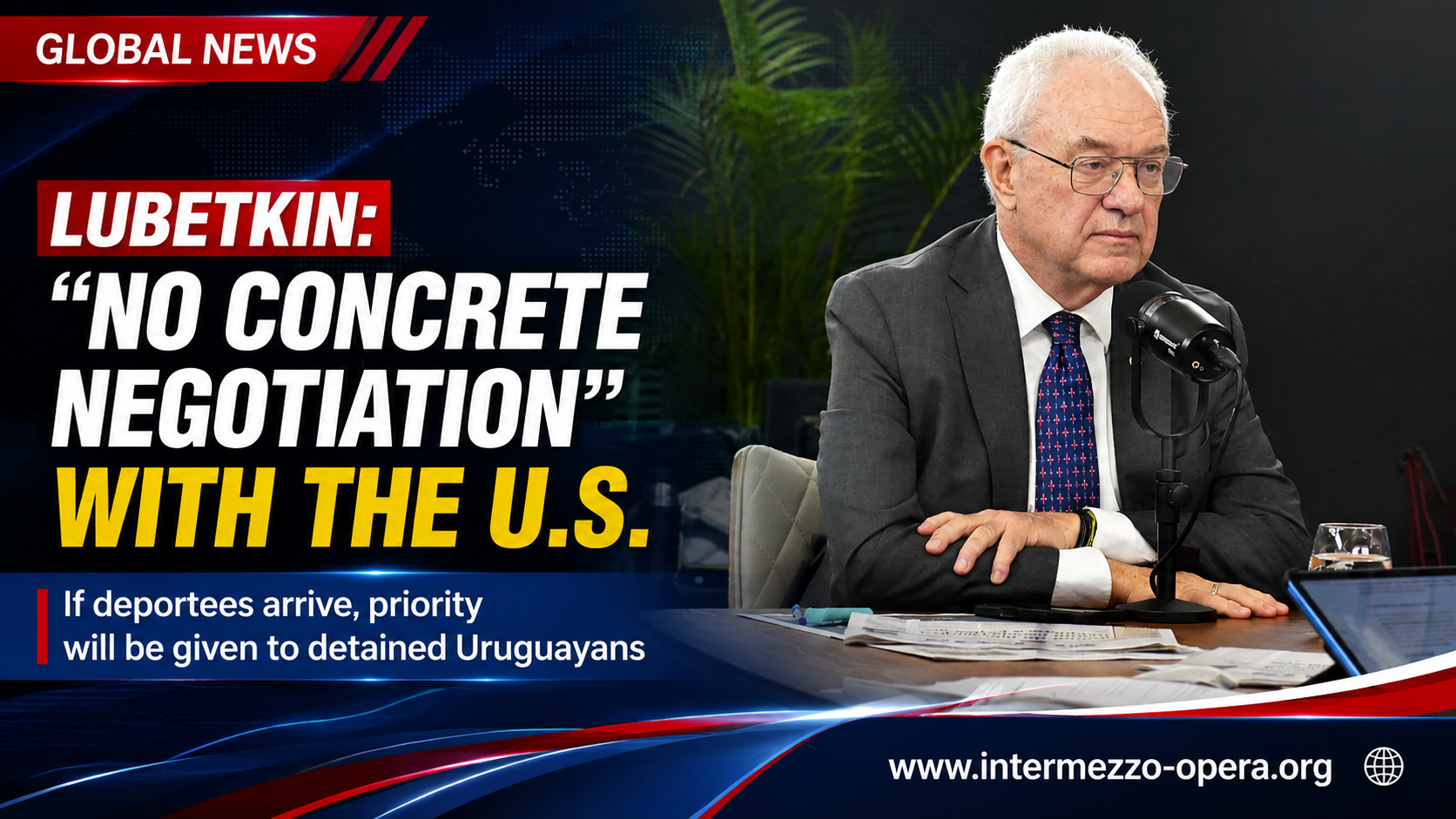
Uruguay-US deportation talks have not developed into a concrete negotiation, Foreign Minister Mario Lubetkin said, as discussions continue over the possibility of Uruguay receiving migrants deported by the United States.
Lubetkin stressed that there has been no substantial progress toward an agreement with Washington. Although different proposals and suggestions have been exchanged, Uruguay remains far from formally agreeing to receive third-country nationals deported from the United States.
The issue has attracted growing political attention in Uruguay amid reports that the United States has approached the government of President Yamandú Orsi about receiving deportees, particularly Cuban nationals.
Lubetkin Says No Concrete Negotiation Has Begun
Lubetkin said discussions on the issue have existed for some time. However, he rejected suggestions that Uruguay and the United States are close to reaching a formal agreement.
According to the foreign minister, different suggestions have been received over time, but those exchanges have never developed into what Uruguay considers a concrete negotiation.
President Yamandú Orsi has expressed a similarly cautious position. The government is evaluating different opinions and implications before making any decision.
The issue is particularly sensitive because any arrangement could involve migrants who are not Uruguayan citizens.
Detained Uruguayans Would Be the Government’s Priority
One of Lubetkin’s clearest messages concerned Uruguayan citizens currently detained in the United States because of documentation-related issues.
The foreign minister said protecting those citizens is a priority for the Uruguayan government.
Montevideo considers the protection of Uruguayans abroad one of its responsibilities. Therefore, their circumstances would receive particular attention in discussions with US authorities.
This position adds another dimension to the Uruguay-US deportation talks, which are not limited to whether Montevideo could receive migrants from third countries.
Cuban Families in Uruguay Also Raise Humanitarian Issue
Lubetkin also referred to Cuban residents in Uruguay whose relatives are currently being held in the United States over documentation problems.
Some Cuban residents have reportedly expressed a desire to reunite with those family members in Uruguay.
According to Lubetkin, they have asked the government to consider the situation on humanitarian grounds.
Nevertheless, the foreign minister emphasized that no concrete progress has been made regarding such an arrangement.
Therefore, the possibility remains under discussion rather than being part of an approved immigration policy.
Human Rights Would Be Central to Any Agreement
Human rights are expected to become one of the most important considerations if negotiations eventually move forward.
Lubetkin said Uruguay would not enter into an agreement that undermines the country’s established principles.
The foreign minister has also held meetings with senior United Nations officials specializing in refugee and migration issues. Those consultations are intended to help Uruguay understand the implications of US immigration policies and the international standards that could apply to any future arrangement.
Any agreement would have to respect both domestic and international standards.
In addition, Lubetkin emphasized the importance of migrants voluntarily choosing to relocate to Uruguay.
Proposal Sparks Political Debate in Uruguay
The possibility of receiving US deportees has also generated discussion within Uruguay’s governing Frente Amplio coalition.
Frente Amplio president Fernando Pereira has argued that any potential arrangement must respect human rights and should not result in people being involuntarily deported to Uruguay.
Some lawmakers have also stressed that humanitarian considerations should determine whether individuals can be accepted.
The debate reflects broader concerns about how Uruguay should balance humanitarian responsibilities, international cooperation and its own immigration principles.
Uruguay Maintains Cautious Approach Toward Washington
For now, the government’s position remains cautious.
Despite continuing contacts between Montevideo and Washington, Lubetkin says there is still no concrete negotiation for Uruguay to receive third-country deportees.
The government is instead examining the proposal while prioritizing Uruguayan citizens detained in the United States and considering humanitarian requests involving families already living in Uruguay.
Any future Uruguay-US deportation agreement, therefore, would likely face several conditions before it could move forward.
Human rights protections, voluntary relocation, international standards and Uruguay’s traditional approach toward refugees and migrants are expected to remain central to the government’s decision.
For now, Lubetkin’s comments make one point clear: discussions with Washington continue, but Uruguay has not reached an agreement to receive US deportees.


Happy
0 %

Sad
0 %

Excited
0 %

Sleepy
0 %

Angry
0 %

Surprise
0 %
Related Post

Milei and Cristina Face Off as Political Tensions Draw Global Attention
Argentina's political landscape remains under intense international scrutiny as President Javier Milei and former President…