Spain’s Popular Party Confirms It Will Accept Unaccompanied Minors in Regional Governments
 0
0
 0
0
Read Time:2 Minute, 19 Second
Popular Party Says It Will Comply With Law on Unaccompanied Migrant Minors
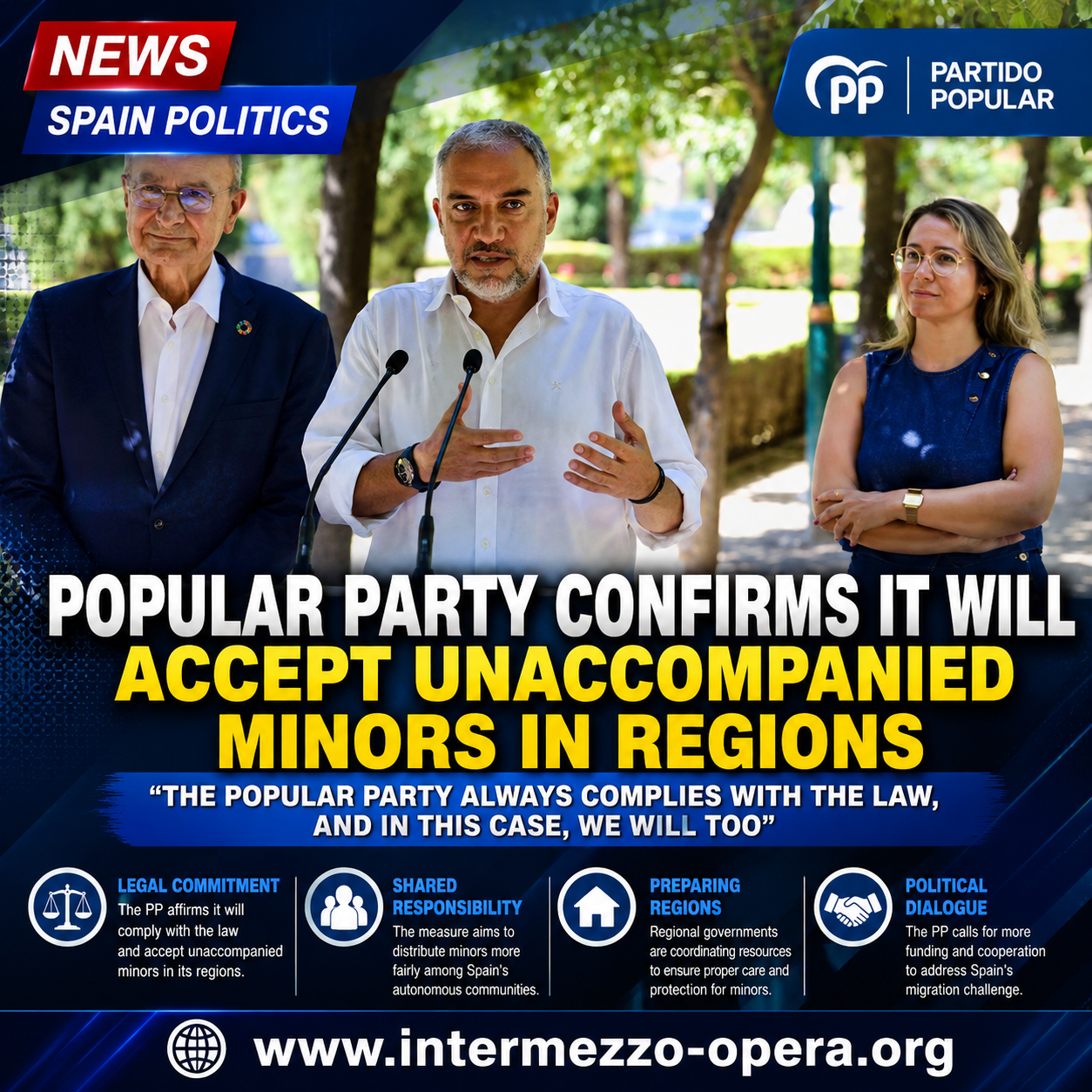
Spain’s Popular Party (PP) has confirmed that the regional governments under its control will receive unaccompanied migrant minors in accordance with national legal requirements. Party representatives stressed that the PP has always respected the law and intends to continue doing so despite the ongoing political debate surrounding migration policy.
The announcement comes as Spain continues to face pressure to distribute unaccompanied minors more evenly among its autonomous communities. Government officials argue that sharing responsibility helps reduce pressure on regions experiencing the highest number of migrant arrivals.
Party Leaders Emphasize Legal Responsibility
According to PP officials, complying with the redistribution plan does not represent a political shift but rather a commitment to respecting Spain’s legal framework. They stated that every regional administration governed by the party will fulfill its obligations while continuing to defend its own proposals for improving migration management.
Moreover, party leaders reiterated that immigration policies should combine humanitarian assistance with effective border management. They believe both objectives can be achieved through cooperation between regional and national authorities.
Migration Remains a National Challenge
Spain has experienced a steady flow of migrants arriving through several entry points, including the Canary Islands, Ceuta, and Melilla. Consequently, accommodation centers in some regions have faced increasing pressure due to the growing number of unaccompanied minors requiring protection and care.
Meanwhile, the central government continues encouraging all autonomous communities to participate in relocation efforts. Officials argue that a balanced distribution system allows resources and responsibilities to be shared more fairly across the country.
Regional Governments Prepare for Implementation
Several regional administrations governed by the Popular Party have begun preparing facilities and coordinating with social services to receive additional minors. At the same time, local authorities are reviewing available housing, education, healthcare, and child protection resources.
However, PP representatives continue to call for greater financial support from the central government. They argue that regional governments need sufficient funding to guarantee appropriate living conditions and integration services for every child placed under their care.
Political Debate Continues
Although the Popular Party confirmed it will comply with the law, discussions over Spain’s migration policy remain active. Different political parties continue proposing alternative approaches regarding border security, asylum procedures, and the distribution of migrant minors among autonomous communities.
Nevertheless, legal experts note that protecting unaccompanied minors remains a priority under both Spanish legislation and international child protection standards.
Conclusion
The Popular Party’s decision to accept unaccompanied migrant minors demonstrates its intention to comply with Spain’s legal obligations while maintaining its broader position on immigration reform. As regional governments prepare for implementation, cooperation between national and local authorities will remain essential.
Ultimately, the issue highlights the continuing challenge of balancing humanitarian responsibilities, regional resources, and long-term migration management across Spain.


Happy
0 %

Sad
0 %

Excited
0 %

Sleepy
0 %

Angry
0 %

Surprise
0 %
Related Post

Reeves plans energy bill help for those ‘who need it most’
The UK government is preparing targeted support to help households struggling with rising energy costs,…