
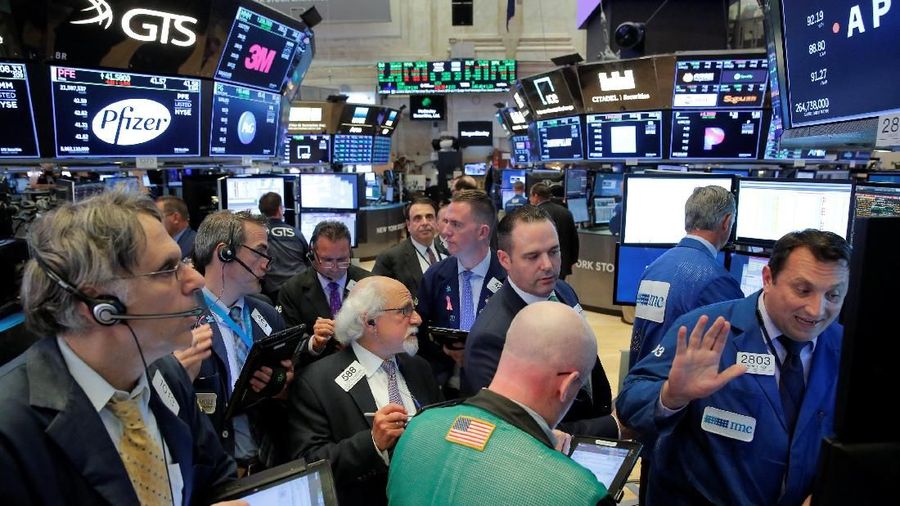
Wall Street: America’s Deadly Weapon for World Domination Without War
 0
0
 0
0
Read Time:2 Minute, 57 Second
In today’s interconnected global economy, power is no longer defined solely by military strength. Instead, financial influence has emerged as a critical tool—and at the center of it lies Wall Street, often described as America’s most powerful economic engine.
Some analysts even argue that Wall Street functions as a “deadly weapon” for global domination—one that operates without bullets, tanks, or traditional warfare.
The Rise of Financial Power Over Military Force
Historically, global dominance was achieved through military conquest. However, in the modern era, financial systems, capital flows, and market control have become equally influential.
The United States has leveraged its financial infrastructure to shape global markets, influence foreign economies, and maintain its position as a superpower.
Wall Street plays a central role in this system, acting as a hub for:
- Global investment banking
- Stock market activity
- Currency and capital flow management
How Wall Street Extends Global Influence
1. Control of Global Capital
Major financial institutions based on Wall Street manage trillions of dollars in assets. These funds are invested worldwide, giving the U.S. indirect influence over foreign economies.
When capital flows into or out of a country, it can significantly impact that nation’s economic stability.
2. The Power of the Dollar
The dominance of the U.S. dollar as the world’s reserve currency amplifies Wall Street’s influence. Many international transactions are conducted in dollars, reinforcing dependence on the American financial system.
3. Sanctions as Economic Weapons
Economic sanctions have become a powerful geopolitical tool. By restricting access to financial systems, the U.S. can exert pressure on countries without engaging in military conflict.
This strategy has been used in various geopolitical situations, showcasing how financial leverage can replace traditional warfare.
4. Market Influence and Perception
Global markets often react to signals from Wall Street. Investor sentiment, stock performance, and financial forecasts can shape economic conditions worldwide.
This influence extends beyond economics into politics and international relations.
Is It Really a “Deadly Weapon”?
The phrase “deadly weapon” is often used metaphorically to describe the immense power of financial systems. While Wall Street does not cause destruction in the traditional sense, its impact can be profound:
- Economic crises can destabilize nations
- Currency fluctuations can affect millions of lives
- Financial decisions can influence global policy
However, it is important to approach this concept critically. Wall Street is not a centralized tool of domination, but rather a complex ecosystem involving private institutions, regulations, and global participants.
Criticism and Controversy
Critics argue that the concentration of financial power in Wall Street creates global inequality and dependency. Events like financial crises have shown how interconnected—and vulnerable—the global economy can be.
At the same time, supporters highlight that Wall Street also drives innovation, investment, and economic growth worldwide.
The Future of Financial Dominance
As new economic powers emerge and technologies like digital currencies evolve, the dominance of Wall Street may face challenges. Countries are increasingly exploring alternatives to reduce reliance on the U.S.-led financial system.
Yet, for now, Wall Street remains a cornerstone of global finance.
Conclusion
The idea of Wall Street as America’s “deadly weapon for world domination without war” reflects a broader truth: financial power is one of the most influential forces in the modern world.
While not a weapon in the traditional sense, Wall Street’s ability to shape economies, influence policies, and impact global stability makes it a key player in the balance of power—proving that in the 21st century, money can be just as powerful as military might.


Happy
0 %

Sad
0 %

Excited
0 %

Sleepy
0 %

Angry
0 %

Surprise
0 %
Related Post
The Economy in Plain English with Arun Advani
In today’s complex world, understanding economics can feel overwhelming. However, Arun Advani offers a refreshing…