Portugal Government Faces Scrutiny Over Laws Still Waiting for Regulation
 0
0
 0
0
Read Time:3 Minute, 55 Second
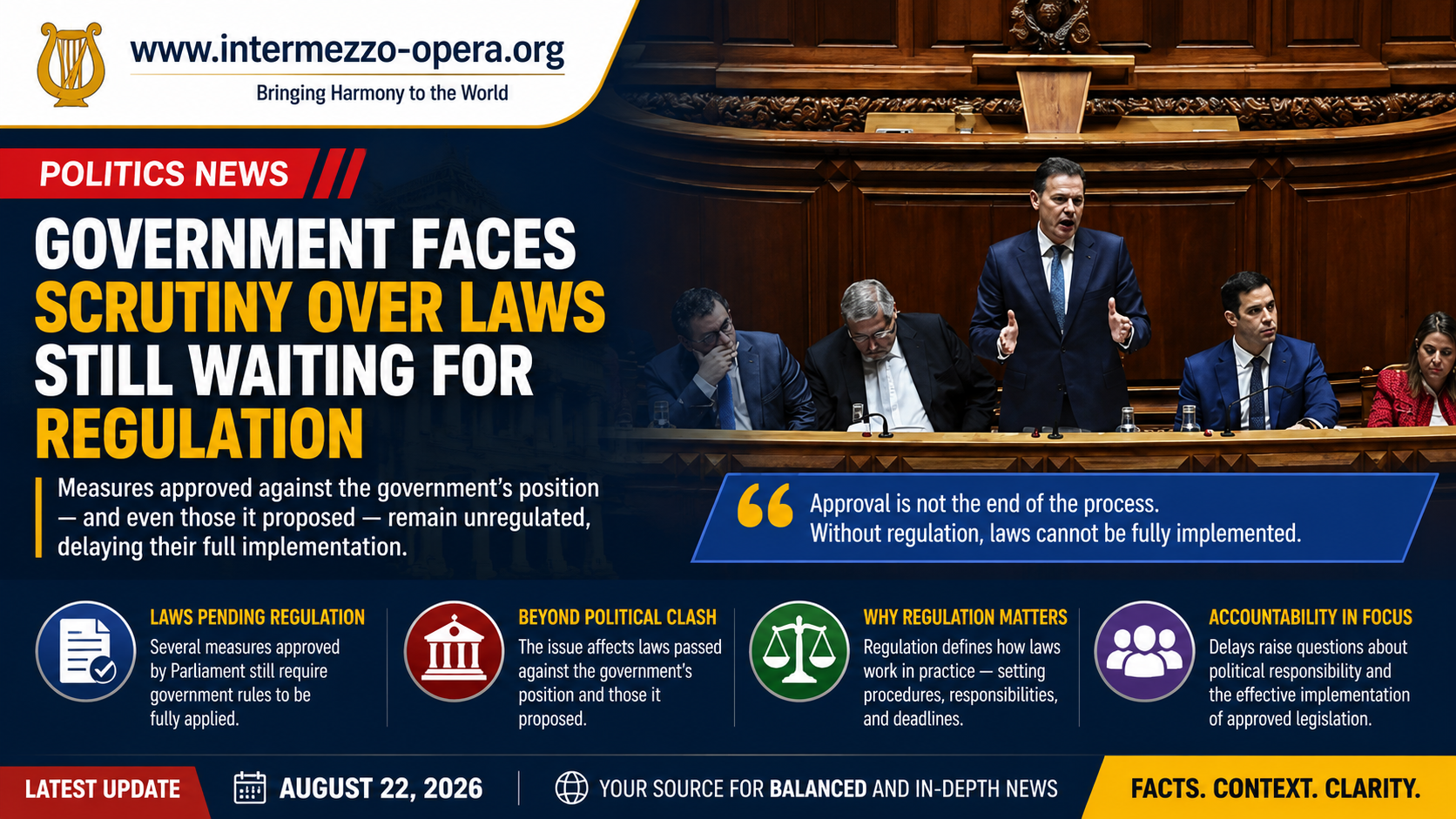
Portugal laws awaiting regulation are drawing scrutiny as several measures remain without the rules needed for their full implementation.
Portugal laws awaiting regulation are drawing fresh political attention. Several measures approved by Parliament still require government rules before they can be fully applied.
The issue does not concern only legislation that passed against the government’s position. It also includes measures that originated from government initiatives.
Therefore, the debate is raising questions about how quickly approved legislation becomes effective in practice.
Portugal Laws Awaiting Regulation Raise Questions
A law can be approved and published without every operational detail being immediately available.
In some cases, additional regulations are required. These rules can define procedures, responsibilities, deadlines, or administrative mechanisms.
Therefore, approval in Parliament may represent only one stage of implementation.
However, delays can become politically sensitive. This is especially true when legislation directly affects citizens, public services, or institutions.
Some Measures Passed Against Government’s Position
Part of the controversy involves legislation approved despite opposition from the government or governing parties.
Portugal’s parliamentary system allows the Assembly of the Republic to approve legislation through parliamentary majorities. Moreover, Parliament has constitutional powers to scrutinize government activity and legislation.
As a result, governments can sometimes find themselves responsible for implementing laws they did not politically support.
Nevertheless, once legislation enters into force, the debate can shift from political disagreement to practical implementation.
Government-Backed Measures Also Affected
However, the issue is broader than political disputes between the government and opposition.
Some legislation associated with government proposals can also require further regulation.
This point makes the controversy more significant. In other words, regulatory delays cannot always be explained by parliamentary confrontation alone.
Instead, administrative complexity may also play a role.
Government departments may need to prepare technical rules. Moreover, agencies may have to coordinate before a measure can operate as intended.
Why Regulation Matters
Regulation can determine how a law works in everyday situations.
For example, legislation may establish a new right or public policy. However, additional rules may still be needed to explain how citizens can access it.
Likewise, public agencies may need clear procedures before implementing new responsibilities.
Therefore, delays in regulation can reduce the immediate practical effect of legislation.
The law may formally exist. Yet, some of its provisions can remain difficult to apply until the necessary framework is completed.
Political Responsibility Becomes Part of Debate
The situation also creates a question of political responsibility.
Opposition parties can argue that delayed regulation weakens measures already approved by Parliament. Meanwhile, governments may point to technical, legal, or administrative requirements.
Therefore, not every delay necessarily has the same explanation.
Some regulations may require complex preparation. Others can involve consultation with public bodies or affected sectors.
Nevertheless, long delays can increase political pressure on the executive.
Parliament and Government Have Different Roles
Portugal’s constitutional system gives Parliament and the government distinct legislative responsibilities.
The Assembly of the Republic approves laws within its constitutional powers. At the same time, the government can issue decrees and regulations within its own areas of competence.
Moreover, Parliament has powers to oversee compliance with the Constitution and laws.
Consequently, disputes over implementation can become part of parliamentary scrutiny.
This institutional relationship is important. A law approved by lawmakers may still depend on executive action for some practical details.
Delays Can Affect Implementation
The central issue surrounding Portugal laws awaiting regulation is their practical impact.
When additional rules are necessary, delays can create uncertainty. Public bodies may not know exactly how to apply certain provisions.
Meanwhile, citizens can find it difficult to understand when new rights or procedures become available.
Businesses and other organizations can face similar problems. Therefore, regulatory clarity can be almost as important as legislative approval itself.
Government Faces Pressure to Complete the Process
The controversy is likely to increase pressure on the government to review pending regulations.
First, authorities must determine which laws still require additional action. Then, ministries need to complete the necessary regulatory framework.
However, priorities can differ between departments.
Some legislation may require urgent implementation. Meanwhile, other measures can involve longer technical preparation.
Therefore, the number of pending regulations alone does not explain the entire situation. The reasons and consequences of each delay also matter.
Scrutiny Likely to Continue
The debate over Portugal laws awaiting regulation highlights the difference between passing legislation and putting it into practice.
Parliament can approve a measure. However, additional government action may still be necessary before every provision becomes operational.
The political issue becomes more sensitive when the delay affects laws the government opposed. Moreover, questions become harder to dismiss when government-backed legislation is also waiting for regulation.
Therefore, scrutiny is likely to continue until the outstanding implementation rules are completed.


Happy
0 %

Sad
0 %

Excited
0 %

Sleepy
0 %

Angry
0 %

Surprise
0 %
Related Post

Milei and Cristina Face Off as Political Tensions Draw Global Attention
Argentina's political landscape remains under intense international scrutiny as President Javier Milei and former President…